HARARE (Reuters) – Ethiopia’s former Marxist ruler Mengistu Haile Mariam, sentenced to death by his country’s supreme court, will remain in Zimbabwe under the protection of President Robert Mugabe’s government, a government minister said on Tuesday.
“Our position has not changed. He remains our guest in Zimbabwe. He will remain in Zimbabwe and we will protect him as we’ve always done,” Deputy Information Minister Bright Matonga said on Tuesday.
Ethiopia’s supreme court sentenced Mengistu to death on Monday, granting a prosecution appeal that a life sentence he received last year did not match the seriousness of this crimes.
Mengistu, who has lived a life of comfortable exile in Zimbabwe since he was driven from power in 1991, is unlikely to face punishment unless Mugabe loses a run-off election next month and gives up power.
Zimbabwe’s opposition Movement for Democratic Change, whose leader Morgan Tsvangirai will face Mugabe in a second round presidential vote on June 27, said dictators like Mengistu were not welcome in the country.
“It only takes a dictator to hang around fellow dictators. Birds of the same feather, this is why (Mugabe’s ruling) ZANU-PF is clinging on to Mengistu,” MDC spokesman Nelson Chamisa said.
“We don’t want dictators on our land. The people of Ethiopia suffered for such a long time.”
Chamisa hinted that Mengistu may be extradited if Tsvangirai wins next month.
“Of course we do not condone killing or the death sentence as MDC, but we want justice to be delivered to the victims and to the perpetrators so that there’s restoration,” he said.
The MDC said in 2006 it would withdraw the protection afforded by Mugabe’s government, which considers Mengistu a friend of Zimbabwe’s liberation struggle.
Matonga said there had been no formal request regarding Mengistu from the Ethiopian government.
“Even if they make the request, he’s not going anywhere.”
The prosecution in Ethiopia appealed against a life term imposed on Mengistu in January 2007, after he was found guilty of genocide arising from thousands of killings during his 17-year rule that included famine, war and the “Red Terror” purges of suspected opponents.
He and more than a dozen other senior officers were found guilty after a 12-year trial that concluded Mengistu’s government was directly responsible for the deaths of 2,000 people and the torture of at least 2,400.
(Reporting by Nelson Banya; Writing by Marius Bosch; Editing by Giles Elgood)
By Henok Semaegzer | The Reporter
Jamal Mahjoub, an archeologist by training who became a composite multilingual writer, was recently quoted as saying, “it was easier to write about an archeologist than actually becoming one”. So he wrote a book about an archeologist, which essentially gained him worldwide fame and gave him a start in a career in writing.
Fikremarkos Desta, like Mahjoub, was trained to become practical in the world of science. He studied chemistry in college only to find himself as a full-fledged writer. His ethnographic trilogy is one of the few well-read books in the country.
Fikremarkos writes about the Hamar, Kio, Ebore, and other “minor” ethnic groups in the south-western parts of Ethiopia. He has so far published five books, all of them in Amharic (Kebuska Bestejerba, Evanghadi, Ya Zersiewoch Fikir, Achamie, and Ya Nisir Ayene). The sixth one that was launched is written in English.
The title (Land of the Yellow Bull), that does not seem to make sense in English, is a direct translation of a phrase in Hamar language “Wake Alepenon”, that is how the Hamar call themselves; this is roughly translated into English as “land of the heroic people”. All in all the entire the writing of the script took about three years: until it was published abroad a couple of months ago.
Fikremarkos believes that he is blessed to have lived with such “innocent” people for about a decade and most importantly to be writing about their “pure and harmonic” way of indigenous existence. “I usually write about the purity and compassion of these people with a determined mindset. I appreciate such innate human qualities of indigenous life, which can be a symbol of a natural, unruffled and peaceful way of survival,” he said.
Fikremarkos admits that his works revolve around usual themes. The characters in Land of the Yellow Bull are even much similar to the characters in the Amharic trilogy “I write about love, purity, friendship, and calmness,” he says, “I have an optimistic belief that a lot of misunderstandings can be removed through promoting dialogue among people and through interacting in a natural calm way. I promote peace, solidarity, and communication; that is why I write about such usual themes.”
As a writer Fikremarkos says he does not want to limit himself to only one style of writing. However, most of his works are set in the countryside; he actually never published a book about city life. He usually recognizes life in the city in terms of life in the rural country setting. In Land of the Yellow Bull he compares the emergency life of the city with the more or less tranquil way of traditional life. According to the author, the people of Hamar and Kio are serene in their nature that they do not involve themselves in any matter without careful observations. They study nature carefully, their interaction with one another is not disheveled, and most of all peace is the most important fabric of traditional Hamar society. Fikremarkos brings his knowledge of chemistry to create an allegory: “Its like when water full of impurities is allowed to settle, the residue goes to the bottom of the container and pure water remains on top.” An allegory that professes to say: silence and calmness purify the soul.
Synopsis of the novel
An English anthropologist (Charlotte Alfred) goes to Hamar village to conduct a research. There she finds a problem in adjusting with the culture, the climate, and unusual quietness of the people. As the story develops, Charlotte keeps on trying to communicate with the Hamar people, culture, and way of life. In due course the people responded in their silence by giving her friendship. Charlotte finds herself deeply involved in the practices and life of these people. She falls in worship of the “purity and graceful silence of the people”. (The story goes…)
The novel talks about the difference in the livelihood, and the common misunderstandings that prevail in the city and country life. Fikremarkos portrays the disparity in favor of tradition. We see that when the character Charlotte evolves in favor of tradition in the story. Asked if he is advocating going back to tradition from civilization, he said, “I am only making a modest proposal; the trend in civilization had been advancing on western models in the economy, politics, and even individual interactions. Somehow people have stopped going back to tradition. See how civilization has affected our lives; and understand the world from both angles.”
According to Fikremarkos, since the south-westerners had been alienated from the rest of the world in space and time, they have maintained their identity when the world beyond their land was changing. “I am, in that regard, portraying that positivism, because it interests me a great deal,” he said.
EDITOR’S NOTE: Ethiopians and all peoples of Africa would forever be indebted to the Japanese if they round up these vampires and put them in jail for making Africa a land of misery.
– – – – – – – – –
ADDIS ABABA — Ethiopia’s fascist dictator Meles Zenawi left here Monday for Japan to join other African leaders at the Fourth Tokyo International Conference on African Development (TICAD), scheduled to take place in Yokohama city from 28-30 May.
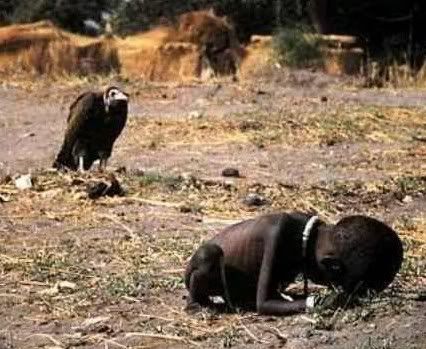
African dictators turned the continent into a hell on earth
The Conference’s main agenda is the continued development of Africa.
Besides reflecting on the 15 years of TICAD, the Summit is scheduled to discuss, among other topics, ways of boosting Africa’s economic growth, ensuring human security, Environmental issues/climate change, Asia-Africa cooperation and African development frontiers.
Meanwhile, the UN Development Programme (UNDP), in partnership with the NEPAD Business Group, the UN Conference on Trade and Development (UNCTAD) and the UN Industrial Development Organisation (UNIDO) are organising on the sidelines of TICAD IV a meeting on ‘Innovative Approaches to Private Sector Development for achieving the MDGs in Africa’.
As part of the general campaign to revitalise efforts to meet the Millennium Development Goals (MDGs), these partner bodies maintain that there is a particularly acute need to scale up the role and involvement of the private sector in develo p ment.
The meeting is intended to share this understanding of the positive contribution s of the private sector in promoting poverty reduction and sustainable development in Africa, as well as the role of the public sector in development.
Delegates from Africa and Asia, UN agencies and other partners as well as repres entatives of Japanese organisations registered to TICAD and representatives from the private sector will take part in the meeting.
Selected new and innovative approaches by global partners will be showcased to demonstrate how market-based business activities and private sector investments can help achieve the MDGs.
According to the event organisers, presentations will include actual case studies developed by the UN organisations and first-hand testimonials from various local private sector actors who have been beneficiaries or advocates of TICAD-inspired private sector development initiatives in Africa.
UNIDO Director-General Kandeh K. Yumkella is scheduled to deliver a keynote speech at the opening of the meeting on ‘Challenges and Opportunities for Industrial Transformation through investments Value Chains: The scope for Public-Private Partnerships’.
EDITOR’S NOTE: It is the same kangaroo court that stole Ethiopian people’s vote in 2005 and allowed Meles Zenawi’s death squads to unleash terror on civilians. The Derg did not commit half the crime Woyannes have perpetrated against the people of Ethiopia. The Woyanne judged are themselves murderous criminals.
(The Associated Press) — ADDIS ABABA, Ethiopia: Ethiopia’s Supreme Kangaroo Court sentenced an exiled former president dictator Mengistu Haile Mariam and 18 officials to death Monday, a prosecutor said.
Yoseph Kiros said the judgment delivered justice for the thousands of people murdered during Mengistu’s 17-year rule.
“I believe it is the right verdict because these people committed serious crimes against humanity,” Kiros said.
Mengistu, a Marxist leader who was driven from power in 1991 by the current regime, is living in comfortable exile in Zimbabwe and is not expected to be extradited while Robert Mugabe remains Zimbabwean president.
A runoff in Zimbabwe’s presidential race is scheduled for June 27. Mugabe’s opponents say he is using violence and intimidation in an attempt to win the runoff and retain power. Nevertheless, opposition leader Morgan Tsvangirai has said he is confident of victory.
The 18 other officials sentenced to death Monday are all in Ethiopian custody.
Some experts say 150,000 university students, intellectuals and politicians were killed in a nationwide purge by Mengistu’s regime, though no one knows for sure how many suspected opponents were killed during the Soviet-style purges.
Human Rights Watch has described the 1977-78 campaign known as the Red Terror as “one of the most systematic uses of mass murder by a state ever witnessed in Africa.”
Mengistu had previously been sentenced to life imprisonment in January 2007 for genocide, but the prosecution appealed the sentence in July as unduly lenient.
Under Ethiopian law, the current president must approve the death sentences before an execution date is set.
– – – – – – – – – – –
ADDIS ABABA (AFP) – Ethiopia’s Supreme Court sentenced former dictator Mengistu Haile Mariam to death in his absence Monday, along with 17 senior officials of his regime, overturning a previous life term on appeal.
The court followed the request of the prosecution to toughen the sentence imposed in January 2007 on Mengistu, who has lived in comfortable exile in Zimbabwe since he was toppled in 1991, after he was found guilty of genocide at the end of a decade-long trial.
Mengistu, an army lieutenant colonel, was a member of the Marxist junta known as the Derg which ruled Ethiopia from 1974 after the ousting of Emperor Haile Selassie, assuming control of it in a bloody coup in 1977.
The genocide charges arose from a crackdown against opponents in 1977-78 known as the Red Terror in which tens of thousands were killed or disappeared.
The court that passed life sentences in 2007 accepted pleas for leniency from the defence, but Supreme Court judge Desta Gebru rejected them Monday.
“The court has decided to revoke the leniency appeal from the defendants,” he said in his ruling. “It has sentenced them to death.
“They have tortured and executed thousands of innocent people in public, which applies as genocide according to Ethiopian law.”
“Despite claiming that the killings resulted from the chaos that ensued after the (1974) coup, the defendants ordered massacres and abuses several years after the death of the emperor,” the judge added.
“All defendants are guilty of genocide, murder and illegal confiscation and detainment of innocent people. As a result, they will be handed out the most severe punishment in Ethiopian law.”
Desta said the court would await the confirmation of the sentences by President Girma Woldegiorgis — who has the power to amend them again — before fixing an execution date.
Those sentenced to death along with Mengistu included Legesse Afsaw, known as “the butcher of Tigre”, former vice-president Fisseha Desta and former prime minister Fikresellassie Wogderes.
On the reading of the Supreme Court’s verdict, many relatives of the accused in court burst into tears. None would comment to AFP.
Although the death sentence is sometimes pronounced in Ethiopia, only two people have been executed in the past 10 years and none since August 2007.
Following the end of Mengistu’s trial last year, Robert Mugabe’s government in Zimbabwe ruled out his extradition, saying, “Comrade Mengistu still remains a special guest”.
The Federal High Court had convicted Mengistu and 11 of his top aides in December 2006 on 211 counts of genocide, homicide, illegal imprisonment and illegal property seizure.
A further 60 defendants were also found guilty of genocide, but only by a majority 2-1 ruling by the judges, who acquitted some but not all on several of the lesser charges.
Only one defendant was acquitted on all charges.
Mengistu and his former top aides were also accused of the murders of former Ethiopian emperor Haile Selassie, whom they overthrew in 1974, and Orthodox Patriarch Abuna Tefelows.
Of the 73 accused, 14 had died and only 33 were present in court. Mengistu was among 25 defendants tried in absentia.
– – – – – – – – – – – – –
(VOA) — Ethiopia’s highest court threw out a January, 2007 court ruling giving Mengistu and 17 of his senior associates life sentences for their part in the deaths of thousands of people between 1974 and 1991.
In a three-hour reading of the verdict, Justice Desta Gebru said the court has decided to revoke the leniency appeal from the defendants. It sentences them to death.
Justice Gebru agreed with a prosecution appeal that the life sentence was not commensurate with the crimes. After the original trial, which lasted 12-years, the defendants were convicted in 2006 of genocide for torturing and executing political enemies.
Many of the deaths occurred in 1977 and 1978, when Mengistu’s Marxist government, called the Derg, or “the committee,” carried out a purge known as the Red Terror.
Mengistu was an army lieutenant colonel when he led a military coup that overthrew Emperor Haile Selassie. He has been living in exile in Zimbabwe since he was ousted by Ethiopia’s current government in 1991.
But several senior Derg officials were in the courtroom when the verdict was read.
Prosecutor Yoseph Kirkos expressed satisfaction at the high court’s decision. He said the difference between a life sentence and death in absentia may be meaningless now, but it could make a big difference if Zimbabwe’s President Robert Mugabe is ousted in next month’s election.
“For now you can say is no different,” said Yoseph Kirkos. “But for tomorrow maybe the country which protects him, which gives him the right to live there, maybe knows the gravity of the crime, and his involvement in the crime. Maybe one day they can return him. When they look he is a criminal and he is a dangerous guy.”
Former Ethiopian president and historian Negaso Gidada says persons convicted of genocide cannot be pardoned or granted amnesty. He says under Ethiopia’s constitution, only the current president, Girma Woldegiorgis, could commute the sentences.
“In case of person convicted of any crimes stated in sub-article one in these articles and sentenced with the death penalty, the head of state may, without prejudice, commute the punishment to life imprisonment,” said Negaso Gidada.
Negaso and prosecutor Kiros said while the issue of a commuted sentence may be moot for Mengistu, 17 other senior Derg officials are facing death. It was not immediately clear when or how the sentences might be carried out.
Coincidentally, the Supreme Court’s decision came two days before Ethiopia’s national day, when it celebrates the downfall of the Mengistu regime.
