(Los Angeles Times) MOGADISHU, SOMALIA — Along the ghostly streets of Mogadishu, just about the only traffic nowadays consists of starving cats and goats searching for food. They race toward the occasional pedestrian, crying for scraps.
Their owners fled the city’s violence long ago, leaving more than half of Somalia’s capital deserted. Shops are closed. Burned-out cars sit abandoned by the side of the road. Other than soldiers and militiamen, only the most desperate of people frequent the streets, including orphans and old women who sometimes are forced to compete with the strays for food.
Most others leave their homes only when necessary. In venturing outside, they hurry to their destinations in silence, heads down, avoiding eye contact with strangers. Few dare use cellphones lest they fall victim to thieves or be accused of spying. There’s no socializing because it’s too risky to stop for chitchat and no one knows whom to trust.
After 17 years of civil war, it’s hard to imagine Somalia could get any worse. It has.
These days, this Horn of Africa nation appears on the verge of a total breakdown, aid officials and residents said.
In addition to a growing insurgency, clan warfare and the lack of a functioning government since 1991, Somalia’s fragile economy is now disintegrating amid hyperinflation and the local effects of a global food crisis that sparked riots this month.
“We are very close to collapse,” said Hassan Rage, a sugar vendor in Mogadishu who earns about $2 a day. Until recently that was enough for his family to survive. But with Somalia’s shilling losing half its value in the last year, he can no longer afford water, lamp oil or charcoal for cooking.
“Sometimes I don’t go home after work and sleep in the mosque,” Rage said. “I can’t face the children empty-handed.”
A United Nations-recognized transitional government, once seen as Somalia’s best hope, is crippled by infighting and largely controlled by former warlords. Ailing President Abdullahi Yusuf, 73, has been in and out of hospitals for the last year. His Cabinet, hunkered down in a heavily guarded district of Mogadishu, retains a tenuous grip on power thanks only to the thousands of Ethiopian Woyanne troops supporting it.
Attacks by insurgents worsen by the day. After a short-lived Islamist government was defeated in 2006, its armed forces shifted to guerrilla tactics, striking government and Ethiopian Woyanne forces and launching hit-and-run attacks in various southern cities.
A U.S. airstrike May 1 killed a top insurgent commander whom American officials accused of having links to Al Qaeda. His followers are vowing to step up their assaults, targeting any Westerners in the region.
This month, the latest in a long string of peace conferences was held in the tiny neighboring nation of Djibouti, but little progress was made.
Meanwhile, the humanitarian crisis is verging on catastrophe, aid groups warn. About one-third of Somalia’s population needs emergency food assistance. One million people have been displaced over the last 18 months, including 40,000 in April. Thousands have been killed in the fighting.
“We are innocent,” pleaded Murayo Siad Roble, a mother of nine. Her husband was killed in November while attempting to find food for the family. “I don’t understand what crime we’ve committed to be punished like this. I’m worried my children will all die.”
U.N. and aid groups, which already had a skeletal presence, are pulling back further because of growing violence. Two World Food Program drivers and three Doctors Without Borders staffers have been killed this year.
Somalia’s social breakdown has hit the young the hardest. They have rarely known peace, stability or even a semblance of order. In one desolate neighborhood, shabbily dressed children played away a recent afternoon. As usual, it was a war game. They carried guns carved from wood and tossed plastic bags filled with ash to mimic the smoke of exploding grenades.
There are three sides in their game: transitional government soldiers, Ethiopian Woyanne troops and insurgents. Insurgents usually trounce the soldiers, who then run to Ethiopians for help. Ethiopians Woyannes chase away the insurgents as they sweep through neighborhoods, terrorizing civilians.
None of the boys seek the role of government soldier. “No one wants to play the ones who are defeated,” said Ahmed Ali, 13, who played the role of insurgent leader.
The real-life drama is not far from this make-believe version. According to an Amnesty International report issued this month, Somalia’s civilians are enduring widespread abuse from all sides. “The people of Somalia are being killed, raped, tortured,” said Michelle Kagari, deputy director of Amnesty International’s Africa program. “Looting is widespread, and entire neighborhoods are being destroyed . . . and no one is being held accountable.”
International human rights groups singled out Ethiopian Woyanne troops for alleged abuses while carrying out anti-insurgency sweeps since November, including an April attack on a Mogadishu mosque in which 21 people were killed, among them seven whose throats were slit.
The insurgents, who have split into at least three rival factions, haven’t spared civilians either. They reportedly killed four foreign teachers in April during an attack on a school. In seaside Merka, Islamic radicals killed four moviegoers by tossing a grenade into a cinema showing a Bollywood film.
The insurgents are recruiting teenagers not much older than those engaged recently in the make-believe game. With offers of $70 cash payments or even just a daily meal, young fighters are being lured into carrying out assassinations, kidnappings and bombings.
Hassan Yare, 17, said he joined Shabab, one of Somalia’s largest militant groups, at age 11. His father, a founding member, brought him to a training camp before he died in battle.
“I promised him that I will continue the holy war after he died,” the teenager said. “And when I have children, I will train them to continue the fight after I am gone.”
By Abukar Albadri and Edmund Sanders, The Los Angeles Times
Special correspondent Albadri reported from Mogadishu and Times staff writer Sanders from Nairobi, Kenya.
HARARE (Reuters) – Ethiopia’s former Marxist ruler Mengistu Haile Mariam, sentenced to death by his country’s supreme court, will remain in Zimbabwe under the protection of President Robert Mugabe’s government, a government minister said on Tuesday.
“Our position has not changed. He remains our guest in Zimbabwe. He will remain in Zimbabwe and we will protect him as we’ve always done,” Deputy Information Minister Bright Matonga said on Tuesday.
Ethiopia’s supreme court sentenced Mengistu to death on Monday, granting a prosecution appeal that a life sentence he received last year did not match the seriousness of this crimes.
Mengistu, who has lived a life of comfortable exile in Zimbabwe since he was driven from power in 1991, is unlikely to face punishment unless Mugabe loses a run-off election next month and gives up power.
Zimbabwe’s opposition Movement for Democratic Change, whose leader Morgan Tsvangirai will face Mugabe in a second round presidential vote on June 27, said dictators like Mengistu were not welcome in the country.
“It only takes a dictator to hang around fellow dictators. Birds of the same feather, this is why (Mugabe’s ruling) ZANU-PF is clinging on to Mengistu,” MDC spokesman Nelson Chamisa said.
“We don’t want dictators on our land. The people of Ethiopia suffered for such a long time.”
Chamisa hinted that Mengistu may be extradited if Tsvangirai wins next month.
“Of course we do not condone killing or the death sentence as MDC, but we want justice to be delivered to the victims and to the perpetrators so that there’s restoration,” he said.
The MDC said in 2006 it would withdraw the protection afforded by Mugabe’s government, which considers Mengistu a friend of Zimbabwe’s liberation struggle.
Matonga said there had been no formal request regarding Mengistu from the Ethiopian government.
“Even if they make the request, he’s not going anywhere.”
The prosecution in Ethiopia appealed against a life term imposed on Mengistu in January 2007, after he was found guilty of genocide arising from thousands of killings during his 17-year rule that included famine, war and the “Red Terror” purges of suspected opponents.
He and more than a dozen other senior officers were found guilty after a 12-year trial that concluded Mengistu’s government was directly responsible for the deaths of 2,000 people and the torture of at least 2,400.
(Reporting by Nelson Banya; Writing by Marius Bosch; Editing by Giles Elgood)
By Henok Semaegzer | The Reporter
Jamal Mahjoub, an archeologist by training who became a composite multilingual writer, was recently quoted as saying, “it was easier to write about an archeologist than actually becoming one”. So he wrote a book about an archeologist, which essentially gained him worldwide fame and gave him a start in a career in writing.
Fikremarkos Desta, like Mahjoub, was trained to become practical in the world of science. He studied chemistry in college only to find himself as a full-fledged writer. His ethnographic trilogy is one of the few well-read books in the country.
Fikremarkos writes about the Hamar, Kio, Ebore, and other “minor” ethnic groups in the south-western parts of Ethiopia. He has so far published five books, all of them in Amharic (Kebuska Bestejerba, Evanghadi, Ya Zersiewoch Fikir, Achamie, and Ya Nisir Ayene). The sixth one that was launched is written in English.
The title (Land of the Yellow Bull), that does not seem to make sense in English, is a direct translation of a phrase in Hamar language “Wake Alepenon”, that is how the Hamar call themselves; this is roughly translated into English as “land of the heroic people”. All in all the entire the writing of the script took about three years: until it was published abroad a couple of months ago.
Fikremarkos believes that he is blessed to have lived with such “innocent” people for about a decade and most importantly to be writing about their “pure and harmonic” way of indigenous existence. “I usually write about the purity and compassion of these people with a determined mindset. I appreciate such innate human qualities of indigenous life, which can be a symbol of a natural, unruffled and peaceful way of survival,” he said.
Fikremarkos admits that his works revolve around usual themes. The characters in Land of the Yellow Bull are even much similar to the characters in the Amharic trilogy “I write about love, purity, friendship, and calmness,” he says, “I have an optimistic belief that a lot of misunderstandings can be removed through promoting dialogue among people and through interacting in a natural calm way. I promote peace, solidarity, and communication; that is why I write about such usual themes.”
As a writer Fikremarkos says he does not want to limit himself to only one style of writing. However, most of his works are set in the countryside; he actually never published a book about city life. He usually recognizes life in the city in terms of life in the rural country setting. In Land of the Yellow Bull he compares the emergency life of the city with the more or less tranquil way of traditional life. According to the author, the people of Hamar and Kio are serene in their nature that they do not involve themselves in any matter without careful observations. They study nature carefully, their interaction with one another is not disheveled, and most of all peace is the most important fabric of traditional Hamar society. Fikremarkos brings his knowledge of chemistry to create an allegory: “Its like when water full of impurities is allowed to settle, the residue goes to the bottom of the container and pure water remains on top.” An allegory that professes to say: silence and calmness purify the soul.
Synopsis of the novel
An English anthropologist (Charlotte Alfred) goes to Hamar village to conduct a research. There she finds a problem in adjusting with the culture, the climate, and unusual quietness of the people. As the story develops, Charlotte keeps on trying to communicate with the Hamar people, culture, and way of life. In due course the people responded in their silence by giving her friendship. Charlotte finds herself deeply involved in the practices and life of these people. She falls in worship of the “purity and graceful silence of the people”. (The story goes…)
The novel talks about the difference in the livelihood, and the common misunderstandings that prevail in the city and country life. Fikremarkos portrays the disparity in favor of tradition. We see that when the character Charlotte evolves in favor of tradition in the story. Asked if he is advocating going back to tradition from civilization, he said, “I am only making a modest proposal; the trend in civilization had been advancing on western models in the economy, politics, and even individual interactions. Somehow people have stopped going back to tradition. See how civilization has affected our lives; and understand the world from both angles.”
According to Fikremarkos, since the south-westerners had been alienated from the rest of the world in space and time, they have maintained their identity when the world beyond their land was changing. “I am, in that regard, portraying that positivism, because it interests me a great deal,” he said.
EDITOR’S NOTE: Ethiopians and all peoples of Africa would forever be indebted to the Japanese if they round up these vampires and put them in jail for making Africa a land of misery.
– – – – – – – – –
ADDIS ABABA — Ethiopia’s fascist dictator Meles Zenawi left here Monday for Japan to join other African leaders at the Fourth Tokyo International Conference on African Development (TICAD), scheduled to take place in Yokohama city from 28-30 May.
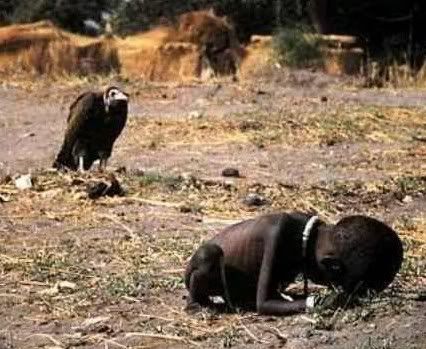
African dictators turned the continent into a hell on earth
The Conference’s main agenda is the continued development of Africa.
Besides reflecting on the 15 years of TICAD, the Summit is scheduled to discuss, among other topics, ways of boosting Africa’s economic growth, ensuring human security, Environmental issues/climate change, Asia-Africa cooperation and African development frontiers.
Meanwhile, the UN Development Programme (UNDP), in partnership with the NEPAD Business Group, the UN Conference on Trade and Development (UNCTAD) and the UN Industrial Development Organisation (UNIDO) are organising on the sidelines of TICAD IV a meeting on ‘Innovative Approaches to Private Sector Development for achieving the MDGs in Africa’.
As part of the general campaign to revitalise efforts to meet the Millennium Development Goals (MDGs), these partner bodies maintain that there is a particularly acute need to scale up the role and involvement of the private sector in develo p ment.
The meeting is intended to share this understanding of the positive contribution s of the private sector in promoting poverty reduction and sustainable development in Africa, as well as the role of the public sector in development.
Delegates from Africa and Asia, UN agencies and other partners as well as repres entatives of Japanese organisations registered to TICAD and representatives from the private sector will take part in the meeting.
Selected new and innovative approaches by global partners will be showcased to demonstrate how market-based business activities and private sector investments can help achieve the MDGs.
According to the event organisers, presentations will include actual case studies developed by the UN organisations and first-hand testimonials from various local private sector actors who have been beneficiaries or advocates of TICAD-inspired private sector development initiatives in Africa.
UNIDO Director-General Kandeh K. Yumkella is scheduled to deliver a keynote speech at the opening of the meeting on ‘Challenges and Opportunities for Industrial Transformation through investments Value Chains: The scope for Public-Private Partnerships’.
