(Pana) ABUJA — Ethiopia’s tribal dictatorship on Tuesday asked Nigeria to deploy a contingent of its troops for ‘peace-keeping mission’ the border with Eritrea.
Making the request when he paid a courtesy call on Nigeria’s Minister of State for Defence, Mrs. Fidelia Akuabata Njeze, Ethiopian Woyanne Ambassador to Nigeria, Mr. Suleiman Dedefo Woshe, said the deployment of troops to the border of the two countries would prevent the situation in the disputed area “from degenerating into a full scale war”.
Woshe also solicited for Nigeria’s assistance for peace sustenance between Ethiopia Woyanne and the Eritrea.
He told Njeze that Eritrea, which shares a common border with Ethiopia, had violated the peace accord signed by the two countries.
Ethiopia Woyanne, Dedefo said, had restrained itself from retaliation to avoid full-scale war between the two countries, adding that war was never a solution to such situations.
Responding, Njeze described Dedefo’s visit as meaningful, saying Nigeria and Ethiopia had a good history of long-standing relationship in their peace-keeping efforts in Africa and beyond.
According to her, Nigeria has peace as its primary mission and will work to ensure the two countries live in peace.
She said peace in the African Region was of primary importance to the present Nigerian administration.
Nigeria, she added, would work towards signing a Memorandum of Understanding bet ween Ethiopia and Nigeria, to cement the existing relationship between the two countries.
A 19-year-old woman named Bezawit Solomon, who is a Norwegian citizen of Ethiopian descent, was found murdered in Norway yesterday (Monday) morning.
The victim’s body was found in one of the apartments in the Anker Studentbolig complex in downtown Oslo, just across the Aker River from the popular Grünerløkka district.
Police have charged the victim’s 27-year-old husband, Yafet Kassa Gebrewold, and issued warrants for his arrest both in Norway and internationally. He is a citizen of Ethiopia, says Inspector Hanne Kristin Rohde.
Yafet Kassa is charged with
murdering his wife
Police withheld many details of the case, but said they found blood in the apartment that quickly led them to believe the woman was murdered. They were first summoned to the complex shortly after 1am, by an acquaintance of the woman.
It is reported that Bezawit came to Norway in 2000 and in 2006, she was granted Norwegian citizenship. The husband came to Norway in 2004 as a student. The two got married in 2006. “They had good relationship. They were to to celebrate their second wedding anniversary this month,” says Temesgen Kahsay, a friend who knew the couple.
The police want tips from the public on this issue, if you have information, please contact the police at tel: 22 66 99 66
Ethiopian man in Alexandria VA charged with killing wife
Murder suspect Mesfin Hussien
ALEXANDRIA, VIRGINIA — Police have charged Mesfin Hussien with the murder of his wife Hawlet Mohammed today. The victim died at the scene. An autopsy performed today has determined the manner of death to be homicide.
Hawlet is Alexandria’s first homicide victim of this year (2008), according to Alexandria Police.
A few weeks ago, another idiot in Arlington, Virginia, strangled his wife to death. Yesterday, in Norway, yet another woman from Ethiopia was killed by her husband. Is this becoming an epidemic in our community? What is driving these men to murder their wives?
– – – – – – – – –
ALEXANDRIA POLICE DEPARTMENT
MEDIA SERVICES UNIT, 2003 MILL ROAD
ALEXANDRIA, VIRGINIA 22314-4658
703-838-4636
Alexandria Police Identify Homicide Victim; Make Homicide Arrest
Alexandria police have identified the victim of yesterday’s homicide as Hawlet Mohammed, a 27 year-old Alexandria woman. Police were called to the 3000 block of Park Center Drive around 11:55 p.m. for the report of a deceased female. The victim died at the scene.
The victim suffered trauma to the upper body. An autopsy performed today has determined the manner of death to be homicide.
Alexandria detectives arrested an Alexandria man for the murder of Hawlet Mohammed earlier today. Mesfin Hussin, 35, of 3001 Park Center Drive, was charged with Murder. Mr. Hussin is the husband of Ms. Mohammed.
This is the first homicide in Alexandria this year. There were eight homicides in Alexandria last year.
ADDIS ABABA (Reuters) – Over a quarter of Ethiopia’s HIV/AIDS patients on drugs are not taking their medicine because of logistical problems but also due to religious beliefs, the head of a treatment body said on Tuesday.
Over 40,000 of Ethiopia’s 156,360 HIV/AIDS patients on the life-prolonging medication have discontinued treatment “due to problems of transportation to hospitals,” said Dr Ygeremu Abebe, the director of the Clinton Foundation in Ethiopia.
Some however stopped taking the anti-retroviral medicine on the prompting of religious leaders who encouraged them to take “holy water” instead, he said.
“Lack of awareness of serious health problem for patients who discontinue treatment could also be considered a reason,” Ygeremu told a workshop on the disease.
Some 20 percent of 7,000 children with the illness have also stopped medication, he said.
Last year, the head of Ethiopia’s Orthodox Church told about 5,000 faithful, most of who were infected, that they should combine the free drugs — provided under U.S. President George W. Bush’s Emergency Plan for AIDS Relief — with the holy water.
With more than 1.7 million people living with HIV/AIDS, Ethiopia is one of the countries in the world most affected by the epidemic, according to the World Health Organization (WHO).
Over a million adults and children have died in Ethiopia in the last two decades from AIDS.
Infections in the country are predominantly in urban areas but have in the last several years spread to rural centers all over the country, where 85 percent of Ethiopia’s 81 million people live, according to WHO.
(Reporting by Tsegaye Tadesse; Editing by Richard Balmforth)
MELBOURNE, AUSTRALIA — FERRYING passengers around in a Melbourne taxi, Abdalla Ahmed might seem to be one more refugee dreaming of bringing out those he left behind.
But Mr Ahmed harbours a grander vision, one that has embraced an entire town in Ethiopia and inspired support from around the world.
Somalia-born Mr Ahmed’s personal dream of being a doctor was shattered when, three years into his studies in 1979, he was forced to flee on political grounds. He came to Australia in 1982 and after a humble start packing cigarettes in a factory, became a public servant.
Years later, arrivals from Ethiopia’s Somali community urged him to visit their war and drought-stricken homeland and see what might be done to ease suffering there.
Mr Ahmed’s father was born in Ethiopia, migrating to Somalia in 1943, and most of their family was still there. In 2005, Mr Ahmed went back.
At the town of Raaso, with a population of 80,000, he found “no education, no water, no hospital”. He asked what they needed most. They nominated a hospital, saying “our women are dying during labour”.
Back in Melbourne, Mr Ahmed enlisted Pastor Allan Herman, chief executive of the International Volunteer Health Network, and documentary maker David Schmidt. Filming in Ethiopia in 2006, Mr Ahmed met the country’s health minister and asked why the government could not build a hospital in Raaso.
The minister suggested he look to the Ethiopian diaspora for funds “and we will give you doctors and nurses”. Armed with a memorandum of understanding and Schmidt’s footage, Mr Ahmed returned to Australia, giving up his job and driving a taxi to support himself while he knocked on doors.
Banyule Community Health Centre, where Mr Ahmed is on the board, gave him an office and sponsorship. Mobile Mission International in Whittlesea contributed a hospital design that depended on $22,500 for materials. Mr Ahmed had the money within three weeks. So far he has raised $100,000, as well as obtaining 60 beds and medical equipment from the Austin and Warringal hospitals.
Mr Ahmed estimates another $200,000 is needed to complete the 100-bed hospital by next June, but he is optimistic – so much so that, at 51, he is even contemplating resuming medical studies, bringing two dreams together.
‘Women empowerment one of the most profitable social investments imaginable’
ADDIS ABABA – Today the United Nations Population Fund (UNFPA) and the Kingdom of the Netherlands launch a € 2.7 million programme that aims to reduce violence against women.
The three-year programme, which will be managed by UNFPA, will further strengthen an enabling environment that reduces violence against women in Ethiopia.
UNFPA and the Netherlands, through their Agreement, will support the activities of civil society organisations that implement community-based intervention and violence prevention programmes. The agreement will also strengthen capacity in the areas of care and social support to victims of violence. Adolescent girls and women will benefit from better clinical help and legal assistance, for instance, and from counselling and rehabilitation services. The ultimate goal is to stop violence against women.
Empowering women is central to the Netherlands’ development co-operation policies.
Mr. Alphons Hennekens, Netherlands Ambassador to Ethiopia, said that ending violence against women is not only a human rights and a social justice issue: “Strong women and girls also help economic development and reduce poverty.” He called the improvement of the situation of women and girls “one of the most profitable social investments imaginable.”
Gender Based Violence is also at the heart of UNFPA’s mandate, as it reflects gender inequalities and is very closely related to reproductive health issues and HIV/AIDS. “Whether it is domestic violence, rape, sexual abuse, sexual exploitation, child prostitution, trafficking, forced labour, or harmful traditional practices like early marriage and female genital mutilation, violence prevents a girl or a woman from exercising her human rights, violates her dignity, and jeopardizes her health, well-being, and future,” noted Dr. Monique Rakotomalala, UNFPA’s Representative in Ethiopia. “Today’s agreement offers an opportunity to take a firm stand to stop gender-based violence and ensure that reproductive rights and care are the centre piece of our work.”
The Agreement and its objectives complement the Government of Ethiopia’s policies on gender equality. Gender equality is one of the eight pillars of the government’s poverty reduction plan, which aims to “unleash the potential of women.” The Donor community is currently supporting the Ethiopian Ministry of Women’s Affairs through a Gender Pool Fund, and the technical working group on Gender Equality is providing technical and financial support to promote the advancement of Ethiopian women.
About the Royal Netherlands Embassy
The Netherlands has a longstanding development partnership with Ethiopia. The Netherlands’ bilateral development cooperation programme with Ethiopia focuses on three sectors: education; health; and rural economic development. Gender is a cross-cutting issue that is reflected in all three sectors. Furthermore, governance is an important area of Dutch development policy.
A new policy area for the Netherlands Government is private sector development. The Embassy is actively promoting the development of the horticulture/floriculture sector in Ethiopia. With obvious success: over forty Dutch entrepreneurs have already started operations throughout Ethiopia.
About UNFPA Ethiopia
UNFPA, the United Nations Population Fund, is an international development agency that promotes the right of every woman, man and child to enjoy a life of health and equal opportunity. UNFPA supports countries in using population data for policies and programmes to reduce poverty and to ensure that every pregnancy is wanted, every birth is safe, every young person is free of HIV/AIDS, and every girl and woman is treated with dignity and respect.
UNFPA in Ethiopia currently supports Gender as the third sub-programme of its sixth country programme. The gender programme includes capacity building and community-based interventions through the federal Ministry of Women’s Affairs; the Ministries of Health, Education, and Youth Services; and various Bureaus of Women’s Affairs all over the country. UNFPA Ethiopia consistently appeals to local and national leaders to vigorously enact and enforce laws and regulations that address discrimination and violence against women and girls, and to advance gender equality and human rights, including the right to sexual and reproductive health. UNFPA Ethiopia also supports innovative programmes in the areas of Early Marriage and advocacy on Gender Based Violence. The organisation is a lead partner in fostering coordination within the UN and with the national donor network in Gender programming.
Present in Ethiopia since 1973, the Fund ensures that population continues to be a key focus in the UN development assistance to the Government of Ethiopia.
For more information, please contact:
Yelfigne Abegaz, Gender & CSOs Senior Advisor, Netherlands Embassy; Tel 011 3 71 11 00 ext.218; email: [email protected]
Helen Amdemikael, Assistant Representative, UNFPA; Tel. 0115444468;
e-mail: [email protected]
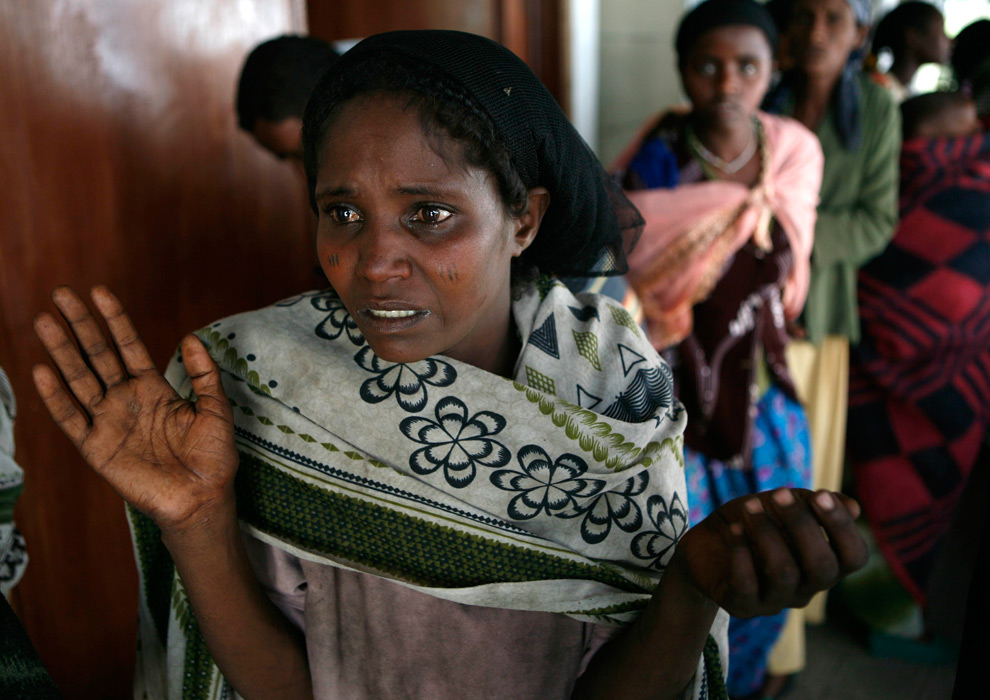
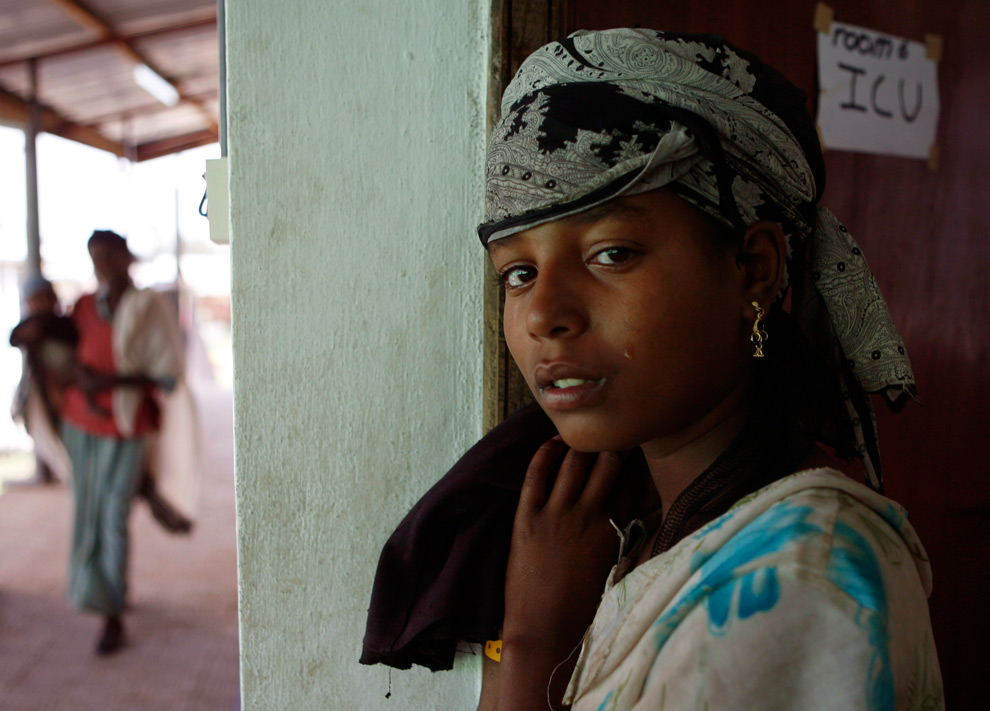
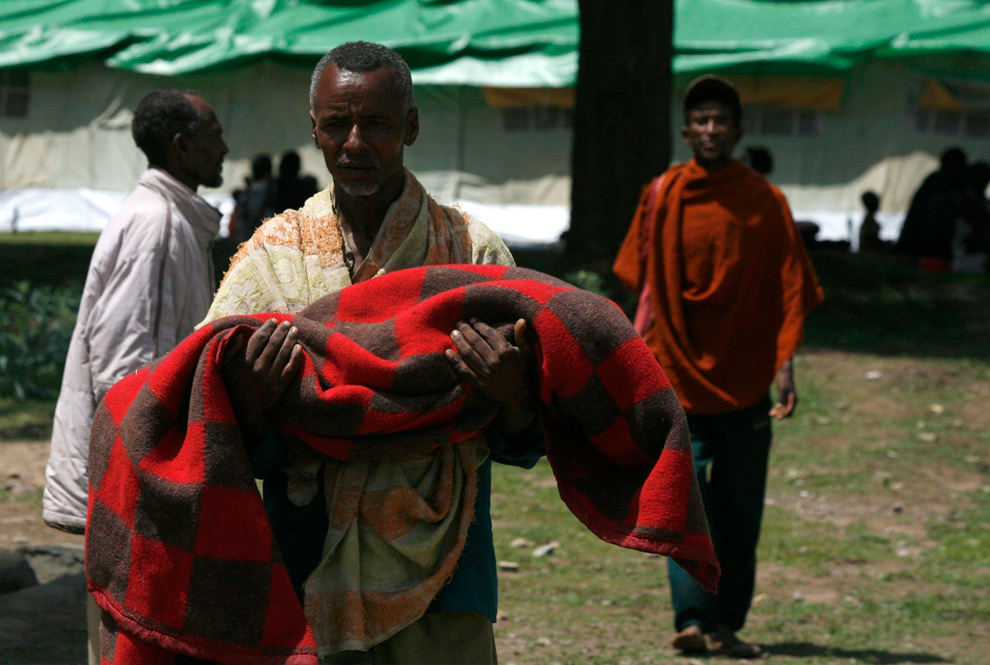
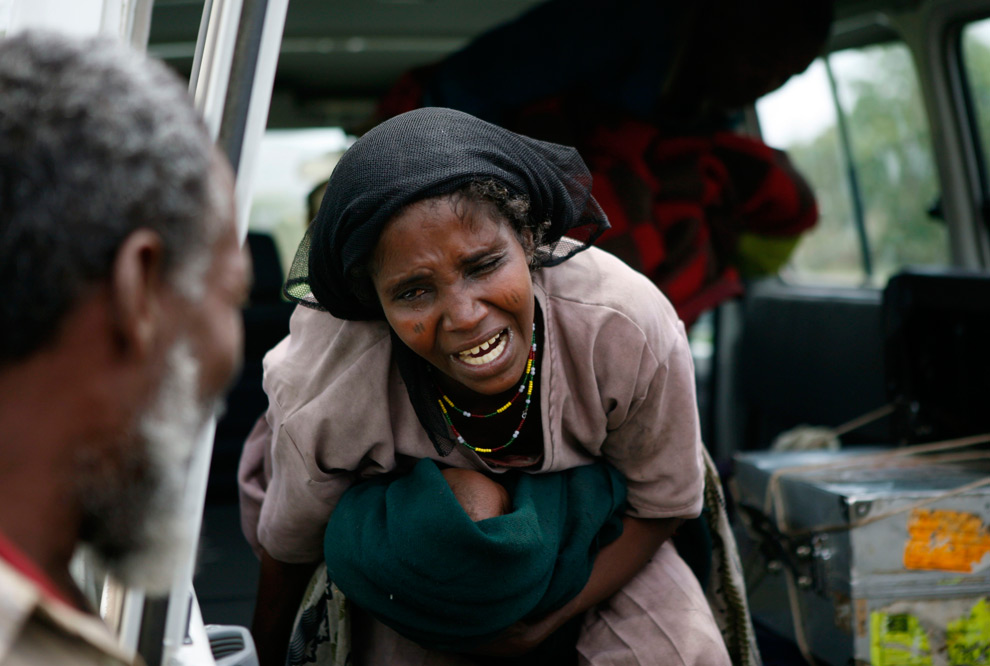
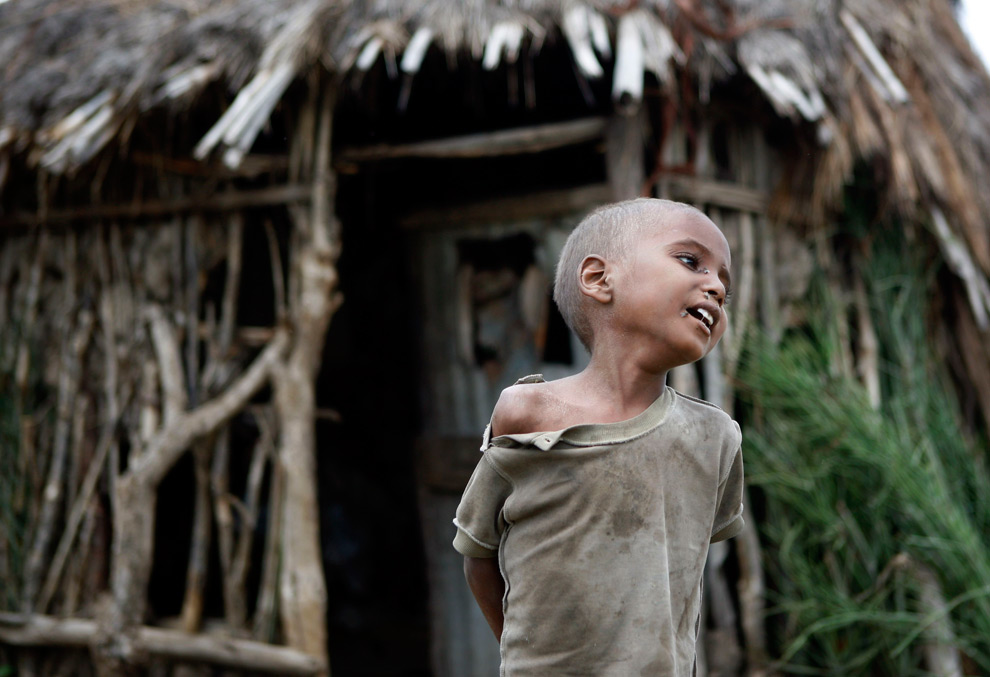
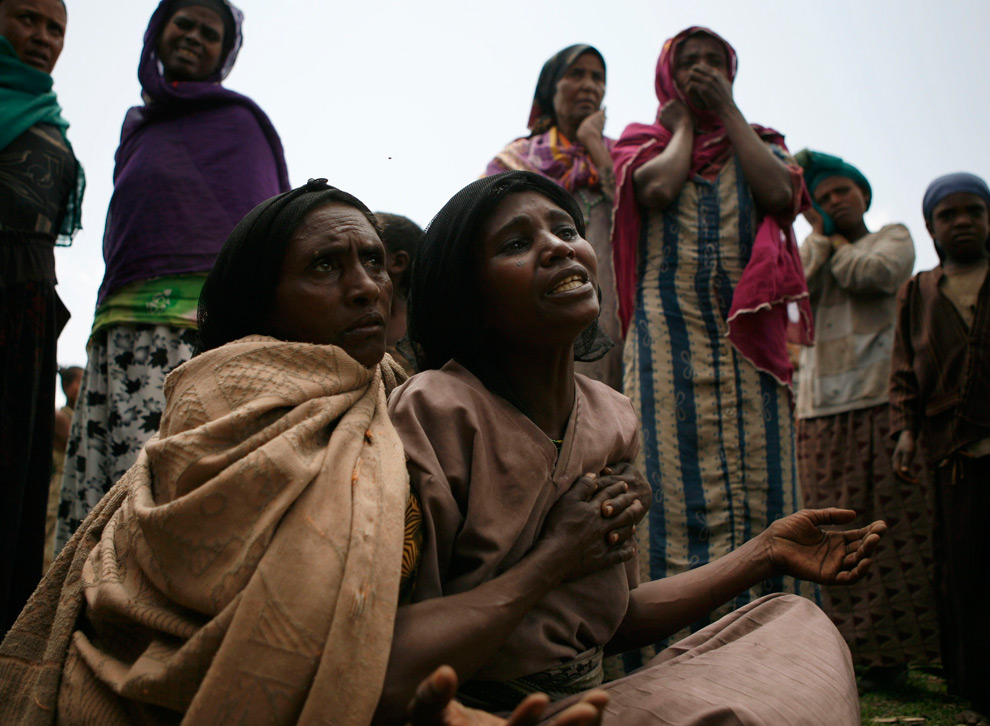
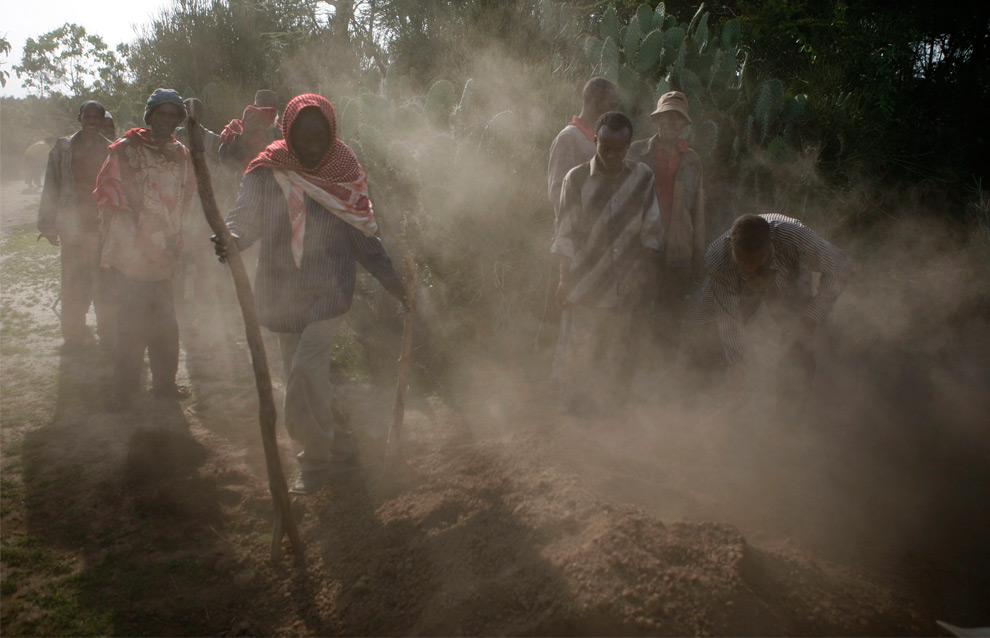
(By Alan Taylor, The Boston Glob) — Recent crop failures, drought conditions and the current high price of food have plunged Ethiopia into another food crisis, reminiscent of the famines of 1984-85 which killed over 1 million. People have become so desperate for food that they are eating seeds that were meant for their next harvest. 4.5 million Ethiopians are in need right now.News like this feels familiar, yet distant. Words like famine and crisis describe the situation broadly, but it can be hard to personalize, to put faces to such things. Reuters photographer Radu Sigheti takes us on a brief, painful and intimate visit with the Mohamed family, as they experienced the loss of their young daughter Michu, due to malnutrition, earlier this month.
Amina Nanessa Mohamed cries outside the intensive care unit of Medicine Sans Frontieres after her four-year-old daughter Michu died of malnutrition near Sheshemene, southern Ethiopia, June 8, 2008. Some 4.5 million Ethiopians need emergency food aid due to failed rains and high food prices, reviving grim memories of the country’s 1984-1985 famine. (REUTERS/Radu Sigheti)
Chaltu Mohamed cries outside the intensive care unit of Medicine Sans Frontieres after her four-year-old sister Michu died of malnutrition near Sheshemene, southern Ethiopia, June 8, 2008. (REUTERS/Radu Sigheti)
A relative carries the body of four-year-old Michu Mohamed who died of malnutrition near Sheshemene, southern Ethiopia, June 8, 2008. (REUTERS/Radu Sigheti)
Amina Nanessa Mohamed cries as she arrives at her home carrying the body of her four-year-old daughter Michu who died of malnutrition near Sheshemene, southern Ethiopia June 8, 2008. (REUTERS/Radu Sigheti)
Kufu Mohamed stands outside his tukul as his mother Amima arrives home with the body of his four-year-old sister Michu who died of malnutrition near Sheshemene, southern Ethiopia, June 8, 2008. Kufu, which also suffers of malnutrition, was later taken to a Medicine Sans Frontieres intensive care unit. (REUTERS/Radu Sigheti)
Amina Nanessa Mohamed (R) cries as she arrives at her home with the body of her four-year-old daughter Michu who died of malnutrition near Sheshemene, southern Ethiopia, June 8, 2008. (REUTERS/Radu Sigheti)
Relatives, following Muslim tradition, wash the body of Michu Mohamed, a four year old girl who died of malnutrition near Sheshemene, southern Ethiopia, June 8, 2008. (REUTERS/Radu Sigheti)
Men bury four-year-old Michu Mohamed who died of malnutrition near Sheshemene, southern Ethiopia, June 8, 2008. Kufu, her brother which also suffers from malnutrition, was later taken to a Medicine Sans Frontieres intensive care unit. (REUTERS/Radu Sigheti)