The Worldwide March Committee for Freedom and Justice, held from May 15-18 was a great effort by hundreds of organizers and participants in Ethiopian cities and communities throughout the world. We want to thank all of those organizers who worked so hard and devoted countless hours to bring it all together in a relatively short period of time!
Many Ethiopians rose up from the silence of the last many months to show that they have not forgotten those back home. More importantly, we have learned that we Ethiopians can successfully work together across many lines of differences that have separated us in the past.
We have learned that we can accomplish exponentially more together than in separate factions—the biggest obstacle to our success in the past. In fact, we would never be where we are today if we had been a more united people. In actuality, even a core group of united people who are willing to work intensely for the greater good, representing the diversity of Ethiopian citizenry can be more effective because of that unity than groups with more resources or members.
Instead, we have learned that we do not necessarily come closer to freeing the country by creating more political parties or civic groups, but instead what is of utmost importance is having a core group of people with commitment, vision, organization and who trust each other.
A major intent of the Worldwide March was to remember our fellow Ethiopians who died back home since TPLF came to power. That mission was accomplished. Most of the people within the executive committee were overwhelmed and touched by the stories reported to them of how people commemorated this day in many different ways—through candlelight vigils, prayer, community gatherings, marches and public meetings.
In eleven countries, Ethiopians presented a petition asking these donor countries to stop supporting this repressive regime and to instead, to start encouraging a democratic process and the opening up of freedoms within Ethiopia. By these actions, Ethiopians showed that our people who died for freedom, did not die in vain and that many of us will not rest until justice and reform comes to Ethiopia.
In Geneva at the United Nations, two letters were presented to the United Nations High Commissioner for Human Rights and United Nations High Commissioner for Refugees to urge them to take action on Ethiopia and on behalf of Ethiopians refugees who are suffering in Libya, Egypt, Israel, Sudan, Kenya, Uganda and many countries.
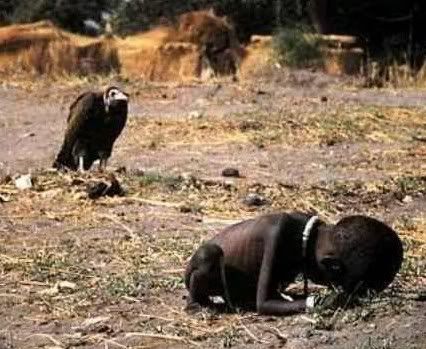
A second accomplishment was that we Ethiopians demonstrated that we have not forgotten those who are still suffering intense hardships back home. We know of the extraordinarily high inflation in the country that makes food aid essential for the survival of millions, only worsened by the heartbreaking news that a drought is coming to Ethiopia from which 6 million Ethiopians may die.
Neither have we forgotten how many Ethiopians are continuing to face torture, threats and intimidation. We know of the many thousands who are still imprisoned, people like Teddy Afro who was detained for what strongly appears to be a bogus crime. He has been punished like many of his fellow Ethiopians for simply speaking the truth about the oppression found in the country.
In the midst of all this, the phony election last month has left Ethiopians with only one choice of a political party, the same party of the ruling government that is repressing the media, taking away their freedom of expression, giving away their land to Sudan and committing the ongoing genocide in the Ogaden—the EPRDF government of Mr. Meles Zenawi!
Thirdly, our grief over the many deaths and continued suffering of our loved ones has reminded us that shared grief can find greater relief when connected together as one. Some people may have been disappointed by the division within the political parties and the failure of our political leaders to guide us, but despite this, we have found that there are people who will never give up.
Those people are men and women, young and old, from all parts of Ethiopia—from the east to the west to the south to the north. They are from all of the many different ethnic groups, religions, political parties and civic groups. These people came out from many different countries in the world, agreeing to work together because they knew it was the only way to free their country. They knew they could not wait for another foreign country to free them, but that they had to take on the responsibility themselves.
The Worldwide March Committee is developing a next step action plan which would involve the creation of a Solidarity Movement for a New Ethiopia—like we have been suggesting for over a year. An important step in this initiative would be to bring together political parties, civic organizations and religious organizations so as to develop a vision and strategy of how to free Ethiopia and how to build the foundation for a new Ethiopia where justice, freedom and harmony could be sustainable.
What we need to do is to have a national conference—with political, civic, religious and other groups involved—in order to discuss and develop a plan for the country’s political future, one based on consensus. This national conference would have two goals: (a) to address the demand for political freedom; in other words, what do we want for Ethiopia and how can we best resolve our differences so we can work together to accomplish it, and (b) what is a viable plan, with all its components and steps, for bringing about the changes we want?
Right now, things look very grim and dark in Ethiopia and everyone knows it. One of the biggest fears many have is that the discontent, division, frustration and anger could boil over and erupt. Many fear that we might be sitting on a time bomb that could explode before we have been able to put into place a strong, multi-ethnic body that could guide the people through such difficulties. None of us want a disaster to unfold. Because of that, we must think ahead and strategize as to how we can avert that kind of disaster, yet not compromise on the push towards the changes we need.
Right now, Meles is using repression and control, but this will not work forever. It is in the interest of every single living Ethiopian to really think of the seriousness of this situation as a motivation to come together with the genuine intention of making some concessions for the good of everyone. If people refuse to so, all of us will suffer for our joint failure.
The Worldwide March Committee has learned that there is still a way to forge a future, as long as we place our faith and hope in God that even when it looks to be impossible, God can help us find a way through this dark valley, especially if we travel this road together.
During these last weeks, we have built new friendships with people throughout the world who we only met through the phone and Internet. We are now enjoying the richness of new relationships and after many intense meetings and discussions with a shared purpose in mind, we feel we know each other despite many of us never meeting in person. This is part of the new family of Ethiopia, but we are still looking for our other family members. If you want to be part of this, please feel free to contact us.
The problem of Ethiopia cannot be solved by one ethnic group, one political party or by one religion. All of us are needed. We are asking Ethiopians to join with us in seeking a new political culture in Ethiopia. In this new political culture, the self-seeking politics of ethnic power barons is replaced by a de-ethnicized, inclusive politics drawing on African traditions of consensus, respect, integrity and participation. The existing repressive politics where leaders grasp for power to ensure their accumulation and that of their followers ignores the ordinary Ethiopian who must suffer government rather than being served by it.
In the existing house of politics where elites rule for themselves, changing the political leadership, only changes the participants who `eat’. The ordinary Ethiopian can only stare in wonder at the rapaciousness of the ruling clique. Currently, human rights are proclaimed to satisfy the national and international community but when human rights clash with the interests of the powerful, then they wither and die. Our rights and lives are exceedingly fragile subject to the whims of the powerful.
The Worldwide March Committee has a vision of a new house. The house we have right now in Ethiopia has become the house of the elite that pushes out the vulnerable and the weak from its protection. Ethiopians are not brought within the house but rather left to languish in the undeveloped bush outside. While the leaders are sheltered and feasting within, the ordinary person is wet and starving beyond the bright lights of the exclusive house.
Now it is time for all of us to build a new house where we will invite everyone to come back in to the hut to live, but it cannot be built by one person. It will require many hands. We want to build a new house where all can enjoy their rights and acquire meaningful opportunities to enhance their lives and those of their children.
All Ethiopians, whether male or female, old or young, whatever one’s ethnic identity or religious affiliation, no matter what region of the country, are invited to participate in this national endeavour of transformation under the Solidarity Movement for a New Ethiopia.
We call on donor countries and international institutions to respect our goals and to join with us in the creation of this new Ethiopia under a new political culture of respect, participation and life enhancement.
Keep posted for the next events. We have only begun our march ahead to freedom and justice for Ethiopia. The way before us may be difficult, but with God, nothing is impossible!
==================================================================
For further questions, please contact the Worldwide March Executive Committee at: [email protected]
EDITOR’S NOTE: Ethiopians and all peoples of Africa would forever be indebted to the Japanese if they round up these vampires and put them in jail for making Africa a land of misery.
– – – – – – – – –
ADDIS ABABA — Ethiopia’s fascist dictator Meles Zenawi left here Monday for Japan to join other African leaders at the Fourth Tokyo International Conference on African Development (TICAD), scheduled to take place in Yokohama city from 28-30 May.
African dictators turned the continent into a hell on earth
The Conference’s main agenda is the continued development of Africa.
Besides reflecting on the 15 years of TICAD, the Summit is scheduled to discuss, among other topics, ways of boosting Africa’s economic growth, ensuring human security, Environmental issues/climate change, Asia-Africa cooperation and African development frontiers.
Meanwhile, the UN Development Programme (UNDP), in partnership with the NEPAD Business Group, the UN Conference on Trade and Development (UNCTAD) and the UN Industrial Development Organisation (UNIDO) are organising on the sidelines of TICAD IV a meeting on ‘Innovative Approaches to Private Sector Development for achieving the MDGs in Africa’.
As part of the general campaign to revitalise efforts to meet the Millennium Development Goals (MDGs), these partner bodies maintain that there is a particularly acute need to scale up the role and involvement of the private sector in develo p ment.
The meeting is intended to share this understanding of the positive contribution s of the private sector in promoting poverty reduction and sustainable development in Africa, as well as the role of the public sector in development.
Delegates from Africa and Asia, UN agencies and other partners as well as repres entatives of Japanese organisations registered to TICAD and representatives from the private sector will take part in the meeting.
Selected new and innovative approaches by global partners will be showcased to demonstrate how market-based business activities and private sector investments can help achieve the MDGs.
According to the event organisers, presentations will include actual case studies developed by the UN organisations and first-hand testimonials from various local private sector actors who have been beneficiaries or advocates of TICAD-inspired private sector development initiatives in Africa.
UNIDO Director-General Kandeh K. Yumkella is scheduled to deliver a keynote speech at the opening of the meeting on ‘Challenges and Opportunities for Industrial Transformation through investments Value Chains: The scope for Public-Private Partnerships’.
EDITOR’S NOTE: It is the same kangaroo court that stole Ethiopian people’s vote in 2005 and allowed Meles Zenawi’s death squads to unleash terror on civilians. The Derg did not commit half the crime Woyannes have perpetrated against the people of Ethiopia. The Woyanne judged are themselves murderous criminals.
(The Associated Press) — ADDIS ABABA, Ethiopia: Ethiopia’s Supreme Kangaroo Court sentenced an exiled former president dictator Mengistu Haile Mariam and 18 officials to death Monday, a prosecutor said.
Yoseph Kiros said the judgment delivered justice for the thousands of people murdered during Mengistu’s 17-year rule.
“I believe it is the right verdict because these people committed serious crimes against humanity,” Kiros said.
Mengistu, a Marxist leader who was driven from power in 1991 by the current regime, is living in comfortable exile in Zimbabwe and is not expected to be extradited while Robert Mugabe remains Zimbabwean president.
A runoff in Zimbabwe’s presidential race is scheduled for June 27. Mugabe’s opponents say he is using violence and intimidation in an attempt to win the runoff and retain power. Nevertheless, opposition leader Morgan Tsvangirai has said he is confident of victory.
The 18 other officials sentenced to death Monday are all in Ethiopian custody.
Some experts say 150,000 university students, intellectuals and politicians were killed in a nationwide purge by Mengistu’s regime, though no one knows for sure how many suspected opponents were killed during the Soviet-style purges.
Human Rights Watch has described the 1977-78 campaign known as the Red Terror as “one of the most systematic uses of mass murder by a state ever witnessed in Africa.”
Mengistu had previously been sentenced to life imprisonment in January 2007 for genocide, but the prosecution appealed the sentence in July as unduly lenient.
Under Ethiopian law, the current president must approve the death sentences before an execution date is set.
– – – – – – – – – – –
ADDIS ABABA (AFP) – Ethiopia’s Supreme Court sentenced former dictator Mengistu Haile Mariam to death in his absence Monday, along with 17 senior officials of his regime, overturning a previous life term on appeal.
The court followed the request of the prosecution to toughen the sentence imposed in January 2007 on Mengistu, who has lived in comfortable exile in Zimbabwe since he was toppled in 1991, after he was found guilty of genocide at the end of a decade-long trial.
Mengistu, an army lieutenant colonel, was a member of the Marxist junta known as the Derg which ruled Ethiopia from 1974 after the ousting of Emperor Haile Selassie, assuming control of it in a bloody coup in 1977.
The genocide charges arose from a crackdown against opponents in 1977-78 known as the Red Terror in which tens of thousands were killed or disappeared.
The court that passed life sentences in 2007 accepted pleas for leniency from the defence, but Supreme Court judge Desta Gebru rejected them Monday.
“The court has decided to revoke the leniency appeal from the defendants,” he said in his ruling. “It has sentenced them to death.
“They have tortured and executed thousands of innocent people in public, which applies as genocide according to Ethiopian law.”
“Despite claiming that the killings resulted from the chaos that ensued after the (1974) coup, the defendants ordered massacres and abuses several years after the death of the emperor,” the judge added.
“All defendants are guilty of genocide, murder and illegal confiscation and detainment of innocent people. As a result, they will be handed out the most severe punishment in Ethiopian law.”
Desta said the court would await the confirmation of the sentences by President Girma Woldegiorgis — who has the power to amend them again — before fixing an execution date.
Those sentenced to death along with Mengistu included Legesse Afsaw, known as “the butcher of Tigre”, former vice-president Fisseha Desta and former prime minister Fikresellassie Wogderes.
On the reading of the Supreme Court’s verdict, many relatives of the accused in court burst into tears. None would comment to AFP.
Although the death sentence is sometimes pronounced in Ethiopia, only two people have been executed in the past 10 years and none since August 2007.
Following the end of Mengistu’s trial last year, Robert Mugabe’s government in Zimbabwe ruled out his extradition, saying, “Comrade Mengistu still remains a special guest”.
The Federal High Court had convicted Mengistu and 11 of his top aides in December 2006 on 211 counts of genocide, homicide, illegal imprisonment and illegal property seizure.
A further 60 defendants were also found guilty of genocide, but only by a majority 2-1 ruling by the judges, who acquitted some but not all on several of the lesser charges.
Only one defendant was acquitted on all charges.
Mengistu and his former top aides were also accused of the murders of former Ethiopian emperor Haile Selassie, whom they overthrew in 1974, and Orthodox Patriarch Abuna Tefelows.
Of the 73 accused, 14 had died and only 33 were present in court. Mengistu was among 25 defendants tried in absentia.
– – – – – – – – – – – – –
(VOA) — Ethiopia’s highest court threw out a January, 2007 court ruling giving Mengistu and 17 of his senior associates life sentences for their part in the deaths of thousands of people between 1974 and 1991.
In a three-hour reading of the verdict, Justice Desta Gebru said the court has decided to revoke the leniency appeal from the defendants. It sentences them to death.
Justice Gebru agreed with a prosecution appeal that the life sentence was not commensurate with the crimes. After the original trial, which lasted 12-years, the defendants were convicted in 2006 of genocide for torturing and executing political enemies.
Many of the deaths occurred in 1977 and 1978, when Mengistu’s Marxist government, called the Derg, or “the committee,” carried out a purge known as the Red Terror.
Mengistu was an army lieutenant colonel when he led a military coup that overthrew Emperor Haile Selassie. He has been living in exile in Zimbabwe since he was ousted by Ethiopia’s current government in 1991.
But several senior Derg officials were in the courtroom when the verdict was read.
Prosecutor Yoseph Kirkos expressed satisfaction at the high court’s decision. He said the difference between a life sentence and death in absentia may be meaningless now, but it could make a big difference if Zimbabwe’s President Robert Mugabe is ousted in next month’s election.
“For now you can say is no different,” said Yoseph Kirkos. “But for tomorrow maybe the country which protects him, which gives him the right to live there, maybe knows the gravity of the crime, and his involvement in the crime. Maybe one day they can return him. When they look he is a criminal and he is a dangerous guy.”
Former Ethiopian president and historian Negaso Gidada says persons convicted of genocide cannot be pardoned or granted amnesty. He says under Ethiopia’s constitution, only the current president, Girma Woldegiorgis, could commute the sentences.
“In case of person convicted of any crimes stated in sub-article one in these articles and sentenced with the death penalty, the head of state may, without prejudice, commute the punishment to life imprisonment,” said Negaso Gidada.
Negaso and prosecutor Kiros said while the issue of a commuted sentence may be moot for Mengistu, 17 other senior Derg officials are facing death. It was not immediately clear when or how the sentences might be carried out.
Coincidentally, the Supreme Court’s decision came two days before Ethiopia’s national day, when it celebrates the downfall of the Mengistu regime.
Addis Ababa, Ethiopia- The Ethiopian Olympic Committee (EOC) at a ceremony on Sunday (25) honoured the country’s Olympic medallists and five individuals for their contributions to the Olympic movement.
Contributions to the Olympic movement
The five individuals are: Dr. Woldemeskel Kostre (Coach), Fikrou Kidane (Journalist/Administrator/Advisor), Yidnekachew Tessema (Administrator), Ayalew Tilahun (Medical), and Demessie Damte (Journalist)
At the ceremony held at the Sheraton Addis, the awardees were each presented golden placards in recognition of their performances and their outstanding performances. The ceremony was attended by the country’s head of state President Girma Woldegiorgis and head of government Prime Minister Meles Zenawi.
In his keynote address, Woldegiorgis said of the medallists, “They have made the country proud. They are ambassadors of the country in the field of international sport and have raised the country’s national flag on the world’s stage. We are all proud of them.”
A special award was also presented to Shekih Mohammed Alamoudi, Africa’s only Fortune-500 Billionaire and Ethiopia’s most affluent man, for his contribution to the development of Ethiopian sport.
On a night that doubled as a fundraising event to raise money for Ethiopia’s Olympic participation in Beijing in August this year, Alamoudi was the largest contributor of the evening with ETB 5million (around USD 535,000). The EOC raised over ETB 13.5 million (USD 1.44 million) exceeding its target USD 11 million (1.18 million) in just under three hours of aggressive fund-raising.
EDITOR’S NOTE: The Addis Ababa-based business journal, Fortune Ethiopia, reports that Kuma Demeksa (real name Taye Teklemariam) was selected as mayor of Addis Ababa after defeating a candidate in his district who had died several days before the local election in April 2008. This guy has no conscience, no self-pride what so ever. Even some Woyanne cadres who want to revamp their image among Addis Ababa residents are not happy with the appointment of this fool as a mayor, according to Fortune. Most of the officials serving Meles share common traits with pigs and donkeys — no sense of self-worth.
—————————
(Fortune) — The coronation of the new Mayor, Kuma Demeksa, 50, as Addis Abeba’s 35th mayor will be the main political event this week. A father of seven, a person rather known for his composure, Kuma will be taking over the reins of a city with so many woes. Perhaps Addis Abeba will now have a mayor who stands taller and sees farther. Michael Chebud, Fortune Staff Writer, has researched on the background of the man who will be stepping into the mayoral boots, replacing Berhane Deressa.
This week will certainly be a busy one for Addis Abeba; senior officials of the Caretaker Administration, as well as their lieutenants at district and kebele levels, will relinquish their offices leaving behind the cumbersome responsibility of meeting the abundant needs of residents of the capital in the hands of a new administration, which will be led by Kuma Demeksa.
Kuma will be at the helm of political power in the diplomatic and political capital of Africa, where Revolutionary Democrats have promised to throw the whole weight of their party machinery into overwhelming Addis Abeba, hoping that whatever they accomplish in this melting pot city will secure them a legitimate rule of the country come national elections in 2010.
This view is well reflected by a posting on www.aigaforum.com, a pro-EPRDF blog based in the United States. It stands tall on the row of those websites that support Ethiopia’s ruling party in that it has created “EPRDF Supporters’ Forum” and encourages visitors to the site to become members.
“We have to fight [for] EPRDF to transform before the election,” says one of its latest postings in response to the news that Kuma will become the 35th mayor of the 122-year old Addis Abeba. “Or, we will fight ten-fold the useless opposition after the election.”
The genesis of aigaforum’s desire to transform the EPRDF comes from its disappointment with the ruling party’s decision to install Kuma as its man in town. The blog describes Kuma as a, “typically opaque party hack”. For a web-blog that has been consistent in its support of the Revolutionary Democrats for the past few years, and one considered to be an insider, such rare statements tell something about the discontent within the establishment.
“There is nothing that stands out about him,” says aigaforum. “He was everywhere and nowhere.”
Kuma’s coming to the city council followed his departure from the Oromia Regional Council, which he was elected to, during the May 2005 national elections. In April this year, he ran for the City Council in Bole District, which featured the lowest turn out of voters (52.3pc), from the 91,777 registered in the district.
Kuma stood second in this district with an aggregate vote of 45,271, trailing behind Tesfaselassie Mezgeb, who amassed 47,059 votes, representing the same party. It is in this district that the only candidate from the Coalition for Unity and Democracy (CUD), now under Ayele Chamiso, was elected for the City Council. Bededit Anteneh, the only non-EPRDF addition to the 138 council-members, had died days before the election. She was given 6,037 votes, in vain.
Another Revolutionary Democrat who secured a sweeping victory in Addis Ketema District was Melaku Fenta, minister of Revenues; his district featured a 70.7pc turnout of voters.
Although it was rumoured a few weeks ago that Melaku would become Deputy Mayor, it has become very unlikely for him to stand alongside Kuma when the handover of power takes place this week, according to reliable sources.
Indeed, Addis Abeba will welcome its new mayor, Kuma Demeksa, the tranquil member of the Oromo People’s Democratic Organization (OPDO), and bid farewell to the outgoing mayor of the city’s Caretaker Administration, Brehane Deressa, who held office for two years beginning May 2006.
After managing the chartered city for the past two consecutive years, the accidental faces of the Caretaker Administration have not been able to inspire Addis Abebans with achievements in bringing the city’s woes to an end. In fact, the excitement aroused among the residents of the city by its predecessor – the provisional administration of Arkebe Oqubay, now state minister for Works and Urban Development – has long disappeared.
Apart from calming the political instability that had prevailed in the city, the custodian administration was, among others, tasked with cutting down the unemployment rate, taking swift decisions on illegal land transfers, constructing condominiums for low-income city dwellers, as well as raising access to potable water. It has hardly achieved most of these objectives.
One person disappointed with the ailing performance of the Caretaker Administration is Beyene Petros (Prof.), an MP representing UEDF.
“I’m very disappointed with the mal-administration of Brehane Deressa,” Beyene told Fortune. “Addis Abeba has been swimming in corruption. It is shameful to the administration.”
An alarming rate of corruption is just one of the hurdles that Addis Abeba’s Mayor Brehane leaves behind for his successor. The new mayor will be confronted with a long list of problems, including a high cost of living, unemployment, a shortage of housing, lack of adequate public transport, a deteriorating civil service, and an acute shortage of water supply.
Many are questioning whether Kuma is up for the challenge, and if he has the personality to become the kind of mayor who stands taller and looks farther.
Kuma’s ability to assume these daunting tasks is not questioned by some of his former colleagues, who are familiar with, and confident in his competence for the job. In fact, they identify him as a capable leader. At the mature age of 50, and serving as the Minister of Defense, Kuma is believed to have immense leadership experience under his belt.
No one is better placed to give testimony on Kuma’s ability than Negasso Gidada (PhD), former president of Ethiopia, now an MP, although they are on the opposite sides of the political fence.
“He is good at developing good plans and monitoring them,” Negasso told Fortune. “He is clever in implementations, too.”
The two first met in May 1991, when Negasso had come back from Germany for a brief one-month stay. Kuma was then chairman of the OPDO, one of the parties that form the ruling EPRDF, which also includes Amhara National Democratic Movement (ANDM), Tigray People’s Liberation Front (TPLF) and the Southern Ethiopian People’s Democratic Front (SEPDF).
In August 1991, Negasso had already become a member of the OPDO, which was based in Nekemte, Wellega, and had been closely working with Kuma, who was one of the few rebels fighting the military government and instrumental in the creation of OPDO a year earlier.
Kuma’s passion for politics goes back to the 1970s; it was instigated by the recurrent tussle between the Ethiopian People’s Revolutionary Party (EPRP) and the Provisional Military Administrative Council – often called Derg – which held political power after ousting Emperor Haileselassie in 1974.
Born in Gore of the Illubabor Zone, 620Km west of Addis Abeba in the Oromia Regional State, Kuma is the oldest of three children. His father, Wodajo Tokon, a priest, was renamed Teklemariam after baptism. His family, including his mother, Muluye, lived in Kotore Kebele, Bure Woreda of Gore. Presently, however, his brother, Girma Teklemariam, has moved to the United States, and his sister, Abaynesh Teklemariam, currently lives in Addis Abeba.
Like many of his comrades-in-arms did during the fight against the Derg, he changed his original name, Taye Teklemariam, to Kuma, the nomme de guerre he has retained to date.
Unlike most Ethiopians from such remote parts of the country, in 1965, he began going to the Menelik II Primary School in Bore at a tender age. His perseverance was so strong that he completed his primary classes after daily enduring a 12Km long walk to and from school.
He was transferred to a high school even farther, Hailessselassie I Senior Secondary School, where he did secondary education up to Grade 10.
An exacerbating political conflict between the EPRP and the military officials led to the temporary closure of schools in 1975. Kuma’s strong desire to pursue his education the following year was futile in the face of the continued instability in his area, and across the country, according to an account by a childhood friend. The boys of his age were all afraid of the potential danger posed against them, although the severe massacres reported in other regions, such as Jimma and Wellega, did not occur in the Illubabor Zone.
The EPRP conducted urban guerrilla warfare against the military regime, referred to as the “White Terror” and the government responded with its own brand of terror, the “Red Terror”. The government provided peasants, workers, public officials, and students considered loyal to the government with arms to help its security forces root out those deemed anti-revolutionaries. Indeed, it was a trying period for Ethiopia.
Kuma and a few of his friends subsequently joined the army and moved to Jimma Police Training Camp in 1976. Not much is known about his years within the military. Nevertheless, six years after his departure, his parents and family members, as well as his peers, had thought he was dead, as they had not heard from him for a long time, according to a friend who grew up with him in Gore.
“We were all under the impression that he had died eight years prior to his return in 1991,” this friend told Fortune.
Other sources claim that he spent several years as a prisoner of war (PoW) in the fight with Eritrean separatist groups, and languished in EPLF’s jails in Nakfa. Much to the relief of those who had known him, he returned – very much alive – to visit his native land, Illubabor, and to search for his parents.
They were glad to learn that he had not come back alone; with him were his first wife, Asres, and his eldest daughter, Chaltu, who was born in the field. Chaltu now lives in the United States. The couple had three more children before getting divorced. Kuma is now a father of seven, after having had three more children with a second wife, Debabe Eshetu, the daughter of the late Eshetu Desta who was the administrator of Illubabor during the military regime.
In circumstances that remain murky, Kuma and several other PoWs were released from Eritrean rebel jails and joined in the fight against the military government under the Ethiopian People Democratic Movement (EPDM), a junior partner to the TPLF, who jointly waged a guerilla war up in the north. It was these two groups that originally formed the EPRDF in 1990 before they were joined by what is today known as the OPDO.
Spearheaded by what they called ‘Duula Bilissummaaf Walqixxummaa’ in Afan Oromo, (literally translated as ‘Operation Freedom and Equality), those Oromifa speakers within the insurgent movement decided to form another party, representing the Oromo people in the struggle. In the early 1990s, the OPDO was officially established by rebels such as Kuma, Abadula Gemeda, also reported to be a former PoW and the current president of the Oromia Regional State, and a few hundred other members in Dera, a town in northern Shoa. Kuma was elected as its first chairman, while Ibrahim Melka was appointed as the first secretary-general.
Eventually, the OPDO joined the EPRDF.
Following the fall of the military government in 1991, Kuma was appointed as the minister of Internal Affairs, a security agency embraced by the rebels before it was dissolved four years later in 1995.
When the constitution got ratified and the regional governments were established, Kuma became president of the Oromia Regional State, replacing Hassen Ali, chief of the region during the transitional period.
He remained in charge of the Oromia Regional State until reality dawned on him in 2001, his sixth year in office, during a membership appraisal conducted within the ruling party. Kuma was subsequently sacked from his position as president on July 24, 2001, as well as fired from the Central Committee.
The appraisal and course of party renewal were made following the internal split within the senior partner in the alliance, TPLF, which created two opposing factions. The division within the ruling party had become apparent following the incursion of Ethiopian territories by Eritrea forces. A vote made by 60 executive committee member of the EPRDF dropped a technical arrangement before the Algiers Agreement which was proposed by the United States and European Union; only two of them, Prime Minister Meles Zenawi and Kassu Yilala (PhD), now minister of Works and Urban Development, voted for it.
The division went deeper among the central Committee members of the TPLF. Leaders of other parties were also haunted by this division at the core of the TPLF: Meles, Sebehat Nega and Arkebe’s group on the one side, and Tewolde W. Mariam, Seeye Abraha and Gebru Asrat’s group on the other.
Kuma’s role at the time was reconciliatory, according to a politician who was close to the issue at the time. He was trying to bring about a consensus between the two groups that were up against each other. This was deemed as an indecisive move on his part as it was not clear where his heart was, he was in a wishy-washy position.
His seat at the Oromia Regional State was given to the relatively less known Junadin Sado, who was the Investment Bureau Chief of the region then, and now minister of Transport and Communications.
The fall out seemed to have left a bold scar on his political career, as it took him two years to regain the sympathy and confidence of the top leadership of the party.
In 2001, right after Kuma was removed from the Central Committee, he was appointed as an expert on immigration and security issues, within the office he once was a minister but which had been restructured to into an agency after his departure. Credited for accepting his fate, and the party’s decision, with unreservedly, he made a comeback to the Central Committee of the OPDO in 2003. He was also appointed as one of the three state ministers for Capacity Building, under the sturdy watch of Tefera Walwa, minister of Capacity Building, and one of the close political allies of the Prime Minister. He replaced Woredewold Wolde, once a minister of Justice.
While in this office, Kuma obtained his first and second degrees from the London based UK Open University, and was an active participant when the Civil Service Reform was developed by the Ministry of Capacity Building.
Prime Minister Meles testified to Kuma’s loyalty and commitment to the party before parliament when he nominated him as Minister of Defense, when he set up his current administration after the most contested elections in 2005.
Up until last week, the embattled politician was chief of the country’s defense force. That will be over soon. This week, he will become the 35th mayor of the 122-year old Addis Abeba.
“He is not supposed to stand out by design,” said aigaforum.
The pro-EPRDF web-blog is not pleased by the party’s “communistic style” of the past, which it says is still making the party devoid of “witty, funny, humble, and caring individuals” within the leadership who are able to come forward in fear of personality cult.
The blog referred to Arkebe Oqubay and his popular years in the city government; but it criticized the party for its failure to capitalize on this popularity, while arguing that the opposition parties which waged electoral battle successfully separated him from the EPRDF and used it against the Revolutionary Democrats.
Like Arkebe, Kuma has to begin from scratch, according to observers, in order to win back the hearts of Addis Abebans. These observers say that the new mayor needs to act vigorously as he will only have a reign that will last two years, like his predecessor, if he is not elected in the next national election of 2010.
The new boss in Addis Abeba is expected to become a more familiar face to the residents of Addis who are scorched by a multitude of enigmas, ranging from a lack of adequate housing to a hike in consumer prices.
“With his calm, yet wise personality, I hope he makes it,” says a senior party official who has worked with him closely.
ADDIS ABABA (Reuters) – Ethiopia Woyanne and Uganda on Saturday denied accusations by a U.N. weapons sanctions committee that their soldiers broke the world body’s arms embargo on Somalia.
The United Nations says the Horn of Africa nation is awash with weapons despite a 1992 arms ban that followed the collapse of the central government a year before. Somalia has been engulfed in civil conflict ever since.
Dumisani Kumalo, chairman of the U.N. Security Council’s Somalia sanctions committee, accused “elements” of the African Union (AU) peacekeeping force in Somalia and Ethiopian Woyanne and Somali government troops of arms trafficking.
“We want to assure the world community that this accusation does not have an iota of truth,” Wahade Belay, spokesman for the Ethiopian Woyanne Ministry of Foreign Affairs, told Reuters.
“In fact our troops were and still are playing an exemplary role in mitigating the arms trade inside Somalia,” he said.
Kumalo said 80 percent of the ammunition on sale in Somalia’s numerous arms markets comes from Ethiopian Woyanne and Somali troops.
Ethiopia Woyanne sent thousands of soldiers into Somalia in late 2006 to help the Somali government oust an Islamic Courts movement from the south. Since then, the two allies have battled an insurgency led by members of the Islamists.
Kumalo said the presence of Ethiopian Woyanne troops inside Somalia was itself a violation of the 16-year-old arms ban.
The sanctions committee report comes as the world body unanimously adopted a measure for a stronger U.N. presence in Somalia and opened the door for a possible U.N. force.
A 2,200-strong AU peacekeeping contingent, known as AMISOM, has been unable to stem the mounting violence.
Uganda, which has 1,600 troops in Mogadishu, joined Ethiopia Woyanne in condemning the sanctions committee’s accusations.
“I can assert that none of the AMISOM commanders is involved in any form of arms trafficking in contravention of the U.N. arms embargo,” said Captain Barigye Bahouku, spokesman for the mission.
Both Ethiopia Woyanne and Uganda said they would investigate the claims if provided with evidence.
An AU official said he had no information confirming the allegations against its troops but promised an investigation.
“We are going to analyse the report in detail,” El Ghassim Wane, head of the AU’s conflict management division, told Reuters. “We are requesting AMISOM to carry out an investigation.”
Last week, Ethiopian Prime Minister dictator Meles Zenawi said his troops would remain in Somalia until “jihadists” were defeated.
The United States, whose main ally in the region is Addis Ababa Woyanne, says some of the Islamist-led insurgents have links to terrorist organisations.
(By Tsegaye Taddesse. Additional reporting by Frank Nyakairu in Kampala; Writing by Jack Kimball; Editing by Giles Elgood)