To do what is right and just is more acceptable to the Lord than sacrifice (Proverbs 21: 3).
Do Western donors know that their donated money to help the hungry in Ethiopia and other poor nations has been used to buy sophisticated weapons ‘to fight terrorism’ instead of preventing hunger, to buy bullets instead of medicine, and to build military barracks instead of shelters for the homeless?
Famine, poverty, and disease have gone rampant in Ethiopia but never terrorism. Ethiopia is blessed for not having foreign terrorism, but cursed for producing famine, poverty, disease, and home-grown terrorists such as Meles, a self-declared dictator who is terrorizing the Ethiopian people for almost twenty years.
Meles Seitanawi (Zenawi) has turned the good intention of the donors into evil acts by misappropriating the donated money into his personal use to buy weapons and to bully his neighbors and his own people. For this reason, donors must be aware of the evil act of Meles Seitanawi before they send their donation to help the Ethiopian hungry children.
The hungry children of Ethiopia may get only a fraction of the donated money, but the rest is gone to buying weapons and military gadgets to maim and kill or destroy the opposing parties. The donors do not understand what I and others have told them what their donated money is doing in Ethiopia: It is killing innocent Ethiopians instead of helping the hungry and the sick.
It is my hope these donor nations will read Dr. Loretta Napoleoni’s books, Terror Inc: Tracing the Money Behind Global Terrorism and Insurgent Iraq: Al-Zareqawi and the New Generation, on the economics of terrorism. Donors must stop donating money to Ethiopia unless they are hundred percent sure that the children of Ethiopia get all the donated money without being siphoned off the government.
At this critical time, one cannot distinguish the difference between the donated money and the money given to a particular church at certain times. On both cases, auditing is lacking, and that is why we see extremely wealthy preachers in some churches and ruthless dictators in some countries like Ethiopia, Burma, Sudan, and Zimbabwe. Every Sunday, millions of Christians pour their money into the offering plates, but most of them do not really know where their money goes. In the same way, many celebrities and wealthy nations like the United States, Canada, England, and others donate their tax payers’ money to help the people of Ethiopia and other poor nations, but their money has become a deadly poison that has killed hundreds of innocent people Ethiopians in Somalia, Ogaden, Oromo, and the Amhara regions. Meles Seitanawi is using the donated money to buy weapons to destroy his opponents so that he could stay in power unopposed for ever and ever.
Ethiopia needs help from the West to overthrow dictator Meles Seitanawi, who has misused the donated money for his political survival instead of helping needy Ethiopians. For sure, Meles’ superficial government will collapse if the West and the World Bank stop supporting him, and instead turn their attention to helping Ethiopians to have a democratically elected government.
When Ethiopians tried to oust dictator Meles from his office by the ballot box at the 2005 elections, the West helped Meles by supporting him financially and politically, instead of condemning him publicly for over turning the people’s choice.
Even now, after Meles has slaughtered hundreds of Ethiopians, the fake election board has declared him a winner of last month’s local elections, which were boycotted by all opposition parties because of the rampant fraud. The West, I’m afraid, is going to repeat the same mistake by accepting the result of this farcical election.
In conclusion, the more money Meles gets from the West, the more harm he will continue to cause on the people of Ethiopia and people of the region.
Educators, Activists, Entrepreneurs, and Lawyers Win Harvard University’s Berkman Awards for Internet Innovation
Cambridge, MA – On May 16 at the Berkman Center for Internet & Society’s tenth anniversary gala dinner, recipients of the Berkman Awards were chosen for their outstanding contributions to the Internet’s impact on society over the past decade.
The international group of winners was selected from an open nomination process and comes from a range of fields including human rights and global advocacy; academia; communications and media; and law. The five cash award winners received $10,000 with no conditions on how the funds must be spent.
“There is an amazing amount of public interest innovation and activity on the Internet, and selecting these award winners from an extraordinary field of nominees and finalists was a daunting task,” said John Palfrey, Harvard Law School Clinical Professor and Berkman Center Executive Director. “We hope that these Internet heroes will continue to lead and inspire, making the positive potential of networks a reality.”
A Berkman Award was given to Noah Samara, the Ethiopian satellite expert who founded WorldSpace, whose satellite network provides radio and data services to Asia, Africa and the Middle East, and Europe. His work has been cited as a major conceptual influence on XM satellite radio. WorldSpace was one of the most innovative uses of communications satellites when it was launched. In addition to the commercial satellite radio and data service offerings, Mr. Samara has provided the leadership to leverage the project to provide information and entertainment services to people in extremely rural parts of Africa and Asia.
A Berkman Award went to Esra’a Al Shafei of Bahrain, the 21-year-old director of student-owned MideastYouth.com, whose mission is “to inspire and provide young people with the freedom and opportunity of expression, and facilitate a fierce but respectful dialogue among the highly diverse youth of all sects, socio-economic backgrounds, and political and religious beliefs in the Middle East.” MideastYouth.com fights for social change with podcasts, blogs, social networks, and online video.
Engineering professor Richard Baraniuk received a Berkman Award for founding Connexions at Rice University. Connexions lets teachers share digital texts and learning materials, modify them, and disseminate them online using a Creative Commons license. This free, open-source platform is a building block towards a system of open educational resources.
John Breen was recognized with a Berkman Award for creating FreeRice.com. FreeRice asks site users to answer multiple-choice vocabulary questions and, for every correct answer, donates 20 grains of rice to the United Nations World Food Programme. According to the website, over 27 billion grains of rice have been distributed thus far.
Carl Malamud received a Berkman Award for creating Public.Resource.Org. Malamud is making US case law and government documents freely available online. He has also made images from the Smithsonian freely available on the Flickr photo sharing site and pushed to get broadcast-quality video of all congressional committee hearings posted online by the end of the 110th Congress. He is working with the National Technical Information Service to digitize and put NTIS’ multimedia online. Malamud is making the work of governments more transparent and providing citizens around the world with greater access to legal information.
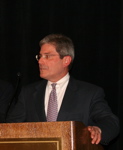
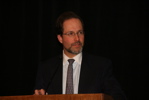
The Berkman Center gave its highest honor, an award for pro bono service, to Jeffrey Cunard and Bruce Keller of Debevoise & Plimpton. Two of the leading Internet lawyers in the world, Cunard and Keller were honored for their pro bono service as lawyers and educators. Over the past five years, despite their demanding private practice, Cunard and Keller have volunteered thousands of hours as classroom and clinical teachers at Harvard Law School. For several years, on a weekly basis during the term, they have flown to Cambridge from Washington and New York, respectively, to teach in person. They have co-authored, and continuously updated, the leading treatise on copyright law in a digital era.
The awards presentation was the finale of the Berkman Center’s year-long, tenth anniversary celebration, Berkman@10, and marked the end of the Berkman@10 conference, a landmark event on “The Future of the Internet,” held on May 15 and 16, 2008, in Cambridge, MA.
About the Berkman Center
The Berkman Center for Internet & Society at Harvard University is proud to celebrate its tenth anniversary as a research program founded to explore cyberspace, share in its study, and help pioneer its development. Founded at Harvard Law School in 1997, through a generous gift from Jack N. and Lillian R. Berkman, the Center is now home to an ever-growing community of faculty, fellows, staff, and affiliates working on projects that span the broad range of intersections between cyberspace, technology, and society. More information can be found at http://cyber.law.harvard.edu.
Contacts
Berkman Center for Internet & Society
Lexie Koss, 617-384-9100, [email protected]
MideastYouth.com (Esra’a Al Shafei)
(+973) 39755-355, [email protected]
Rice University (Richard Baraniuk)
Jade Boyd, 713-348-6778, [email protected]
In an interview with Ethiopian Current Affairs Discussion Forum (ECADF) Sunday, a resident of Mekele said that food prices are skyrocketing in Tigray region except for party supporters. The elderly gentleman, whose house was confisicated by the Tigray region government, said that one quintal (100 kg) of teff in Mekele costs 900 birr, but Woyanne supporters are provided with food at much lower prices. Click here to listen the interview.
Ethiopians in Ottawa, Canada, are organizing a protest rally on May 23, 2008, to commemorate the fallen heroes of May 15 elections, and also to express opposition to the Ethiopia-Sudan secret boarder agreement. More in Amharic >>
A Resolution from the Public Meeting held in Dallas Fort-Worth in Commemoration of the Victims of the 2005 Ethiopian Election Aftermath
A coalition of major opposition party supporters, civic organizations and patriotic individuals held a meeting on May 17, 2008 in Dallas, TX at Radisson Hotel. After hearing presentations:
* On the memoriam of the victims who were murdered by Melesse’s Agazi forces for peacefully protesting against the stolen election of May 2005
* On the deteriorating human rights and political condition of the country
* On the growing economic hardship prevailing in the country that is driving the majority of our people in to ever growing abject poverty and hidden famine
* On the currently revealed land ceded to Sudan from Ethiopia
The participants of the meeting have adopted the following resolutions:
1. The meeting reaffirms its commitment not to forget our fallen brothers and sisters and vowed to continue the struggle until the goal of establishing democratic Ethiopia is achieved.
2. The meeting also vowed to frustrate the existing ploy of the TPLF/EPDRF regime for dividing our people on the basis of ethnic and regional affiliations.
3. The meeting declares its awareness of the regime’s attempt to infiltrate the rank of the Ethiopian Diaspora through its paid agents, Embassy and Consulate officials. The objective of this attempt by the regime is to “bribe” some amongst us by promising land and property in Ethiopia to silence the growing voice of the Diaspora on behalf the Ethiopian people. The meeting declares that it will fight this attempt of the regime and will make sure that this will not succeed.
4. The participants of the meeting demand that the governments of the United States and England to stop aiding the dictatorial regime of Melesse for the sake of short term benefits. Instead it urges these governments to stand on the side of the Ethiopian people in their aspiration for democratic and stable Ethiopia.
5. The meeting calls upon all Ethiopians to protest vigorously against the recent land give-away of Ethiopian land to the Sudan.
6. Finally, the participants of the meeting called upon all opposition forces, civic organizations and patriotic individuals to come together for a united struggle.
The meeting ended after adopting this resolution unanimously.
DALLAS & FORT-WORTH OPPOSITION FORCES COORDINATING COMMITTEE FOR COMMOMORATION OF THE MAY 2005 ELECTION
Ato Temesgen Zewdie, an executive committee member of the Union for Democracy and Justice (UDJ), has asked the Woyanne rubber stamp parliament to investigate the reported give away of Ethiopian land to Sudan by the Meles regime. In a letter to the parliament, Ato Temesgen, who is the parliamentary leader of UDJ, said that currently Sudanese soldiers are occupying several Ethiopian towns and villages, including those located in Methema, Tach Armacheo, and Quara woredas (districts). The letter also states that Sudanese troops have recently killed 17 Ethiopians in these woredas. Another group of 20 members of parliament is circulating similar letters asking discussion on the Ethiopia-Sudan border agreement. Read more in Amharic below.
————————
Source: Reporter
ሱዳን ወሰን ጥሳ በመግባቷ ፓርላማው እንዲወያይ ተጠየቀ

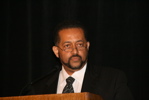 A Berkman Award was given to Noah Samara, the Ethiopian satellite expert who founded
  A Berkman Award went to Esra’a Al Shafei of Bahrain, the 21-year-old director of student-owned
 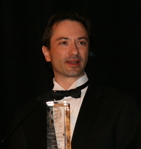 Engineering professor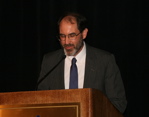
 The Berkman Center gave its highest honor, an award for pro bono service, to Jeffrey Cunard and Bruce Keller of