OSAKA – Tariku Bekele of Ethiopia, the younger brother of Kenenisa, and Eliud Kipchoge of Kenya, won their respective heats of the 5000m as the 11th IAAF World Championships finished its sixth day at Nagai Stadium.
Bekele recorded an improbably slow time of 13:46.42 to win his heat off of a very slow initial pace. Indeed, there was such a large group of athletes still together at the bell that Algeria’s Khoudir Aggoune, Kenya’s Isaac Songok and Joseph Ebuya, and Morocco’s Ahmed Baday were unable to advance to Sunday’s final despite finishing within two seconds of Bekele. Only the top five from each heat automatically qualified for the final.
“I was worried about the weather,” Bekele said in a statement released by the Ethiopian Athletics Federation. “It was very difficult out there and I hope to do well in the final.”
Jesus Espana of Spain, Bernard Lagat of the USA, Hicham Bellani of Morocco, and Moses Kipsiro of Uganda were the other qualifiers from the first heat. Lagat won the gold medal in the 1500m last night. He chose to celebrate with an ice bath and a pizza before getting to bed to rest up for tonight’s race. The slow pace definitely saved him precious energy.
Kipchoge won the second race in 13:33.37, so all the time qualifiers came from the second heat. It was American Matt Tegenkamp who broke the race open by picking up the pace with two laps to go, banging out a 60.5 second circuit. At the bell, five men were away: Kipchoge, Tegenkamp, Abreham Cherkos Feleke of Ethiopia, Craig Mottram of Australia and Adam Goucher of the United States. Kipchoge and Cherkos essentially finished together, with Tegenkamp fewer than two seconds back, qualifying easily.
“It was nice to get out and run,” said Tegenkamp of his decision to take the lead with two laps to go. “I got perfect positioning.”
Mottram eased up before the line, assured of a qualifying spot, but Goucher had to continue to dig to the finish line. He lost concentration before the bell and momentarily thought he was about to finish the race a lap early.
“I don’t know the hell my problem was,” said a frustrated Goucher who was passed by three rivals in the last 200m. Tegenkamp was quick to remind his teammate that they had both made the final. With Lagat advancing from the first heat, the United States put three men in the 5000m final for the first time in the history of these championships.
“It’s about time,” said Tegenkamp with pride in his voice.
As for Mottram, the bronze medalist from Helsinki, he called his heat “a step in the right direction.”
Defending champion Benjamin Limo of Kenya finished seventh and advanced on time. Ethiopia’s Sileshi Sihine decided not to run as he was still feeling fatigued from Monday’s 10,000m final where he earned the silver medal.
On September 15, The Abyssinian Baptist Church in the City of New York, one of the oldest African-American institutions impacting America, and the nation’s first mega-church, continues its 18-month bicentennial celebration, Abyssinian 200: True to Our God, True to Our Native Land, by returning to its roots – Ethiopia.The primary purpose of the first-ever, two-week pilgrimage is to embark on a spiritual and missionary journey that will reconnect Abyssinian with the people and country for which it is named and strengthen ecclesiastical ties with the nation that is its sacred land.This momentous journey is a core component of a series of major events and activities commemorating the church’s 200th anniversary in November 2008.
In 1808, after refusing to participate in segregated worship services at a lower Manhattan church, a group of free Africans in America and Ethiopian sea merchants formed their own church, naming it Abyssinian Baptist Church in honor of Abyssinia, the former name of Ethiopia. In 1954, former Ethiopian Emperor, Haile Selassie I, presented Abyssinian’s pastor, Rev. Adam Clayton Powell, Jr., with the Ethiopian Coptic Cross.This cross has since become the official symbol of the church.
“As we celebrate 200 years of Abyssinian Baptist Church as an empowering center of spiritual and community transformation, we are eager to embark upon this befitting journey to our native land of Ethiopia, especially during this time of the Ethiopian Millennium,” said Rev. Dr. Calvin O. Butts, III, pastor of Abyssinian. “The African-American church has long been a galvanizing force in the active building of beloved communities in the United States. We seek to further advance that cause as part of our global mission — gaining first-hand knowledge during our pilgrimage that will aid in our consideration of a viable, long-term course of action supporting the people and progress of Ethiopia.”
During the trip, Dr. Butts and members of the 150-person Abyssinian pilgrimage will assess economic, health, education and social needs of the Ethiopian people to determine how The Abyssinian Baptist Church can specifically apply its resources to encourage advancement in the country. The delegation will also experience the history and culture of Ethiopia through a five-city tour during which they will visit, among other places, hospitals, schools, World Heritage sites and the Holy City of Axum, the presumed location of the Ark of the Covenant – a sacred container holding the Ten Commandments stone tablets.
In addition to exploring opportunities for Abyssinian to translate its successful development models to Ethiopian communities, Rev. Butts will also draw upon his roles as Chairman of Abyssinian Development Corporation; President of SUNY College at Old Westbury; Chairman of the National Black Leadership Commission on AIDS (NBLCA); and Chairman of the Board of North General Hospital in Harlem, to address issues of poverty and economic revitalization, education, health/ HIV/AIDS.
Abyssinian’s Pilgrimage to Ethiopia
He will also participate in an economic development and Diaspora support roundtable discussion with Professor Abiyi Ford of Addis Ababa University (AAU), as well as explore the development of an exchange and articulation agreement with AAU.
Rev. Butts plans to meet with Ethiopian dignitaries and leaders including Donald Yamamoto, U.S. Ambassador; His Holiness, Abuna Paulos; Seyoum Mesfin, Minister of Foreign Affairs; Tadelech Dalecho Dando, Minister of Culture & Tourism; and Andreas Eshete, President of Addis Ababa University, among others.
In addition to the Ethiopia pilgrimage, featured Abyssinian 200 celebration activities include: a first-time collaboration featuring Jazz at Lincoln Center with Wynton Marsalis, Dr. Butts and a mass choir premiering Marsalis’ penned mass for the bicentennial; a theme song composed by legendary duo Ashford & Simpson; a published book featuring contributions from Dr. Maya Angelou and Dr. Cornel West and co-authored by Drs. Quinton H. Dixie, Genna Rae McNeil, and Houston Roberson; a Schomburg Center for Research in Black Culture exhibition tracing Abyssinian’s significant role in the history of New York City; a partnership with StoryCorps, the national oral-history project (in partnership with the Library of Congress) to document and preserve the stories of Abyssinian for future generations; a formal White-Tie gala for elected officials, dignitaries, business leaders, and the entertainment industry in recognition of Abyssinian’s significance to the global community; a formal Black-Tie event and auction in New York City for the Abyssinian congregation and community supporters; a music CD featuring the Abyssinian Choirs and special guests; and a specially commissioned abstract painting titled “Til Now We Stand at Last” by Harlem artist Dianne Smith.
Abyssinian is one of the oldest African-American institutions impacting the cultural landscape of America, the oldest African-American Baptist church in New York State, and the nation’s first mega-church. Since its founding in 1808, Abyssinian’s dynamic leadership – including Reverend Adam Clayton Powell Sr., Congressman, Rev. Adam Clayton Powell Jr. and Dr. Samuel DeWitt Proctor – have guided Abyssinian as an iconic champion of social justice for positive reform. Today, Rev. Dr. Calvin O. Butts, III leads the church and is dedicated to increasing community development initiatives, including homelessness, senior citizen and youth empowerment, cultural awareness, and ecumenical outreach. Abyssinian Development Corporation (ADC), founded within The Abyssinian Baptist Church, is a community-based not-for-profit organization responsible for more than $500 million in housing and commercial development in Harlem.
Last week it was Negussie Woldemariam of ‘Hod Fiker Radio’ who was told by Woyanne to take a hike. This week, Woyanne told Lidetu Ayalew of UEDP-Medhin to hit the road after evicting him and his friends from their office. Read more in Amharic below (download Amharic font here):
It is reported that Beyonce Knowles will not perform at Al Amoudi’s millennium party in Addis Ababa. Instead, the Black Eyed Peas band from the U.S. will perform, according to the organizers. The Black Eyed Peas web site has also posted the band’s planned event in Addis Ababa.
Reuters and other media had reported that Beyonce, Janet Jacksom and 50Cent would perform at the millennium party, but there is no explanation available yet as to why these singers pulled out.
At least two Ethiopian human rights advocacy groups, Tegbar and SCOEPP, had sent warnings to Beyonce and others not to come to Addis Ababa for the millennium, saying that Ethiopia today is not a place to party; “t is a place where the people are being massacred, tortured, raped, and terrorized.”
It is reported that Beyonce Knowles will not perform at Al Amoudi’s millennium party in Addis Ababa. Instead, the Black Eyed Peas band from the U.S. will perform, according to the organizers. The Black Eyed Peas web site has also posted the band’s planned event in Addis Ababa.
Reuters and other media had reported that Beyonce, Janet Jacksom and 50Cent would perform at the millennium party, but there is no explanation available yet as to why these singers pulled out.
At least two Ethiopian human rights advocacy groups, Tegbar and SCOEPP, had sent warnings to Beyonce and others not to come to Addis Ababa for the millennium, saying that Ethiopia today is not a place to party; “t is a place where the people are being massacred, tortured, raped, and terrorized.”

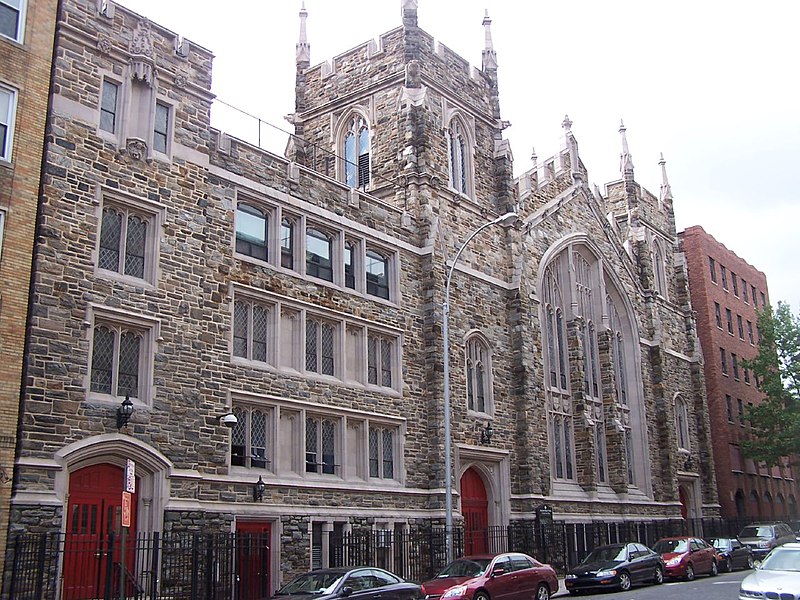 On September 15, The Abyssinian Baptist Church in the City of New York, one of the oldest African-American institutions impacting America, and the nation’s first mega-church, continues its 18-month bicentennial celebration,
  It is reported that Beyonce Knowles will not perform at Al Amoudi’s millennium party in Addis Ababa. Instead, the Black Eyed Peas band from the U.S. will perform, according to the organizers. The