Skip to content

Year: 2012

Journalism is Not Terrorism: EFF

Electronic Freedom Foundation Calling on Ethiopia to Free Eskinder Nega

By Rainey Reitman | Electronic Freedom Foundation

November 19, 2012

Eskinder Nega, an award-winning journalist who has been imprisoned for over a year, appeared briefly in court to appeal the terrorism charges levied against him. Eskinder has unwaveringly denied the charges, maintaining that blogging about human rights abuses and democracy is not a form of terrorism. In July, Eskinder was sentenced to 18 years in prison for his reporting. In court this week, his appeal was cut short: according to one report EFF received from partners working on his case, Eskinder was not allowed to read his defense statement and the appeal was rescheduled to November 22. We are continuing to seek confirmation about the status of the trial. For now, we’re asking concerned individuals to join us in calling on the Ethiopian government to live up to the promises in their own Constitution and free Eskinder Nega.

While many journalists have either fled Ethiopia or been silenced by repressive policies, Eskinder Nega has become a national symbol for press freedom. Educated in the United States in the 1980s, Nega studied political science and economics at American University. He subsequently returned to Ethiopia where he has worked as a journalist for over twenty years. Nega founded 4 newspapers –all of which were shut down by the Ethiopian government –and has been jailed 9 times in the last two decades for his outspoken articles.

Upon his release from prison in 2007, Nega’s journalism license was revoked and he was banned from working on newspapers. He immediately turned to the Internet and began using blogs to speak out. Some of his work has been published on Ethiomedia, a blog that is inaccessible from inside Ethiopia.

Four years later in 2011, Nega was the recipient of the PEN/Barbara Goldsmith Freedom to Write Award. Peter Godwin, President on the PEN American Center, noted that Eskinder understood the risks of continuing to speak out publicly:

He went back into the breach knowing full well what the risks were for doing so. He had a number of other options. He grew up in the DC area. He could have left the country, but he chose to stay. He’d been arrested 6 or 7 times before, he’s had newspapers closed down. He’s really been hounded by the Ethiopian regime.

Birtukan Midekssa, a former federal judge and opposition leader in Ethiopia, says Nega has been unwavering even in the face of death threats from the police. Midekssa said: “At some point, they told him that, you know, they are tired of arresting him. And they said, this time around, we are not going to arrest you, we are going to kill you. Better stop it. But he can’t, you know. He can’t stop. That’s him.”

Already targeted by police, Eskinder Nega drew even more ire from the Ethiopian government when he continued to blog about the Arab Spring uprisings. Through articles like As Egypt and Yemen protest, wither Ethiopia’s opposition? and Egypt’s and General Tsadkan’s lesson to Ethiopian Generals, Nega discussed the implications of the pro-democracy movements in North Africa and the Middle East on Ethiopia. Nega was picked up by the police in February 2011. According to a harrowing account Nega wrote afterwards, he was interrogated at length about his journalism, and the police threatened to seek retribution against him if protests broke out in Ethiopia.

A few months later, he was arrested again. This time, Eskinder Nega was charged with terrorism.

Where are all the Newspapers? The Plight of Independent Press and Ethiopia’s Internet Access

To understand the risk –and importance—of Nega’s work, one must first understand the status of independent media in Ethiopia. The Ethiopian Constitution promises to uphold freedom of expression, stating: “Everyone has the right to freedom of expression without any interference. This right shall include freedom to seek, receive and impart information and ideas of all kinds, regardless of frontiers, either orally, in writing or in print, in the form of art, or through any media of his choice.” But Ethiopia has a dark history of shutting down newspapers and imprisoning journalists.

Immediately prior to the 1990s, there was no independent media to speak of in Ethiopia as the country struggled under a Communist regime and devastating famines. The early 1990s saw major political change in the country. Communism was ousted, a bicameral legislature and judicial system were created, and a new Constitution was written and enacted. Meles Zenawi, who would prove himself deeply aligned with U.S. interests, governed—initially as President, then as Prime Minister. While in some way Zenawi helped Ethiopia to recover after many difficult years of conflict and depravation, his government was marked by an intractable disrespect for human rights and press freedom.

In 1992, Ethiopia issued a Press Proclamation that, in addition to other restrictions on free expression, gave the government the ability to shut down publications that printed “false” information. Ethiopia became one of the leading countries in imprisoning journalists during the 1990s, trailing only Cuba and China.

In the lead up to the 2005 election, there was a brief period of improved journalistic freedom in Ethiopia. However, the aftermath of the controversial election brought a severe crack down on independent media. Even as clashes between government troops and protesters left dozens of civilians dead, law enforcement began a witch-hunt for journalists. Dozens of journalists were arrested and charged with serious crimes such as treason and even genocide. Some of these journalists faced decades in prison or even the death sentence.

The Committee to Protect Journalists described the crackdown:

Along with issuing its “wanted lists,” the government raided newsrooms, blocked newspapers from publishing, and expelled two foreign reporters, including a long-serving Associated Press correspondent. About a dozen exiled Ethiopian journalists were charged in absentia with treason. The U.S. government-funded Voice of America and Germany’s Deutsche Welle, which broadcast radio programs into Ethiopia in local languages, were targeted by smear campaigns in state media, endangering their local correspondents…Eight newspapers were shut as a result of criminal indictments and the jailing of their top journalists.

Many of the journalists who were not arrested fled the country or stopped reporting. The few newspapers that survived the purge increased their self-censorship.

Eskinder and his then-pregnant wife, Serkalem Fasil, a newspaper publisher, were both arrested during the 2005 crackdown on dissent. They each spent over a year in prison.

In Ethiopia today, journalism is still a dangerous occupation. In July 2009, the Ethiopian parliament passed the Anti-Terror Proclamation, a sweeping piece of “anti-terrorism” legislation that’s been used to imprison journalists and political dissidents. Amnesty International researcher Claire Beston, who was expelled from Ethiopia in August of last year, has criticized the application of the law, noting: “Since the law has been introduced, it’s been used more to prosecute opposition members and journalists than persons who might be committing so-called terrorist activities.”

Eskinder Nega criticized the anti-terrorism law just before he was arrested for violating it. In the article, Eskinder pointed to Debebe Eshetu, a famous actor, whose imprisonment under the anti-terrorism law Eskinder said “defies logic.”

The problems with press freedom in Ethiopia are compounded because the majority of the population can’t get to the open Internet, which might otherwise give them access to international news outlets.

Part of this is due to difficulties in accessing the Internet at all. Internet penetration in Ethiopia is among the lowest in all of sub-Saharan Africa. According to Open Net Initiative’s 2009 report, the majority of Internet access in the country occurs in Internet café, most of which are in the capital city. These cafes provide slow and unreliable service. As Nega noted in 2011, Internet access in Ethiopia is slow and cumbersome to use: “It is hard to sign in and out of a simple email window. Fast broadband Internet gave birth to the North African revolution, and now the revolution-phobic EPRDF-led Ethiopian government [Ethiopian People’s Revolutionary Democratic Front] is struggling against fast internet access.”

But even Ethiopians who can get online often can’t reach independent, international news. The only telecommunications service provider for all of Ethiopia is the state-owned Ethiopian Telecommunications Corporation (Ethio-Telecom), which heavily censors access to the open Internet. Tests conducted by the Open Net Initiative in September 2012 showed that online political and news sites are heavily blocked within the country.

In June, EFF reported on recent increases in the censorship and surveillance practices in Ethiopia. Ethio-Telecom began deep packet inspection of all Internet traffic in the country, which engineers at the Tor Project discovered when Tor stopped working there in May of this year.

In the same month, the government of Ethiopia ratified the new Telecom Service Infringement Law. This law criminalizes online speech that may be construed as defamatory or terrorist, and holds the website or account owner liable even if the speech is posted as a comment by someone else on their website. Endalk, a prominent Ethiopian blogger, has wondered if this law could be “the most creative way of copying SOPA and PIPA.” The law also tries to squash competition of VOiP services and harshly punishes citizens for using or having in their possession any telecommunications equipment without prior permission from the government.

Through law and practice, through intimidation and arrest, the Ethiopian government has looked to choke off free expression at every corner. It is no wonder than Eskinder Nega is one of the few outspoken journalists still operating inside Ethiopia.

Eskinder’s Current Conditions

While we are unable to receive direct reports from Eskinder about his current physical conditions, our knowledge of the prison system in Ethiopia leaves us gravely concerned.

A country report about Ethiopia produced by the U.S. Department of State, noted:

Prison and pretrial detention center conditions remained harsh and in some cases life threatening. Severe overcrowding was common, especially in sleeping quarters. The government provided approximately eight birr ($0.46) per prisoner per day for food, water, and health care…Medical care was unreliable in federal prisons and almost nonexistent in regional prisons. Water shortages caused unhygienic conditions, and most prisons lacked appropriate sanitary facilities.

Wikileaks published a diplomatic cable that was called “Inside Ethiopia’s jails” that is far more graphic than the State Department’s annual report. The cable, based on reports from several recently released prisoners, detailed extreme deprivation, including:

“Abuses reported include being blindfolded and hung by the wrists for several hours, bound by chains and beaten, held in solitary confinement for several days to weeks or months, subjected to mental torture such as harassment and humiliation, forced to stand for over 16 hours, and having heavy objects hung from one’s genitalia (males).”

Even though the cables noted that much of the torture occurred in police station detentions, the threat of torture in the Kaliti Prison (where Eskinder is being held) is still possible. We are deeply concerned about the physical condition of Eskinder.

Freeing Eskinder Nega (and Helping All of Ethiopia’s Imprisoned Journalists)

Freeing Eskinder Nega will help preserve a vital voice for independent journalism in a country that hungers for access to truthful news coverage. It will also serve as inspiration for activists working to free other imprisoned journalists in this country.

The Ethiopian government has released journalists in the past—including Eskinder, several times. Earlier this year, it released and pardoned Swedish journalists Johan Persson and Martin Schibbye after substantial international pressure. And in August, Temesghen Desalegn, editor of a leading independent weekly newspaper in Ethiopia, was released and cleared of the criminal charges against him. So we know that activist efforts – including international pressure – can be persuasive to the Ethiopian government. If nothing else, continued international attention can help ensure Eskinder Nega’s safety as he continues to appeal his case.

Here’s how you can get involved:
• Sign PEN American Center’s petition, which automatically an email to Prime Minister Meles Zenawi and Minister of Justice Berhanu Hailu.
• Send appeals by mail to Ethiopian officials and their local Ethiopian Embassy or Consulate.
• Tell your friends on Facebook and Twitter. Suggested Tweet:
Journalism is not terrorism. Join @PenAmerican and @EFF in fighting to #FreeEskinder Nega. http://www.pen.org/page.php/prmID/2226

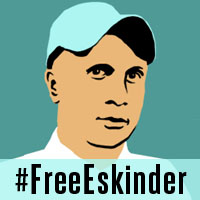
We’re also going to be changing the EFF Twitter profile image to show a #FreeEskinder banner leading up to Eskinder’s next appeal. We hope you’ll do the same to your own online accounts by using the image located here.

The United States has deep ties with Ethiopia, which is a major military alley for our country in sub-Saharan Africa. EFF is writing an open letter to the US State Department to urge them to speak out on Eskinder’s case to Hailemariam Desalegn, Ethiopia’s new Prime Minister. As the Washington Post stated, Eskinder’s case is “a source of tension and embarrassment to the Obama administration,” whose new Africa strategy makes democracy promotion the number one priority.

We’ll be watching Eskinder’s case closely in the coming months. Follow us on social media and sign up for our newsletter to stay up to date on the campaign.


Follow EFF

Journalism is not terrorism. Join @PenAmerican and @EFF in fighting to free #EskinderNega https://eff.org/r.a7qY

Ethiopian Review’s 2012 Top 5 Political Turkeys

Thanksgiving Holiday is this week and here is Ethiopian Review’s 2012 Top 5 Political Turkeys, as a warm up to the much anticipated Ethiopian Review’s 2012 Person of the Year, which will be announced around the end of December.

5. Aba Gebremedhin (formerly Abune Paulos) – accompanied his boss to hell.

4. Barack Obama – gives $3 billion to Ethiopia’s corrupt dictator while his country is burdened with a $17-trillion debt.

3. Mit Romney – couldn’t defeat the most incompetent president since Jimmy Carter.

2. Susan Rice – her lies and hubris finally caught up to her.

1. Meles Zenawi & Azeb Mesfin – good riddance finally. He died running scared and without enjoying his loot.

Your comments are welcomed.

Trekking in Ethiopia’s Semien Mountains

By Kraig Becker

Ethiopia is home to one of the more spectacular, yet lesser known, classic treks of the world. The Semien Mountains, found in the northern part of the country, offer amazing scenery, dizzying heights, and unique wildlife, with treks that can range anywhere from one to two weeks in length. Best of all, the trails tend to be remote and generally empty, providing solitude to travelers throughout the breathtaking landscapes.

The Semien range is quite rugged, with plenty of altitude. Many of the peaks rise above 11,000 feet, with the tallest, Ras Dashen, reaching 15,159 feet in height. The trails and campsites remain primitive, and there are few amenities to be had out in the Ethiopian wilds, but the mostly untouched backcountry offers deep gorges and unique rock formations, delivering stunning views to trekkers at every turn.

One of the more unique aspects of a Semien trek is that the trails wander through remote villages on a regular basis. This allows hikers the opportunity to visit with locals who live in the region and still maintain a simple lifestyle that has remained mostly unchanged for generations. The presence of these villages allows for cultural immersion, which is something that is often missing on similar treks in other parts of the world.

There is also plenty of wildlife to see on the trail as well, with Gelada Baboons being one of the highlights. The baboons make their homes amongst the rocky outcroppings of the Semien Mountains and rarely stray far from those protective spaces. Other animals in the area include the walia ibex, a species of mountain goats unique to the region, and the Ethiopian wolf, which resembles a red fox in most physical aspects.

For trekkers who have already covered the more well known treks of the world, such as the Inca Trail or the Annapurna Circuit, the Semien Mountains offer an isolated, little known escape that remains off the radar for many travelers. The incredible views, unique mountain villages, and interesting wildlife set it apart from just about any other hike, and will leave a lasting impression on anyone who makes the journey. (Source: Gadling.com)

Ethiopia: I Remember!

Never Again!

MA2On June 6-8 and November 1-4, 2005, following the Ethiopian parliamentary elections in May of that year, hundreds of citizens who protested the theft of that election were killed or seriously wounded by police and security personnel under the exclusive command and control of the late Meles Zenawi. An official Inquiry Commission established jointly by Meles Zenawi and the Ethiopian parliament documented that 193 unarmed men, women and children demonstrating in the streets and scores of other detainees held in a high security prison were intentionally shot and killed by police and security officials. An additional 763 were wounded.

The Commission completely exonerated the victims and pinned the entire blame on the police and paramilitary forces.  The Commission concluded, “There was no property destroyed [by protesters]. There was not a single protester who was armed with a gun or a hand grenade as reported by the government-controlled media that some of the protesters were armed with guns and bombs. [The shots fired by government forces] were not intended to disperse the crowd but to kill by targeting the head and chest of the protesters.”

[Important Note: The Commission’s list of 193 victims includes only those deaths that occured on June 6-8 and November 1-4, 2005, the specific dates the Commission was authorized to investigate. It is believed the Commission has an additional list of victims of extra-judicial killings by government security forces which it did not publicly report because the killings occured outside the dates the Commission was authorized to investigate.]

I remember…

Rebuma E. Ergata, 34, mason; Melesachew D. Alemnew, 16, student; Hadra S. Osman, 22, occup. unknown; Jafar S.  Ibrahim,28,  sm. business; Mekonnen, 17, occup. unknown; Woldesemayat, 27, unemployed; Beharu M. Demlew, occup. unknown; Fekade Negash, 25, mechanic; Abraham Yilma, 17, taxi; Yared B. Eshete, 23, sm. business; Kebede W. G. Hiwot, 17, student; Matios G. Filfilu, 14, student;Getnet A. Wedajo, 48, Sm. business; Endalkachew M. Hunde, 18, occup. unknown; Kasim A. Rashid, 21, mechanic; Imam A. Shewmoli, 22,  sm. business; Alye Y. Issa, 20, laborer; Samson N. Yakob, 23, pub. trspt.; Alebalew A. Abebe, 18, student; Beleyu B. Za, 18, trspt. asst.; Yusuf A. Jamal, 23, occup. student; Abraham S. W.  Agenehu, 23, trspt. asst.; Mohammed H. Beka, 45, farmer; Redela K. Awel, 19, taxi Assit., Habtamu A. Urgaa, 30, sm. Business.  

Dawit F. Tsegaye, 19, mechanic; Gezahegne M. Geremew, 15, student; Yonas A. Abera, 24, occup. unknown; Girma A. Wolde, 38, driver; W/o Desta U. Birru, 37, sm. business; Legese T. Feyisa, 60, mason; Tesfaye D. Bushra, 19, shoe repairman; Binyam D. Degefa, 18, unemployed; Million K. Robi, 32, trspt. asst.; Derege D. Dene, 24,  student; Nebiyu A. Haile, 16, student; Mitiku U. Mwalenda, 24, domestic worker; Anwar K. Surur, 22, sm. business; Niguse Wabegn, 36, domestic worker; Zulfa S. Hasen, 50, housewife; Washun Kebede, 16, student; Ermia F. Ketema, 20, student; 00428, 25, occup. unknown; 00429, 26, occup. unknown; 00430, 30, occup. unknown; Adissu Belachew, 25, occup. unknown; Demeke K. Abebe,uk, occup. unknown; 00432, 22, occup. unknown; 00450, 20, occup. unknown; 13903, 25, occup. unknown; 00435, 30, occup. unknown. 

13906, 25, occup. unknown; Temam Muktar, 25, occup. unknown; Beyne N. Beza, 25, occup. unknown; Wesen Asefa, 25, occup. unknown; Abebe Anteneh, 30, occup. unknow; Fekadu Haile, 25, occup. unknow; Elias Golte, uk, occup. unknown; Berhanu A. Werqa, uk, occup. unknown; Asehber A. Mekuria, uk, occup. unknown; Dawit F. Sema, uk, occup. unknown, Merhatsedk Sirak, 22, occup. unknown; Belete Gashawtena, uk, occup. unknown;  Behailu Tesfaye, 20, occup. unknown; 21760, 18, occup. unknown; 21523, 25, occup. unknown; 11657, 24, occup. unknown; 21520, 25, occup. unknown; 21781, 60, occup. unknown; Getachew Azeze, 45, occup. unknown; 21762, 75, occup. unknown; 11662,45, occup. unknown; 21763, 25, occup. unknown; 13087, 30, occup. unknown; 21571, 25, occup. unknown; 21761, 21, occup. unknown; 21569, 25, occup. unknown; 13088, 30,  occup. unknown; Endalkachew W. Gabriel, 27, occup. unknown.

Hailemariam Ambaye, 20, occup. unknown; Mebratu W. Zaudu,27, occup. unknown; Sintayehu E. Beyene, 14, occup. unknown; Tamiru Hailemichael, uk, occup. unknown; Admasu T. Abebe, 45, occup. unknown; Etenesh Yimam, 50, occup. unknown; Werqe Abebe, 19, occup. unknown; Fekadu Degefe, 27, occup. unknown Shemsu Kalid, 25, occup. unknown; Abduwahib Ahmedin, 30, occup. unknown; Takele Debele, 20, occup. unknown, Tadesse Feyisa,38,  occup. unknown; Solomon Tesfaye, 25, occup. unknown; Kitaw Werqu, 25, occup. unknown; Endalkachew Worqu, 25, occup. unknow; Desta A. Negash, 30, occup. unknown; Yilef Nega, 15, occup. unknown; Yohannes Haile, 20, occup. unknown; Behailu T. Berhanu, 30, occup. unknown; Mulu K. Soresa, 50, housewife, Teodros Gidey Hailu, 23, shoe salesman; Dejene Yilma Gebre, 18, store worker; Ougahun Woldegebriel, 18, student; Dereje Mamo Hasen, 27, carpenter; Regassa G. Feyisa, 55, laundry worker; Teodros Gebrewold, 28, private business. 

Mekonne D. G.Egziaber, 20, mechanic; Elias G. Giorgis, 23, student; Abram A. Mekonnen, 21, laborer; Tiruwerq G.Tsadik, 41, housewife; Henok H. Mekonnen; 28, occup. unknown; Getu S. Mereta, 24, occup. unknown;W/o Kibnesh Meke Tadesse, 52, occup. unknown; Messay A. Sitotaw, 29, private business; Mulualem N. Weyisa, 15, Ayalsew Mamo, 23, occup. unknown; Sintayehu Melese, 24, laborer;  W/o Tsedale A. Birra, 50, housewife; Abayneh Sara Sede, 35, tailor; Fikremariam K. Telila, 18, chauffer; Alemayehu Gerba, 26, occup. unknown; George G. Abebe,36, private trspt.; Habtamu Zegeye Tola, 16, student; Mitiku Z. G. Selassie, 24, student; Tezazu W. Mekruia, 24, private business; Fikadu A. Dalige, 36,  tailor; Shewaga B. W.Giorgis, 38, laborer; Alemayehu E. Zewde, 32, textile worker; Zelalem K. G.Tsadik, 31, taxi driver; Mekoya M. Tadesse, 19, student; Hayleye G. Hussien, 19, student; W/o Fiseha T. G.Tsadik, 23, police employee; Wegayehu Z. Argaw, 26, unemployed.  

Melaku M. Kebede, 19, occup. unknown; Abayneh D. Orra, 25, tailor; W/o Abebch B. Holetu, 50, housewife;  Demeke A. Jenbere, 30, farmer; Kinde M. Weresu, 22, unemployed; Endale A. G.Medhin, 23, private business; Alemayehu T. Wolde,24, teacher; Bisrat T. Demisse, 24, car importer; Mesfin H. Giorgis, 23, private business, Welio H. Dari, 18, private business, Behailu G. G.Medhin, 20, private business; Siraj Nuri Sayed, 18, student; Iyob G.Medhin, 25, student; Daniel W. Mulugeta,25, laborer; Teodros K. Degefa,25, shoe factory worker; Gashaw T. Mulugeta, 24, student; Kebede B. Orke, 22, student; Lechisa K. Fatasa, 21, student; Jagama B. Besha,20, student; Debela O. Guta, 15, student; Melaku T. Feyisa, 16, student; W/o Elfnesh Tekle, 45, occup. unknown; Hassen Dula, 64, occup. unknown; Hussien Hassen Dula, 25, occup. unknown; Dejene Demisse,15, occup. unknown; Name unknown; Name unknown;  Name unknown; Zemedkun Agdew, 18, occup. unknown;  Getachew A. Terefe, 16, occup. unknown; Delelegn K. Alemu, 20, occup. unknown; Yusef M. Oumer,20, occup. unknown.

Mekruria T. Tebedge, 22, occup. unknown; Bademe M. Teshamahu, 20, occup. unknown; Ambaw Getahun,38, occup. unknown; Teshome A. Kidane, 65, health worker; Yosef M. Regassa, uk, occup. unknown; Abiyu Negussie, uk, occup. uk; Tadele S. Behaga,uk, occup. unknown; Efrem T. Shafi,uk, occup. unknown; Abebe H. Hama, uk, occup. unknown; Gebre Molla, uk, occup. unknown; Seydeen Nurudeen, uk, occup. unknown; Eneyew G. Tsegaye, 32, trspt. asst; Abdurahman H. Ferej, 32, wood worker; Ambaw L. Bitul, 60, leather factory worker; Abdulmenan Hussien, 28, private business; Jigsa T. Setegn, 18, student; Asefa A. Negassa, 33, carpenter; Ketema K. Unko, 23, tailor; Kibret E. Elfneh, 48, private guard; Iyob G. Zemedkun, 24, private business; Tesfaye B. Megesha,15, private business; Capt. Debesa S. Tolosa, 58, private business;Tinsae M. Zegeye,14,  tailor;Kidana G. Shukrow,25, laborer;Andualem Shibelew, 16, student; Adissu D. Tesfahun, 19, private business; Kassa Beyene Yror,28, clothes sales; Yitagesu Sisay,22, occup. unknown; Unknown, 22, occup. unknown.

Government security officers killed by friendly fire (security officers killed in crossfire):  Nega Gebre, Jebena Desalegn,  Mulita Irko, Yohannes Solomon, Ashenafi Desalegn, Feyia Gebremenfes.

List of prisoners massacred while trapped in their cells at Kaliti Prison on November 2, 2005:

1. Teyib Shemsu Mohammed, age unknown, male, charged with instigating armed insurrection. 2. Sali Kebede, age unknown, male, no charges indicated. 3. Sefiw Endrias Tafesse Woreda, age unknown, male, charged with rape. 4. Zegeye Tenkolu Belay, age unknown, male, charged with robbery. 5. Biyadgligne Tamene, age unknown, male, charges unknown. 6. Gebre Mesfin Dagne, age unknown, male, charges unknown. 7. Bekele Abraham Taye, age unknown, male, charged with hooliganism. 8. Abesha Guta Mola, age unknown, male, charges unknown. 9. Kurfa Melka Telila, convicted of making threats.

10.Begashaw Terefe Gudeta, age unknown, male, charged with brawling [breach of peace]. 11. Abdulwehab Ahmedin, age unknown, male, charged with robbery. 12. Tesfaye Abiy Mulugeta, age unknown, male, charged with instigating armed insurrection. 13. Adane Bireda, age unknown, male, charged with murder. 14. Yirdaw Kersema, age unknown, male, no charges indicated. 15. Balcha Alemu Regassa, age unknown, male, charged with robbery. 16. Abush Belew Wodajo, age unknown, male, no charges indicated. 17. Waleligne Tamire Belay, age unknown, male, charged with rape. 18. Cherinet Haile Tolla, age unknown, male, convicted of robbery. 19. Temam Shemsu Gole, age unknown, male, no charges indicated.

20. Gebeyehu Bekele Alene, age unknown, male, no charges indicated. 21. Daniel Taye Leku, age unknown, male, no charges indicated. 22. Mohammed Tuji Kene, age unknown, male, no charges indicated. 23. Abdu Nejib Nur, age unknown, male, no charges indicated. 24. Yemataw Serbelo, charged with rape. 25. Fikru Natna’el Sewneh, age unknown, male, charged with making threats. 26. Munir Kelil Adem, age unknown, male, charged with hooliganism. 27. Haimanot Bedlu Teshome, age unknown, male, convicted of infringement. 28. Tesfaye Kibrom Tekne, age unknown, male, charged with robbery. 29. Workneh Teferra Hunde, age unknown, male, no charges indicated.

30. Sisay Mitiku Hunegne, charged with fraud. 31. Muluneh Aynalem Mamo, age unknown, male, no charges indicated. 32. Taddese Rufe Yeneneh, charged with making threats. 33. Anteneh Beyecha Qebeta, age unknown, male, charged with instigating armed insurrection. 34. Zerihun Meresa, age unknown, male, convicted of damage to property. 35. Wogayehu Zerihun Argaw, charged with robbery. 36. Bekelkay Tamiru,  age unknown, male, no charges indicated. 37. Yeraswork Anteneh, age unknown, male, charged with fraud. 38. Bazezew Berhanu, age unknown, male, charged with engaging in homosexual act. 39. Solomon Iyob Guta, age unknown, male, charged with rape.

40. Asayu Mitiku Arage, age unknown, male, charged with making threats. 41. Game Hailu Zeye, age unknown, male, charged with brawling [public disorder] 42. Maru Enawgaw Dinbere, age unknown, male, charged with rape. 43. Ejigu Minale, age unknown, male, charged with attempted murder. 44. Hailu Bosne Habib, age unknown, male, convicted of providing sanctuary. 45. Tilahun Meseret, age unknown, male, no charges indicated. 46. Negusse Belayneh, age unknown, male, charged with robbery. 47. Ashenafi Abebaw, age unknown, male, no charges indicated. 48. Feleke Dinke, age unknown, male, no charges indicated. 49. Jenbere Dinkineh Bilew, age unknown, male, charged with brawling [public disorder].

50. Tolesa Worku Debebe, age unknown, male, charged with robbery. 51. Mekasha Belayneh Tamiru, age unknown, male, charged with hooliganism. 52. Yifru Aderaw, age unknown, male, no charges indicated. 53. Fantahun Dagne, age unknown, male, no charges indicated. 54. Tibebe Wakene Tufa, age unknown, male, charged with instigating armed insurrection. 55. Solomon Gebre Amlak, age unknown, male, charged with hooliganism. 56. Banjaw Chuchu Kassahun, age unknown, male, charged with robbery. 57. Demeke Abeje, age unknown, male, charged with attempted murder. 58. Endale Ewnetu Mengiste, age unknown, male, no charges indicated. 59. Alemayehu Garba, age unknown, male, detained in connection with Addis Ababa University student  demonstration in 2004.  60. Morkota Edosa, age unknown, male, no charges indicated.

For the RecordThere is a certified list of at least 237 police and security officers known to be directly involved in these massacres. They should all be brought to justice immediately!

I remember Yenesew Gebre 

yeOn 11/11/11, Yenesew Gebre, a 29 year-old Ethiopian school teacher and human rights activist set himself ablaze outside a public meeting hall in the town of Tarcha located in Dawro Zone in Southern Ethiopia. He died three days later from his injuries.  Before torching himself, Yenesew told a gathered  crowd outside of a meeting hall, “In a country where there is no justice and no fair administration, where human rights are not respected, I will sacrifice myself so that these young people will be set free.”

I remember…

“I remember the killers, I remember the victims, even as I struggle to invent a thousand and one reasons to hope.  Because I remember, I despair. Because I remember, I have the duty to reject despair. Hope is possible beyond despair.”

Elie Wiesel, Holocaust Survivor and Nobel Peace Laureate

WE SHOULD ALL REMEMBER! WE SHOULD NEVER FORGET!

NEVER AGAIN!  

For a complete list of victims released by the official Inquiry Commission investigating the post-2005 election violence, see:   http://www.abbaymedia.com/pdf/list_of_people_shot.pdf 

For additional source of data on massacre victims, including prisoners, see Testimony of Yared Hailemariam, Ethiopian Human Rights Defender,“CRIME AGAINST HUMANITY IN ETHIOPIA: THE ADDIS ABABA MASSACRES OF JUNE AND NOVEMBER 2005” before the EXTRAORDINARY JOINT COMMITTEE MEETING THE EUROPEAN PARLIAMENT COMMITTEES ON DEVELOPMENT AND FOREIGN AFFAIRS, AND SUB-COMMITTEE ON HUMAN RIGHTS May 15, 2006.

The Real Story of Thanksgiving

As Ethiopian-Americans join all Americans in celebrating Thanksgiving this week, here is an interesting perspective by radio host Rush Limbaugh on one of America’s biggest holidays:

BEGIN TRANSCRIPT
RUSH: Time now, ladies and gentlemen, for The Real Story of Thanksgiving, as written by I — by me — in my second book, See, I Told You So. It’s page 70 in the hardcover version. “On August 1, 1620, the Mayflower set sail. It carried a total of 102 passengers, including forty Pilgrims led by William Bradford. On the journey, Bradford set up an agreement, a contract, that established just and equal laws for all members of the new community, irrespective of their religious beliefs. Where did the revolutionary ideas expressed in the Mayflower Compact come from? From the Bible. The Pilgrims were a people completely steeped in the lessons of the Old and New Testaments. They looked to the ancient Israelites for their example. And, because of the biblical precedents set forth in Scripture, they never doubted that their experiment would work.”

Now, you know the usual story of Thanksgiving: They landed. They had no clue where they were, no idea how to feed themselves. The Indians came out, showed ’em how to pop popcorn, fed ’em turkey, saved ’em basically — and then white European settlers after that basically wiped out the Indian population. It’s a horrible example. Not only is that not true, here is the part that’s been omitted from what is still today taught as the traditional Thanksgiving story in many schools. “The original contract the Pilgrims had entered into with their merchant-sponsors in London called for everything they produced to go into a common store,’ when they got here, ‘and each member of the community was entitled to one common share. All of the land they cleared and the houses they built belong to the community as well.

“They were going to distribute it equally. All of the land they cleared and the houses they built belonged to the community as well. … [William] Bradford, who had become the new governor of the colony, recognized that this form of collectivism was as costly and destructive to the Pilgrims as that first harsh winter, which had taken so many lives. He decided to take bold action. Bradford assigned a plot of land to each family to work and manage, thus turning loose the power of the marketplace. … Long before Karl Marx was even born, the Pilgrims had discovered and experimented with what could only be described as socialism,’ and it had failed” miserably because when every one put things in the common store, some people didn’t have to put things in for there to be, people that didn’t produce anything were taking things out, and it caused resentment just as it does today. So Bradford had to change it.

“What Bradford and his community found was that the most creative and industrious people had no incentive to work any harder than anyone else, unless they could utilize the power of personal motivation! But while most of the rest of the world has been experimenting with socialism for well over a hundred years – trying to refine it, perfect it, and re-invent it – the Pilgrims decided early on to scrap it permanently. What Bradford wrote about this social experiment should be in every schoolchild’s history lesson. If it were, we might prevent much needless suffering,” that happens today and will happen “in the future. ‘The experience that we had in this common course and condition, tried sundry years…that by taking away property, and bringing community into a common wealth, would make them happy and flourishing – as if they were wiser than God,’ Bradford wrote.

“‘For this community (so far as it was) was found to breed much confusion and discontent, and retard much employment that would have been to their benefit and comfort. For young men that were most able and fit for labor and service did repine that they should spend their time and strength to work for other men’s wives and children without [being paid] that was thought injustice.’ … The Pilgrims found that people could not be expected to do their best work without incentive. So what did Bradford’s community try next? They unharnessed the power of good old free enterprise by invoking the undergirding capitalistic principle of private property. Every family was assigned its own plot of land to work and permitted to market its own crops and products. And what was the result?”

Here’s what Bradford wrote, the governor of the Massachusetts colony. “‘This had very good success,’ wrote Bradford, ‘for it made all hands industrious, so as much more corn was planted than otherwise would have been.’ Bradford doesn’t sound like much of a Clintonite, does he?” or an Obamaite, if I can update it. “Is it possible that supply-side economics could have existed before the 1980s? … Anyway, the pilgrims found “In no time, the Pilgrims found they had more food than they could eat themselves. … So they set up trading posts and exchanged goods with the Indians. The profits allowed them to pay off their debts to the merchants in London. And the success and prosperity of the Plymouth settlement attracted more Europeans and began what came to be known as the ‘Great Puritan Migration.'”

Very few people have heard this story or have had it taught to them — and the “thanks” was to God for showing them the way. In later parts of the chapter, I quote John Adams and George Washington on their reminisces and their thoughts on the first Thanksgiving and the notion it was thanks to God. It was an entirely different story than is being taught in the schools. It’s been muddied down, watered down all these years — and now it’s been hijacked by the multicultural community — to the point that the story of Thanksgiving is the Pilgrims were a bunch of incompetents and were saved only by the goodness of the Indians, who then were wiped out. And that’s what kids are being taught today — ’cause, of course, you can’t mention the Bible in school, and that’s fundamental to the real story of Thanksgiving.

Ethiopian-Americans protest persecution of Muslims in Ethiopia

Washington, DC,  July 16, 2012.

Muslims and Christians of Ethiopian origin came out in large numbers to protest against the Ethiopian authorities’ harassment, arrest, torture and killing of Ethiopian Muslims.  The event was organized by the Washington-based First Hijrah Foundation.

Click here for a video of the demonstrations