While many of their peers are wiling away their hours playing video games and chatting on MySpace, Eli Ezra and his band are holed up in a recording studio in Kiryat Nordo in Netanya, Israel. There, amid the sound-mixing boards and microphones, they sing about racism, poverty and violence, for what they hope will become their first album.
Ezra, 18, is the lead singer of Café Shachor Hazak, a teenage hip-hop band that has been turning heads in Israel. Since forming in 2006, the group has toured around the country and appeared on “A Star Is Born,” Israel’s version of “American Idol.”
The band is currently touring the United States, and had a stopover for performances in the Bay Area in early May.
All members of Café Shachor Hazak (Strong Black Coffee in English) are Ethiopian Jews either born in Israel or brought there during one of the three airlifts Israel made between 1984 and 1991. Ezra, who was 2 years old when he immigrated with his family, grew up in Netanya and turned to music at an early age.
Spending time at a local community center, Ezra and his friends Moshe, Elak, Uri and Aviram, who today make up the band, started taking classes in music.
There, they learned how not only to write songs, but also to record them on professional studio equipment, much of it donated by Israeli cell phone company Cellcom.
That led to gigs around the country and collaborations with Israeli musicians such as Hadag Nahash and Eli Luzon.
“I hope that our music will be spread all over,” Ezra said in a recent telephone interview.
“We want to pass our message to people who can listen to us and make changes in themselves and the world.”
The promoters hope that Café Shachor Hazak’s Bay Area visit inspires and educates local teens about Israel and breaks down stereotypes about the country’s music and people.
“We want to talk about Israel not as a myth, but as a place that is real and struggling with important issues,” said Ilan Vitemberg, director of the Israel Education Initiative, which helped to sponsor the band’s Bay Area visit.
“We’re facing an uphill battle as Israel runs the risk of becoming less and less relevant to young Jews in the U.S.”
Because members of Café Shachor Hazak are all 17 and 18 years old, they are the perfect cultural ambassadors to carry this message to American youth. Clad in baggy jeans and baseball caps turned backward, they sing about going to school, the mall, fitting in — issues other teens can relate to.
Singing in Hebrew, English and Amharic, an Ethiopian language, the group also tackles adult themes, such as in “A Moment of Quiet,” a song about suicide bombers, poverty and unemployment.
Another is a version of famous Israeli singer Ofra Haza’s “Hand in Hand” that expresses hope for peace and coexistence between Jews and Palestinians.
“They write about issues that are an integral part of their life,” said Yarden Schneider, co-founder of Taste of Israel, another organization behind the band’s Bay Area visit. “They sing about difficulties, but each of their songs encourages hope, love and understanding. Their appeal is that they can see beyond the conflict and stick to their dreams.”
Another topic the group sings about is growing up straddling two cultures. There are more than 90,000 Ethiopian Jews in Israel, a community that, as a whole, has had a difficult time assimilating into Israeli society. Most adults lacked an education — many were illiterate upon arriving in Israel — and have struggled with learning Hebrew, according to the Israeli Central Bureau of Statistics. They also have lower incomes than most other immigrants and are more likely to live in impoverished communities where they are segregated from other Israelis.
Despite the problems, the young generation — a whopping 40 percent of Ethiopians in Israel are under 15 years old — is imbued by a sense of hope. Many, like Ezra, have opted to do Nahal, a yearlong community service project, instead of going to the army, and are more prepared for jobs in a modern economy than their parents.
Their Bay Area hosts hope that American audiences will be inspired by the group’s optimism and energy and make more of an effort to connect to their Israeli counterparts.
Says Schneider: “They love their home, and are true leaders in the sense that they have the courage and talent to address difficult issues in order to better their environment in service of their community … And that is a great force.”
By Karina Ioffee, Jewish News Weekly

Ethiopia’s famed Axum obelisk is to be reinstalled at its original site next month, 70 years after the 1,700-year-old treasure was removed by Italian troops, UNESCO said on Thursday.
The UN Educational, Scientific, and Cultural Organisation (UNESCO) has overseen a multi-million-dollar operation to restore the obelisk to Axum in northern Ethiopia, where it once stood alongside around 100 other stelae.
Work will finally begin on June 4 to resurrect the 150-tonne stela — returned to Ethiopia in three pieces in 2005 — at Axum, a listed World Heritage Site, with an inauguration planned for September 10.
“This is an operation carried out under the sign of peace,” the head of UNESCO’s world heritage centre Francesco Bandarin told a news conference, insisting on the event’s “major importance for Ethiopia and for Italy.”
Italian soldiers carted away the 24-meter (78-foot), third-century AD granite funeral stela on the orders of then-dictator Benito Mussolini in 1937 during his attempt to colonise Ethiopia.
Despite a 1947 agreement to return the obelisk, it remained in Italy until 2005, standing outside the Rome headquarters of the UN Food and Agriculture Organisation.
“It is a symbol of Ethiopian identity. We say, ‘hawult’, which means this is an eternal monument,” Ethiopia’s ambassador to France Tadelech Haile Michael told reporters.
“Our relations with the Italian government are good, but this operation has allowed us to fill the void that existed between the two countries.”
Axum was the capital of the Axumite kingdom that flourished as a major trading center from the fifth century BC to the 10th century AD.
At its height, the kingdom extended across areas in what are today Ethiopia, Eritrea, Sudan, Somalia, and Yemen.
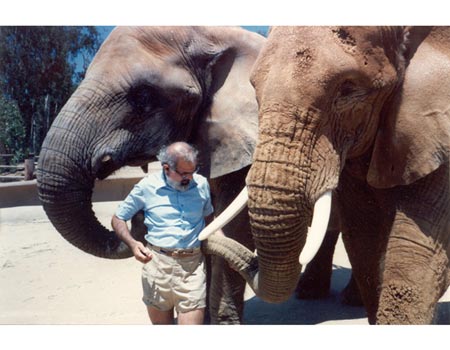
Professor Jeheskel Shoshani [Photo: Haaretz
Addis Ababa, Ethiopia – Israeli Professor Jeheskel Shoshani, a world-renowned researcher of elephants at Addis Ababa University, was among the victims of Tuesday’s minibus explosion in the Ethiopian capital’s downtown area.
The Israeli Foreign Ministry said it remains unclear whether the explosion was terror-related and if Shoshani was aboard the minibus when it exploded.
The transfer of Shoshani’s body is being handled by the US consul general in Addis Ababa, as the professor also holds American citizenship.
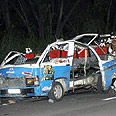
Minibus after blast [Photo: AFP
Three people were killed and nine others were injured in the explosion, which occurred as the minibus was traveling on the road which runs between the Hilton Hotel and the Ethiopian Foreign Ministry.
Source: Ynet
Mogadishu – At least two Ethiopian Woyanne soldiers were killed and five others wounded on Thursday in a roadside bomb explosion in southern Mogadishu, witnesses said.
“A heavy explosion hit the Ethiopian Woyanne soldiers as they were inspecting suspected mines off Maka Al Mukarama road,” eyewitness Mohamed Farah said.
“I saw two dead soldiers and five others wounded. The soldiers then sealed off the area and civilian movement was restricted,” he added.
“One of the soldiers was inspecting the roadside with a stick when the explosion went off. He was torn to shreds and several other soldiers were wounded by the shrapnel,” said Ali Yare, another witness.
On Wednesday, three aid workers — a Somali and two Italians — were kidnapped by gunmen south of Mogadishu, the latest in a spate of attacks and kidnappings targeting humanitarian workers.
In an interview to Britain’s The Guardian published on Thursday, Eritrea-based Islamist leader Sheikh Hassan Dahir Aweys vowed to continue the armed struggle until Ethiopian Woyanne troops leave Somali territory.
Talks between the Islamist-dominated political opposition and the Western-backed transitional government were launched in Djibouti earlier this month, under the aegis of the United Nations. But Sheikh Aweys dismissed the UN as a partial mediator, leaving opposition ranks divided ahead of the resumption of talks later in May.
Source: AFP
Somali rebels attack the parliament building in the southwestern town of Baidoa, killing five guards amid more blasts in the town.
Somali lawmakers were shocked as they found anti-government militias shooting mortars at parliament compound, also known as ADC Building, Press TV correspondent said.
Five parliamentary guards were killed in the crossfire that followed and continued for less than an hour.
Meanwhile, many civilians have left their homes to go to safe places outside Baidoa since hundreds of insurgents entered the town and targeted the parliament premises.
The attack marked a rare incident among the usual hit-and-run skirmishes between the Ethiopian Woyanne-backed Somali soldiers and anti-government gunmen.
The clashes are still going on in Baidoa while the insurgents have vowed to drive the foreign troops and their ‘puppets’ out of Somalia.
Source: Press TV
The International Federation of Red Cross and Red Crescent Societies (IFRC) has this afternoon announced the appointment of Mr Bekele Geleta as its new Secretary General. Mr Geleta will replace the current Secretary General, Mr Markku Niskala, who is retiring after a long and successful Red Cross Red Crescent career.
“It is my pleasure to inform you that today, 21 May 2008, during its 17th session, the Governing Board of the IFRC appointed Mr Bekele Geleta as the new Secretary General,” said Juan Manuel Suàrez del Toro, president of the IFRC, in a letter to all Red Cross and Red Crescent societies, and to all IFRC delegations and staff.
Mr Geleta was born in Ethiopia on 1 July 1944 and has a Masters degree in economics from Leeds University in the United Kingdom.
He has worked as general manager of the Franco-Ethiopian Railway Company, as urban development officer for Irish Concern International, and as a programme manager for Kenya and Somalia for Care Canada. He was Ethiopia’s ambassador to Japan, and its vice-minister of transport and communications.
From 1984 to 1988, during one of the most challenging times in recent African history, he served as Secretary General of the Ethiopian Red Cross. From 1996 to 2007, Mr Geleta was head of the Africa department at the IFRC secretariat in Geneva, deputy head of the IFRC’s delegation to the United Nations in New York and head of the IFRC’s regional delegation in Bangkok, Thailand.
His appointment came while he was General Manager of International Operations for the Canadian Red Cross at its headquarters in Ottawa.
“I wish the new Secretary General of the IFRC success in his new position,” said Mr Suàrez Del Toro.
“I also want to express my thanks and appreciation for the solid work done by Markku Niskala, now Secretary General Emeritus, for his commitment and leadership in guiding the IFRC secretariat through some of the most challenging times in humanitarian history.”
