Muslims defied threats by Ethiopia’s TPLF regime as hundreds of thousands marched following Eid prayers on Friday. Protests engulfed not only Addis Ababa, but also other major Ethiopian cities as well. They asked the government to stop interference in religious affairs.
Obang Metho’s letter to Israeli Prime Minister Netanyahu regarding the deplorable condition of Ethiopian asylum seekers in Israel.
Solidarity Movement for a New Ethiopia (SMNE)
October 22, 2012
Open letter to:
Israeli Prime Minister Benjamin Netanyahu
and Israeli Ministry of the Interior Eli Yishai;
Regarding the serious concerns involving the status, detentions and living conditions of the Ethiopian refugees now living in Israel.
Prime Minister’s Office 3 Kaplan St.
P.O.B. 187
Kiryat Ben-Gurion Jerusalem 91919
================================
“Once I have witnessed the redemption of the Jews, my people, I wish to assist in the redemption of the Africans.” Written in 1902 by Theodor Herzl, the father of modern political Zionism
Dear Prime Minister Netanyahu,
We are writing you regarding our serious concerns involving the status, detentions and living conditions of the 2,500 to 3,000 Ethiopian refugees now living in Israel. As you know, both the government of Israel and the African refugee living within Israel have reached a complicated and difficult impasse with no simple solutions to a growing refugee problem; yet, we believe that Israel’s newly instituted solution to cope with these refugees is not only short-sighted and harsh, but also ethically and morally wrong. Instead, we hold that a more humane policy could be found to address the very real challenges of both refugees who are genuinely seeking a temporary safe haven and the state of Israel which is not ready to meet the real needs of so many persons.
Contrary to the general tone of the law, in most cases, Ethiopians refugees living in Israel have legitimate asylum cases and are there legally as the Ministry of the Interior has reportedly issued most asylum seekers a conditional release visa. This means they are not simply “work infiltrators.”According to the 2012 report from Freedom House,[1] Ethiopia was second on the list of all countries for experiencing the greatest decline in freedom over the past two years.The 2011 Legatum Prosperity Index showed Ethiopia to at the very bottom of their list as the most “un-free” country among the 110 countries studied.[1]
Moreover, we believe the proposed enactment of stringent detention or deportation policies, under the Anti-Infiltration Law and its amendments, which includes asylum seekers, is unjustifiable in view of the widespread human rights violations in many neighboring countries, including Ethiopia, and will undoubtedly place many of these refugees in harm’s way. Some, if not many, will not survive.Furthermore, according to UNHCR, only 1% of asylum requests are finally accepted.Acceptance does not mean permanent residence or citizenship in Israel. What many of these refugees need is temporary shelter until safety and security are restored in their countries; not draconian policies that would criminalize asylum seeking, leading to long-term detention.
We contend that the enactment of the Anti-Infiltrator law and its amendments fail to fulfill the obligations of the international Refugee Convention, of which Israel is a signatory, and may violate the soul and conscience of a nation of people who in the past and present have experienced their own persecution, threats to their survival and the need to seek the goodwill of other nations in providing safe refuge to them.
Request
In light of this, and on behalf of these Ethiopian refugees, the SMNE respectfully calls on theGovernment of Israel, the Ministry of the Interior, the Knesset and other people and bodies associated with the implementation of the Anti-Infiltration Law and its amendments, to consider its revision. In particular, we would for the protection of asylum seekers from the application of this law. We also respectfully call on you to cease disclaiming the cases of these asylum-seekers as being without cause until there is a well-developed asylum process in place, free of bias, with all deficiencies corrected and until authorities possess accurate and up-to-date facts about the state of repression in Ethiopia, so as to fairly evaluate the claims of these African Refugees without discrimination. The present acceptance of only 1% of all asylum claims[i] calls into question the entire process; something that is very disturbing in light of the very real threats many of these refugees will face at home.
According to Hotline for Migrant Workers, an advocacy group located in Tel Aviv, they write in their August 2012 publication, “Legislation Targeting Asylum Seekers in Israel 2012”, “These measures reflect the false claims that the African asylum seekers are not refugees running for their lives and freedom, but rather ‘work infiltrators’, as repeatedly stated by Israeli government officials.” [ii]Amendments to the law will criminalize Israeli citizens who employ asylum seekers, but will eventually will also criminalize both Israelis – with fines and imprisonment in some cases—who shelter or transport asylum seekers or who assist them in sending money to family or others abroad. Africans, who are certainly a more easily identified group within Israel, will be easily targeted
Few Ethiopians, if any, have received asylum in Israel or have been able to go through a thorough process of determination to separate true asylum seekers from illicit workers and the bias is that none of them are refugees, an absurd assumption in light of the rampant human rights violations in Ethiopia and the lack of freedom, justice and freedom of expression. This is backed up with data. According to the United Nations High Commissioner of Refugees (UNHCR), in the entire year of 2011, Israel only approved one out of 46,000 or more requests for asylum and only 190 since Israel signed the 1951 Convention in 1954, [iii] leaving the majority of asylum seekers without work permits and forced to seek illegal work if they are to survive.[iv]
According to UNHCR’s July 2012 report on Israel, they also express concerns that this law will be enacted before there is an adequate asylum process. They indicate in their report: UNHCR is also concerned regarding the current functioning of the asylum system in Israel. With a recognition rate below 1%, eligibility practices appear to be too restrictive… it is clear that further efforts are required to develop capacity and to consolidate the procedural framework guiding this important process. The lack of adequate capacity makes it difficult, for example, to promptly and fairly process asylum claims. A significant number of applicants have to wait several months or longer, some while in detention, to have their claims reviewed. Moreover, the accelerated processing model in use in Israel lacks necessary procedural safeguards, including adequate access to the appeal process. In UNHCR’s opinion, such deficiencies are likely to impact the quality and fairness of decisions rendered for such claims.”[v]
The UNHCR also notes that persons of African descent will be more vulnerable than others. “UNHCR has expressed serious concern prior to and with the approval of the Law for thePrevention of Infiltration. Applied to asylum-seekers, it could constitute a breach of the rightsand obligations of the Government, as stipulated in the 1951 Convention, of which Israel wasa founding signatory. Of particular concern is the long term detention to which asylum seekersare subjected; a minimum of 3 years according to the law. The application of the law could be considered discriminatory, in contravention of other international obligations under the ICCPR and ICERD6, as it will apply almost solely to persons of African descent in practice.Additionally, UNHCR is concerned that the law also applies to children and other persons with specific protection needs.[vi]”
Ethiopian Refugees in Detention Centers
Unofficial sources estimate that there are between four and five hundred Ethiopians in various detention centers within Israel; some for over three years. This number includes minor children. Here are some facts:
In Givon Prison, located near the city of Ramla are the following:
There are 8 male and 13 female prisoners as well as 2 who are reported as being Eritrean. Out of these 23 prisoners, 10 are underage (13 – 16 years).
Among these prisoners are women who have been detained there for more than a year and six months; among the male prisoners it is reported that the maximum prison time is 3 years and 2 months. The average prison time of those underage prisoners (13 – 18 years) is 7 months.
In Saharonim Detention Centre (also “Saaronim”) close to the border with Egypt there are approximately:
200 – 300 male prisoners; among these male prisoners, the longest prison time is 2 years and 2 months
Among the 123 female prisoners, the longest prison time is 2 years. There is some credible information about infant prisoners with their mothers.
In Matan, a juvenile detention facility, located near Hadera
We have been unable to get information about countless prisoners.
In seeking meaningful answers to this current dilemma, no one expects Israel to “go it alone,” but yet, Israel, a nation called to be “repairers, healers and restorers,” – “tikkun olam”— might be in a position to play an important role in working together with Africans themselves and other concerned nations and organizations in finding humane, effective and durable solutions which could be mutually beneficial in the long-run if not much sooner.
“For the Sake of the World” (mip’nei tikkun ha-olam)
We in the SMNE are working to create a “New Ethiopia” where diverse Ethiopians will find a home where they can live and flourish, where streams of refugees out of the country will cease and where those scattered among the nations will want to return, without deportation, like the Jews to their homeland of Israel. Because of your own suffering, you may better understand the present-day world of many of these refugees who are unwanted in their own homeland, driving them to seek a temporary place of safety, but find they are also unwanted there.
The people of Israel know about the great suffering that comes from being unwanted in foreign lands, even those in which they had been born and raised. It led to the Holocaust, an evil that became the darkest of stains on humanity; however, many do not realize that Ethiopians were also the innocent victims of the same evil system that dehumanized them along with many others. One man typifies the common thread between what happened to the Jews and what happened to Ethiopians. That man is Rodolfo Graziano, the defense minister under Mussolin’s fascist regime.
In 1937, Rodolfo Graziano carried out a massacre of Ethiopians, killing 30,000 persons in three days and 1,000,000 other Ethiopians throughout the duration of their invasion of Ethiopia, earning him the nickname as the “Butcher of Ethiopia.”[vii] One of his officials incited the killing saying, “Comrades, today is the day when we should show our devotion to our Viceroy by reacting and destroying the Ethiopians for three days. For three days I give you carte blanche to destroy and kill and do what you want to the Ethiopians.” In 1938, Graziano signed anti-Semitic laws leading to the deportation of 7,000 Italian Jews to German concentration camps where nearly 6,000 of them died.
The world is ashamed of what was done to the Jew during the Holocaust. The Germans have apologized and given compensation and the Vatican has apologized, but in terms of Ethiopia, few even know of the systematic mass extermination campaign where chemical warfare and poisonous gases were used to kill great numbers of people. World leaders could have stopped the rise of Hitler Mussolini early on, like could have been done with Hitler, but another great stain on history was when the League of Nations caved in to self-interest and betrayed one of its co-signers it pledged to protect—Ethiopia—when Mussolini invaded Ethiopia.
Ethiopians suffered so much but it has never acknowledged. Now their grandchildren are the ones suffering at the hands of their own government but they are finding nowhere to go to escape it. This is not about infiltrators or illicit workers but it is about human beings—our sons, daughters, sisters, fathers and mothers.
We do not blame Israel for reacting to what has become an overwhelming and seemingly insurmountable challenge of absorbing such a large influx of refugees in such a small country; however, what we ask for is a temporary arrangement until refugees can return. Use your diplomatic efforts to support those Ethiopians who are working to create a government where there is freedom and democracy. It will bring greater stability to the region. We know the real way out is not with Israel or some other country of refuge but instead it is to build a country where there is a government that respects the rights of its people; where its leaders our accountable to its citizens; and a homeland where the people can live and flourish.
For those who speaks Amharic, please listen to the attached audio of an Ethiopian refugee who lives in Israel
I am appealing to all my friends and colleagues to forward the litter to your friends. If you do, you will not just be giving a voice to our beautiful people, but you would be doing justice to our humanity. Knowing the truth is overcoming the first obstacle to freedom!
Thanks so much for your never-ending support. Don’t give up. Keep your focus on the bigger picture and reach out to others and listen! Care about those who are suffering. Think about our family of Ethiopians and humanity throughout the world—they are YOU!There is no “us” or “them.” This is at the heart of the SMNE.
~ There lies before us, if we choose, continual progress in happiness, knowledge and wisdom. Shall we instead choose death, because we cannot forget our quarrels? I appeal as a human being to human beings; remember your humanity, and forget the rest ~Bertrand Russell
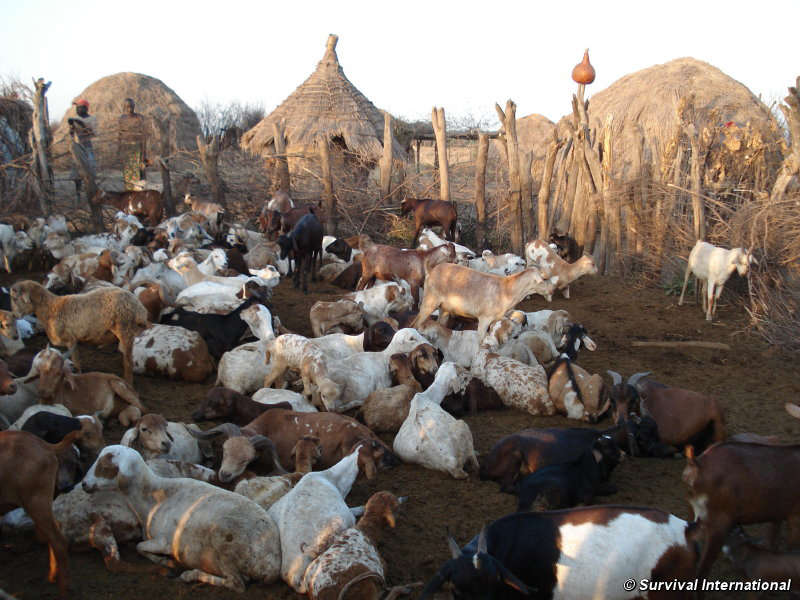
Violent land grabs in Ethiopia’s Lower Omo Valley are displacing tribes and preventing them from cultivating their land, leaving thousands of people hungry and ‘waiting to die’.
As the world prepares to raise awareness of the issues behind poverty and hunger on October 16 (World Food Day), Ethiopia continues to jeopardize the food security and livelihoods of 200,000 of its self-sufficient tribal people.
Tribes such as the Suri, Mursi, Bodi and Kwegu are being violently evicted from their villages as Ethiopia’s government pursues its lucrative plantations project in the Valley.
Depriving tribes of their most valuable agricultural and grazing land, security forces are being used brutally to clear the area to make way for vast cotton, palm oil and sugar cane fields.
One Mursi man told Survival International how the process of villagization is destroying his family. ‘The government is throwing our sorghum in the river. It has cleaned up the crops and put them in the river. I only have a few sacks left…We are waiting to die. We are crying. When the government collects people into one village there will be no place for crops and my children will be hungry and have no food.’
A Suri man also said, ‘They cleared the land. Why did the government sell our land? There is no grass for the cattle. People are hungry…. We are worried about fodder. We have become angry and hopeless.’
From the Omo Valley
A Mursi woman speaks out against the destruction of the tribe’s crops. Her identity has been hidden to protect her from reprisals.
Key to the plantation program is Ethiopia’s controversial Gibe III dam. Once completed, the dam will stop the Omo River’s annual flood, preventing tribes from using its fertile banks to produce valuable crops and feed livestock.
Ethiopia has not consulted any indigenous communities over the construction of Gibe III or its aggressive plantation plans in the Valley, which is a UNESCO World Heritage site.
Stephen Corry, Survival’s Director said today, ‘On World Food Day, people need to be aware of Ethiopia’s decision violently to strip Lower Omo Valley tribes of their self-sustaining way of life. These peoples have used their land to cultivate crops and graze cattle to feed their families for generations. This basic right has now been taken from them, in a brutal manner, leaving them hungry and afraid.’
Debretsion Gebremichael, TPLF spy chief who also doubles as Minister of Communication and Information Technology, appears to suggest that the ruling party has mobilized to crush peaceful Muslim protests. Debretsion used Addis Ababa University as a platform to declare war on what he called “religious radicalism” and “terrorism.”
Eskedar Kifle | Capital Ethiopia
October 8, 2012
The Addis Ababa University, the longest serving higher institution in Ethiopia, gave a three day seminar to its teachers in all campuses, Capital learned. The meeting was originally intended to take place at one location from October 3 to 5, but they later decided to carry it out separately on different campuses.
The notorious Debretsion who intercepts email, other electronic communications
When the seminar came to a close at the Sidist Kilo Main campus on Friday, October 5, DebretsionGebremichael (PhD), Minister of Information and Communication Technology gave guidance to the participants saying that in the coming years the university must focus on the problems of religious radicalism and the dangers of terrorism.
“We don’t want to have a destabilization movement under the guise of religion. In every religion we trace fundamentalism which is contrary to the basic principle of religion that teaches coexistence with each other,” Debretstion was quoted as saying. This movement has to be stopped, he strongly warned.
He also attended the meeting at the Arat Kilo Science Faculty on Thursday, October 3. Sources told Capital that at Science Faculty like in other faculties raised questions about the teachers’ salary increase. Dr. Debretsion discouraged the issue out of hand by saying:
“This time don’t expect a pay raise. You have the capacity to generate additional income by having additional work elsewhere. We don’t like that option. But on the government side there is no plan to increase the salary of teachers at this time,” he said.
A teacher who preferred anonymity because of the sensitivity of the issue told Capital that he is not happy with the response of Debretsion. “Inflation is extremely high. So life is difficult to manage with the salary we are receiving now. House rent is increasing literally every month. The government wants us to provide a quality education. With this small pay it is impossible to have first class teachers. So the fall of the standard of education, due to mediocre teachers, is an avoidable fact,” he said.
But Dr. Debretsion was positive about the housing question. “I know that the late Prime Minister wanted the housing problem of the university teachers to be tackled. Accordingly something has been done in that direction all through. So we will exert every effort to resolve the housing problem that the teachers face,” Dr. Debretsion said.
The other major discussion point was about the quality of education. There was a consensus that the quality of education has tremendously gone down. Though all of them agreed to improve the quality of education, no viable future plan was put in place. “We all said that we will improve the quality of education. This is a cliché like saying we shall realize the dreams of the visionary leader,” remarked one disgruntled teacher. But making change requires a backbreaking job, he concluded.
“Soldiers came and asked me why I refused to be relocated,” a 20-year-old Ethiopian told me in September at a refugee camp in Kenya. “Ojod,” not his real name, was still visibly shaken from the horror he had left behind: “They started beating me until my hands were broken… I ran to tell [my father] what had happened, but the soldiers followed me. My father and I ran away… I heard the sound of gunfire.” Ojod heard his father cry out, but he kept running and hid from the soldiers in the bushes as he was “full of fear.” When he returned the next day he learned that the soldiers had killed his father.
Abuses such as this in Ethiopia, including arbitrary arrests, beatings and killings, have been occurring not in an armed conflict or political uprising, but as part of a government program billed as improving life for indigenous people and other ethnic minorities in designated rural areas. Donor governments supporting World Bank programs in Ethiopia, including the United States, are indirectly funding these atrocities.
Under its “villagization” program, the Ethiopian government plans to relocate 1.5 million people spread out across these areas by the end of 2013. People are to be moved into new villages where the government has promised improved access to health care, schools and other public services. The idea, says the government, is “to bring socioeconomic and cultural transformation of the people.”
The problem is, as Human Rights Watch field research has found, that the government is being duplicitous on both ends of the relocation. The largely indigenous people being moved have had no say in the process, despite being forced off land closely tied to their culture. Those who object, or later return to their old lands, become targets of abuse by the Ethiopian security forces.
Once forcibly evicted and moved to the new villages, families are finding that the promised government services often do not exist, giving them less access to services than before the relocation. Dozens of farmers in Ethiopia’s Gambella region told us they are being moved from fertile areas where they survive on subsistence farming, to dry, arid areas. Ojod’s family farm was on the river, but as part of the villagization program, the government took his farm and forced his family to relocate to a dry area. There are reports that this fertile land is being leased to multinational companies for large-scale farms.
The villagization program is an Ethiopian government initiative, not one designed by the World Bank. But villagization appears to be the government’s way of implementing a certain World Bank project in five of Ethiopia’s eleven regions. The World Bank’s “protection of basic services” (PBS) project is intended to enhance access to education, health care, and other services. Through it, the Bank is paying a portion of the salaries of local government staff, including teachers who are being forced to implement villagization. At least one regional government is deducting funds from these same salaries to fund villagization.
The World Bank has policies that are designed to prevent against forced resettlement and to protect the rights of indigenous peoples affected by World Bank projects. But it has been closing its eyes to these abuses. On September 25, the Bank’s board of directors approved the third round of this PBS loan, the biggest ever granted in Ethiopia, again without applying the Bank’s own safeguard policies.
A day before the Bank approved the loan, several Ethiopians affected by villagization brought a complaint to the Bank’s accountability mechanism, pressing it to apply its safeguard policies. They were not asking for special treatment, but for the World Bank to apply its own policies, which are designed to prevent harm by its projects. As the Bank’s leading shareholder, the US is well-placed to demand that the Bank vigorously implement its own safeguards. But it has not effectively done so to date.
Ethiopia remains in much need of development aid, particularly in the areas of food security, health, and education. But donors need to hold true to their own policies to ensure that they don’t fund harmful projects, directly or indirectly. The US and other donor countries should be telling the World Bank that they do not want to become complicit in further abuses of “villagization” and that World Bank funding for Ethiopia’s misguided effort needs to stop.
Jessica Evans is the senior advocate and researcher on international financial institutions at Human Rights Watch. You can follow her on twitter at evans_jessica.
A pride of captive lions descended from the private menagerie of Emperor Haile Selassie of Ethiopia is genetically distinct from all other lions of Africa, a study has found.
The Ethiopian lion has a distinctive dark mane and is slightly smaller and more compact than other African lions. Now an analysis of its DNA has revealed the Ethiopian lion is also a distinct breed.
It is thought that there may be less than a few hundred Ethiopian lions living in the wild and scientists are urging that their unique genetic makeup should be preserved by a captive-breeding programme.
DNA tests on 15 of the 20 Ethiopian lions kept in Addis Ababa Zoo have revealed that they form a separate genetic group from the lions of east Africa and southern Africa, said Michael Hofreiter of the University of York.
The male lions are the last lions in the world to possess the distinctive dark brown mane. They are the direct descendants of a group of seven males and two females taken from the wild in 1948 for Haile Sellassie’s own zoo, Dr Hofreiter said.
A comparison with other populations of wild lions living in the Serengeti of Tanzania in east Africa and the lions of the Kalahari desert of south-west Africa found that the Addis Ababa lions are quite separate genetically, he said.
“We therefore believe the Addis Ababa lions should be treated as a distinct conservation management unit and are urging immediate conservation actions, including a captive breeding programme, to preserve this unique lion population,” Dr Hofreiter said.
As a species, lions are under threat and their numbers have dwindled over the decades, with the biggest populations centred on east Africa and southern Africa, with a tiny population of Asiatic lions existing in the Gir Forest of India.
Two lion populations that shared the dark brown mane of the Ethiopian lion – the North African Barbary lions and the South African Cape lions – have already gone extinct in the wild.
Susann Bruche of Imperial College London, the lead author of the study published in European Journal of Wildlife Research, said that it is important to preserve the genetic diversity of the Ethiopian lions to help the species as a whole.
“A great amount of genetic diversity in lions has most likely already been lost, largely due to human influences. Every effort should be made to preserve as much of the lion’s genetic heritage as possible,” Dr Bruche said.
“We hope field surveys will identify wild relatives of the unique Addis Ababa Zoo lions in the future, but conserving the captive population is a crucial first step,” she said.