ATLANTA (WSBTV) — A limo driver who disappeared nearly a week ago turned up late Thursday night with no explanation.
Negero Debero, a native of Ethiopia, disappeared last weekend, sparking a search when police found his {www:smash}ed Lincoln town car abandoned on Interstate 85 on Oct. 8.
Friends of Debero told Channel 2 Action News the {www:circumstance}s of the disappearance seem very odd, and how he was located was more bizarre. “He was found in the bushes without his clothing. We’re hoping detectives on the case are still going to be working,” said Surafel Asmamaw.
Witnesses claim Debero was drinking at a bar they day he disappeared. During the week more than 100 people handed out flyers and searched the area. A $10,000 reward was even offered for his safe return.
“We still want answers to what happened that Saturday morning when he disappeared,” said Getachew Techill, Debero’s friend.
Debero was being treated at Gwinnett Medical Center.
Ethiopia[‘s dictator] has minted a new ministry of Communication and Information Technology. It is not yet clear what it is officially entrusted to do. The most obvious thing though, the country has largely missed out on information technology. The state’s monopoly on telecommunication didn’t help improve matters. To the contrary, it was part of the problem. Lately there has been some talk of liberalizing the sector. A French company is expected to take over the management of the dreaded Ethiopian Telecommunications Corporation (ETC).
Words spoken
“We plan to ensure universal access and Internet connectivity to all the tens of thousands of rural kebeles (districts) of our country over the next two to three years.” Prime minister Meles Zenawi. (AP, April 5, 2005). That is the Internet equivalent of three meals a day!
Sometimes back, the newly appointed minister while heading the Ethiopian Information Communications Technology Development Agency (EICTDA) was quoted as saying: “Ethiopia’s investment in Information and Communication Technology is considered to be one of the highest in the world”. Though we don’t know where he got the figure from , he unabashedly added : “the government has invested over USD 14 billion over the last decade.” (The Reporter, August 25, 2007)
Where is the beef?
The Phone – With a motto of “Connecting Ethiopia to the Future”, ETC has actually thrown the country in communication doldrums. Just a little over 3 million people have mobile phones. Ethiopia’s mobile phone penetration rate stands at 5% while that of sub-Saharan Africa is 39%. “Elsewhere in Africa, the debate is about the relative merits of Blackberries and iPhones. In Ethiopia, it is simply about getting a phone,” wrote the Economist in its May edition.
The government has been resisting liberalization on this sector not wanting to share the profits with others. A couple of years back a top government official defending the monopoly was quoted as saying the mobile phone is a cow yet to be milked. That is at the expense of the population. Not only is the number limited, as the government controls the network, it can deny services at will. From 2005 to 07 Ethiopians were denied text messaging services because the ruling party fared miserably in the usage of the medium to garner support while the opposition parties were efficient in mobilizing supporters using the new media. When the government finally felt confident of its firm grip on power, text services resumed.
Internet – When it comes to the internet, the picture is even grimmer. Ethiopians not only are at the mercy of one single provider, but they get the most expensive service. A study on broadband internet connection access sponsored by UN tells a gruesome reality. Ethiopia is the second most expensive place to get a fixed broadband connection only preceded by the Central African Republic.
According to International Telecommunication Union, Ethiopia has around 360,000 internet users which is a mere 0.4 % of the total population. While some countries have already passed a law making broadband internet connection to each household an obligation so government can provide services online (Finland), Ethiopia seems to be in a medieval period. 15 years after the Internet has become a global phenomenon, it is only the lucky few who can chat over Skype or use web cams to communicate. And when it happens, in most cases it is with relatives and friends living abroad rather than Ethiopians living in different corners of the country.
It is not unusual to see people in Internet cafes reading magazines while surfing the internet. So much for the “highest in the world” investment.
Hope you like jammin’ too
If there has been a success in the government’s endeavor to develop the Information Communication Technology (ICT) sector so far, it is the blocking of websites and jamming of electronic media broadcasters. Ethiopia began filtering websites well before many countries as early as 2005. ETC’s monopoly helped ease blocking the sites and monitoring personal email exchanges, hosted in its servers. The Open Net Initiative, a leading internet freedom watchdog said of Ethiopia as “the only country in sub-Saharan Africa to actively engage in political Internet filtering.”
And it is right there where the motive of establishing the new ministry lies. To undertake the jamming and filtering more vigorously. Not playing a suicide bomber when jamming broadcasters. Remember when they knocked of poor ETV from the spectrum in their bid to jam ESAT!
As former security chief at the Bole International Airport, the newly appointed minister Mr Debretsion Gebremichael, knows a thing or two about jamming. Some are already calling him jammer-in–chief for the role he played so far. For that “unrelenting service”, last month he has been promoted to the 9 member TPLF executive committee. And his latest appointment is an extension of that. The move tells loads about where the rulers’ priority lies.
Getting by
Even with the abysmal state of the internet connection in the country people have been yearning to tap from the benefit of ICT. Recent studies indicate that there are about 143,000 Facebook users in Ethiopia. (Kenya with less than half the population of Ethiopia has close to a million Facebookers). Not that hooking to the social networking sites is the yardstick for ICT development, but it gives some idea about the level of expansion of the sector. People have long understood the benefits. The government which is supposed to expand the sector is trying their best to control it in every possible way, hindering the growth. Never forget that even with the most minimum access to internet, Ethiopians were among the first bloggers in the Sub Saharan Africa.
What’s to be done?
* The most straightforward thing to do is just expand the broadband connection. There were already talks about ETC signing contract with SEACOM, a Mauritius based company which was supposed to connect the country through submarine fiber optic cable to the rest of the world via Djibouti.
* Avoid ETC’s monopoly. ETC, at its current state, cannot connect Ethiopia to its past, let alone the future.
* Stop filtering online media and jamming electronics broadcasters. The World Wide Web carries information and ideas. ICT is not about the computers and the gadgets, it is about the information carried and transmitted through it.
* Finally, no need to reinvent the wheel by churning out new ministries.
The 22-yea-old daughter of Ethiopia’s despot Meles Zenawi {www:puke}s from over-eating and drinking…
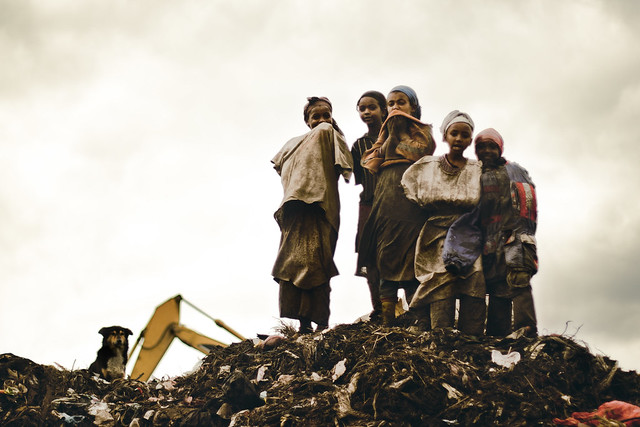
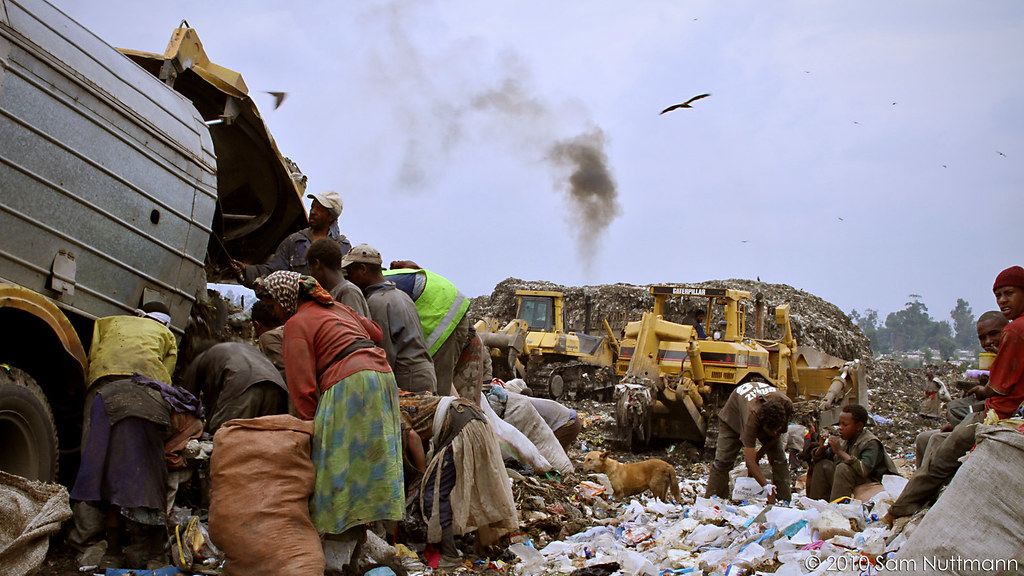
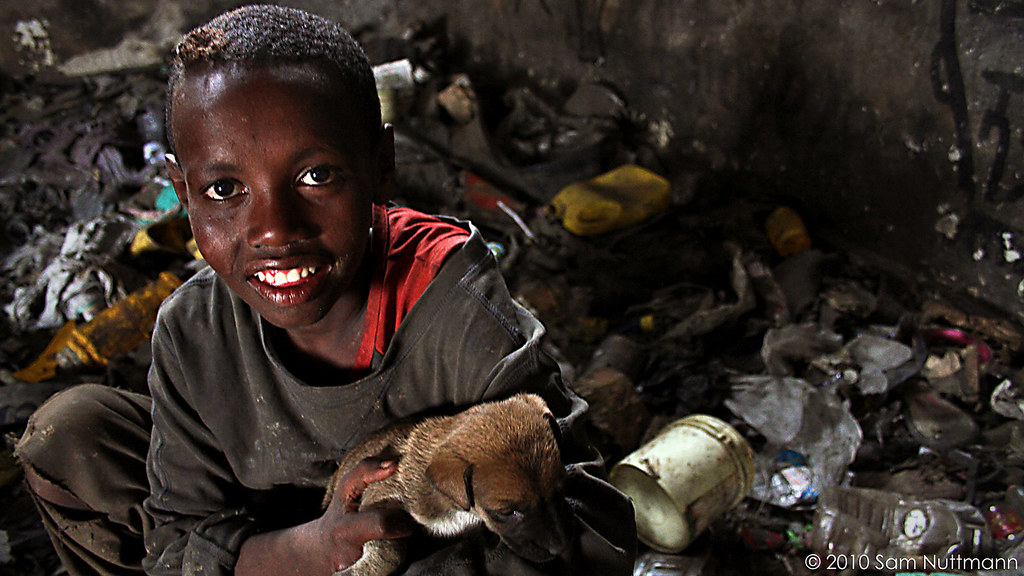
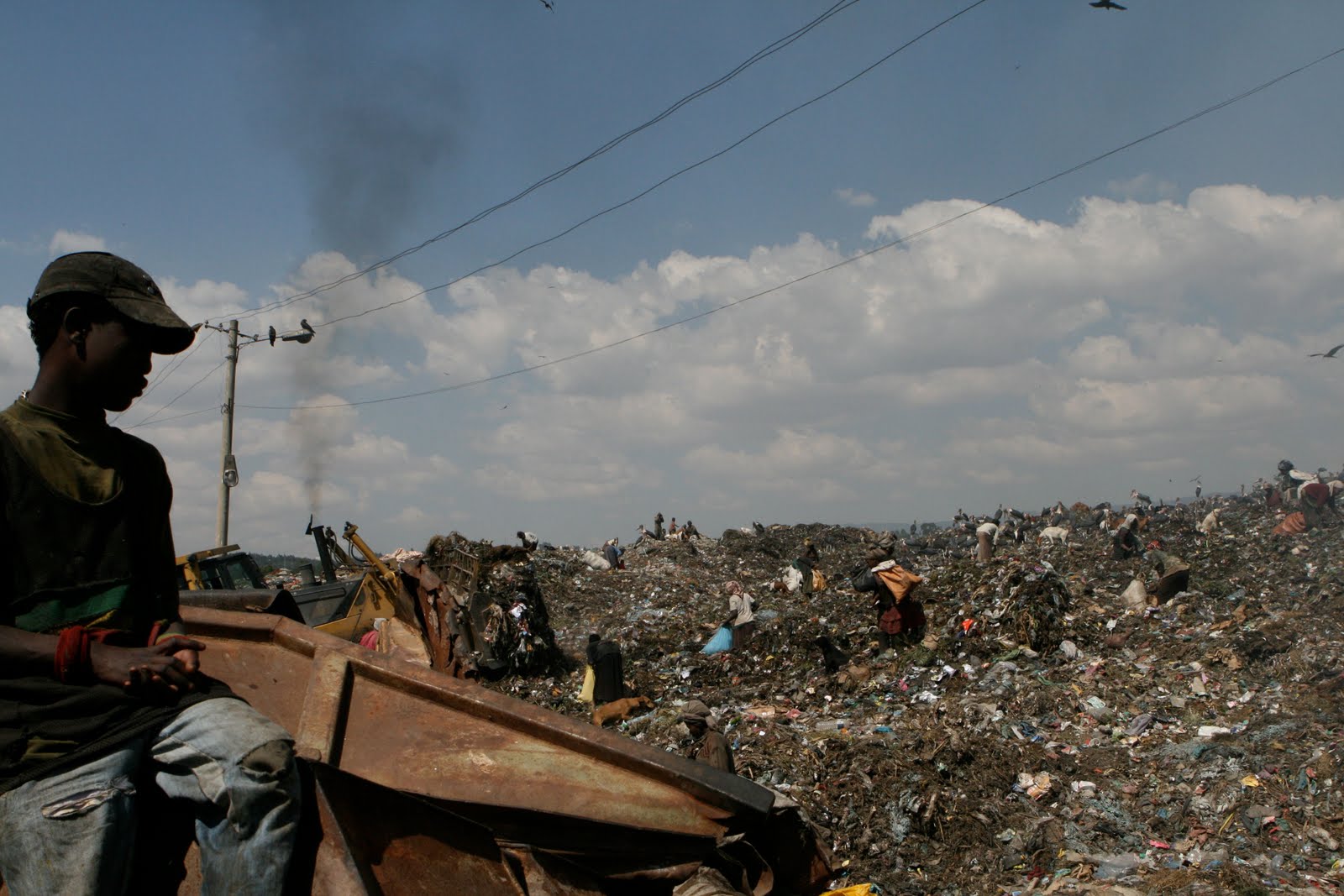
… while over 80,000 resident of the capital city, including children, survive by eating trash (see here) at the city dump. See more photos here about the over-fed and {www:over-indulgent} children of the ruling Woyanne junta. The photo above shows Semehal puking at the side of a road after a night of partying at an exclusive night club where children of the ruling tribal junta throw lavish parties several times per week. The little girl in the photo below looks for food to eat at the Addis Ababa city garbage dump.
Some families whose loved ones are buried at the St. Joseph (Kidus Yosef) Cemetery in Ethiopia’s capital Addis Ababa have contacted Ethiopian Review with information that the land is needed for development and that they need to remove the remains of their relatives.
Families are being told to {www:disinter} their relatives and rebury them on some plot of land located on the road to Jimma.
Obviously the information is terribly upsetting to a lot of people. Yosef Cemetery is about as old as the city of Addis Ababa and almost every resident of the city has some relative buried there.
Addis Ababa Administration, whose mayor is Meles Zenawi’s puppet Kuma Demeks, has warned that the bodies that are not moved by a certain date will be dumped in a mass grave.
Addis Ababa can expand in several directions and there is no shortage of land (see the video below). So it is not clear why the ruling junta is subjecting hundreds of thousands, may be millions of families to the {www:ghoulish} process of exhuming graves.
Kidus Yosef Cemetery is the final resting place for thousands of Ethiopian heroes and patriots such as Abebe Bikila, as well as average citizens. It is a cemetery steeped in Addis Ababa and Ethiopian history.
We invite readers who are knowledgeable about the Yosef Cemetery to share with us what they know about its historical significance to Addis Ababa and the whole nation of Ethiopia.
The video below shows a shocking story about 80,000 Ethiopians who survive on trash at the Addis Ababa city dump in an area called Korah. Many of the people who scavenge through the trash are children and women. These people are living under such horrible poverty not because Ethiopia is a poor country. Some of the reason is that Ethiopia’s treasure is being squandered and looted by Meles Zenawi’s ruling party, that educated people who can help develop the country are forced into exile, and that the country is being ruled by a government of idiots.
This video below will make any decent human being sick. The billions of dollars donation collected from around the world by the Meles regime in the name of these people is being used to keep them under such hellish poverty. This is done with the full knowledge and active collaboration of the poverty-mongers at the World Bank and IMF, as well as Western governments who are financing the parasite regime, and training its killers to keep it in power (see here). Ethiopians are smart, hard working people. With the right government, they can make a decent living. Ethiopians do not expect the West to give them their freedom. We are simply asking the U.S. and E.U. to stop giving weapons and money to the brutal, parasite regime that is sucking the life blood of Ethiopia.
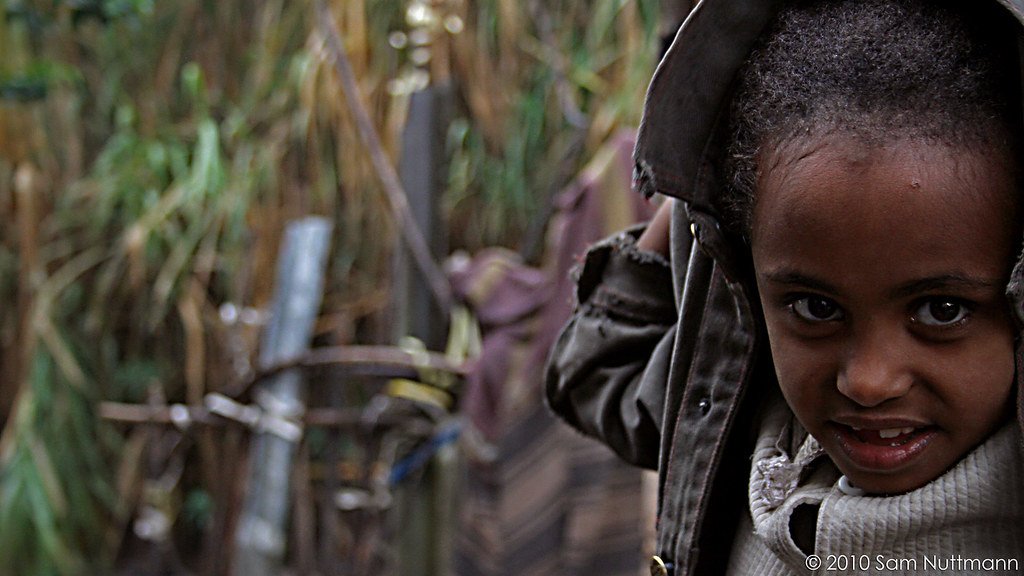
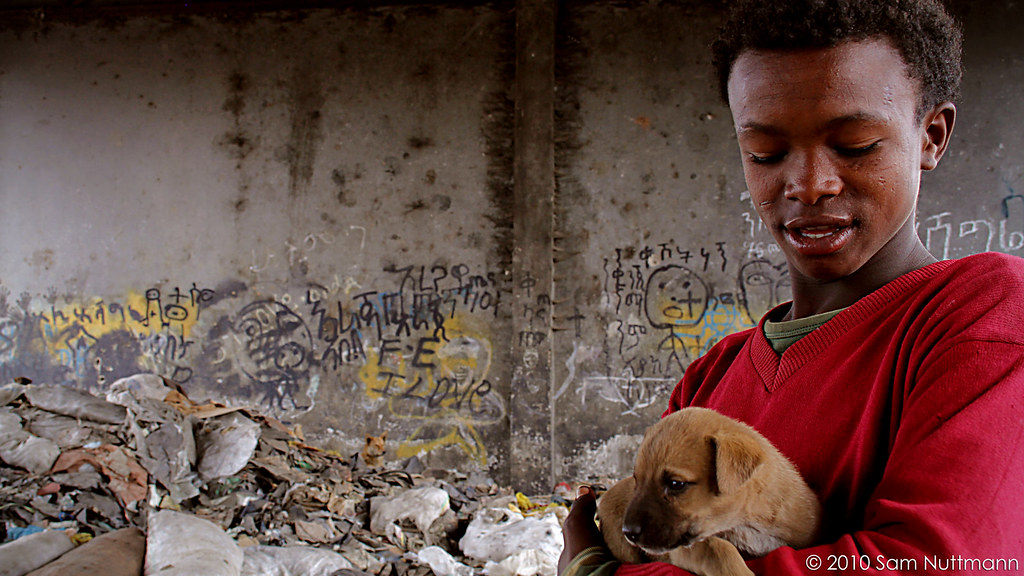
And below are some horrifying pictures of how tens of thousands of children live in Ethiopia’s capital Addis Ababa. These people live under such obscene poverty partly because the so-called “government” is busy buying thanks and fighter jets, and building concentration camps, instead of schools. The other reason is that the Ethiopian elite that has the capacity to do some thing about it simply chose to be indifferent.
A fight broke out at a ruling party meeting chaired by Meles Zenawi last month, which ended with his spokesperson, Bereket Simon, flat on the floor, according to reliable sources close to the ruling party.
Bereket had to get medical attention for the injury he sustained from a {www:sucker punch} by Abadula Gemeda, the former defense minister and currently speaker of the fake parliament.
Following the incident, Bereket was absent from work and his regular press conferences for several days.
Reportedly, the brawl broke out when Bereket insulted Abadula Gemeda, and Abadula responded in kind. Bereket then approached the much bigger Abadula in a threatening way. Seconds later Bereket was knoked out cold.
As is the case with most despots, Meles enjoys keeping his puppets at each others throat.

 Friends of Debero told Channel 2 Action News the {www:circumstance}s of the disappearance seem very odd, and how he was located was more bizarre. “He was found in the bushes without his clothing. We’re hoping detectives on the case are still going to be working,” said Surafel Asmamaw.