
By Kaleb Yekuno Amlak
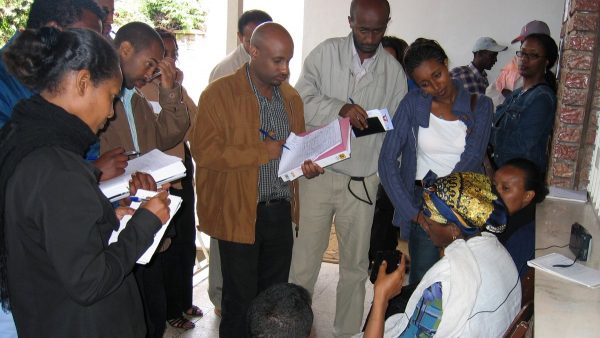
On February 23, 2019, Mereja TV reporter Fasil Aregay and cameraman Habtamu Oda went to Legetafo, outside Addis Ababa, to interview people displaced by home demolitions. According to the Committee to Protect Journalists, regional police detained them, and a crowd attacked them after their release. Habtamu escaped uninjured. Fasil was beaten with sticks in view of the police, who eventually intervened and took him for treatment. Mereja’s chief executive said the camera, held by police, was returned damaged beyond repair.
Remember that camera when a company speaks of removing content. Behind some of those files are people who went where they were unwelcome and asked questions someone wanted left unanswered. Their work deserves to remain available long after the day it was broadcast.
A newsroom’s archive carries that labour forward. Years later, someone may need to establish what an official promised or whether a denial can withstand the evidence. When a platform removes an entire news channel, the loss reaches beyond the publisher to people who had no part in the dispute. They may discover it only when they go looking for a report and find that the familiar link no longer works.
Facebook and YouTube must answer for the power they exercise over Ethiopia’s public record. Mereja’s experience deserves an accounting and, where the companies cannot justify what they removed, a remedy. It also helps explain why Ethiopian Review is returning, after years of limited activity, to the work of sustaining a serious argument about our country.
The YouTube case is documented in a United States court record. According to Elias Kifle’s account, summarized in an April 2021 order, Mereja’s channel had about 2,500 videos and 220,000 subscribers. YouTube stopped its livestream on November 9, 2020, and terminated the channel two days later. Mereja reported at the time that the notice invoked violations of YouTube’s community guidelines without specifying what those violations were.
Months later, in court, YouTube said that the channel had carried programmes featuring Zemedkun Bekele, whose own account it had suspended for what it described as promotion of violence, hate speech and harassment. The company invoked its rule against circumventing a suspension. Kifle replied that Bekele appeared in only ten of Mereja’s videos and that a request could have resolved the issue.
A newsroom should not have to reach a courtroom to receive the company’s specific explanation for removing its channel. Nor does an explanation offered months later repair the absence of a meaningful notice when the decision was made. The court record contains competing accounts; it does not establish that every disputed broadcast was harmless. But a company alleging a breach must still answer for the penalty it imposes. If, as Kifle maintained, the dispute concerned ten videos, why did YouTube remove a channel containing thousands? Why was enforcement against the whole account necessary? The people who produced the other material, and the audiences who relied on it, deserve a specific answer. An enforcement rule should never become an excuse to disregard the rest of a newsroom’s work.
The damage can outlast the removal. A newsroom depends on the habit of an audience returning to it. Losing that audience can mean losing the income that pays a reporter to travel or gives an editor time to question a doubtful story. It is easy to tell a publisher to begin again. Recovering the means to report is harder than opening another account.
The Facebook pages associated with Mereja.com and Mereja TV were also removed in 2024. The removal notices were automated messages saying the pages had violated Facebook’s community guidelines. Appeals received automated replies. Both pages remain unavailable. The public deserves to know what was condemned and why. Even where copies of the reporting survive elsewhere, an established page’s conversation with its readers cannot simply be recreated. Links shared over years may now lead nowhere.
Meta’s own Oversight Board has supplied concrete reasons to question the company’s judgment in Ethiopia. In a decision published on February 24, 2026, it overturned the removal of two posts sharing a press release from the Oromo Liberation Front. Meta acknowledged that it had confused the political party with a similarly named organisation on its dangerous-organisations list. It restored the posts after the board brought the cases to its attention. An Ethiopian political statement had been suppressed because the company applied a rule to the wrong organisation.
Errors also run in the opposite direction. In 2023, the board examined a post calling for a hotel in Amhara to be burned down. It included the hotel’s photograph and address and claimed the owner was an army general. Meta had left the post online; it removed it after the board intervened. Here was an explicit call for violence, with a location supplied for anyone inclined to act.
These cases show why a demand for free expression must include a demand for competent judgment. The same company can silence permissible speech and fail to act against an unmistakable threat. Ethiopians bear the consequences of both mistakes. Correcting a case after exceptional scrutiny is welcome, but the people whose appeals never reach the board deserve a system that can recognise the distinction too.
That obligation extends to the word Fano. Reporting on an armed movement and calling for an attack are different acts. Abuses by armed actors must be investigated; civilian Amhara testimony must also be heard. A moderator cannot make a sound judgment by recognising a name and ignoring the words around it. People describing violence in their communities deserve reviewers who understand what they are saying.
In Ethiopia, such decisions enter a public life already constrained by state power. The government has its broadcasting institutions, and journalists know that arrest is a real danger. The authorities can also close the routes through which independent reporting reaches its audience. From February to mid-July 2023, amid tensions involving the Ethiopian Orthodox Tewahedo Church, major social-media services were blocked for more than five months. OONI measured the interference; Access Now called for access to be restored.
The wars made reliable reporting a matter of terrible urgency. During the conflict in Tigray, communications blackouts cut families off from one another. Accounts of mass killing and sexual violence demanded investigation. Reporting such crimes is an indispensable public service. So is scrutinizing violence in Amhara, where journalists covering unrest have faced detention. A relative searching for news of a missing person cannot afford to have every inconvenient report dismissed as ethnic agitation. Nor can that relative afford a false report. Verification matters most when fear is greatest, which is precisely when reporters and their sources are most vulnerable.
The Ethiopian government has to answer for the journalists it detains and the services it blocks. Facebook and YouTube have to answer for their own decisions. A newsroom struggling against state pressure can also lose its audience and archive to a platform’s judgment. Those injuries compound each other, whatever the separate motives of the institutions responsible.
Meta did remove a network it linked to people associated with Ethiopia’s Information Network Security Agency in 2021. That belongs in the record. It also shows why enforcement must be judged through particular decisions, including the treatment of Mereja. Neither a company’s assurances nor a publisher’s indignation can substitute for examining what happened.
Professional media have responsibilities of their own. A familiar masthead cannot make an allegation true, and a small channel can produce valuable reporting. The work worth defending is work that can be questioned and corrected. It requires someone willing to check a name before publishing it and to return to a story when the first account proves wrong. Weakening the institutions that can sustain that work makes the information crisis harder to repair.
American law offers no easy remedy. Section 230 of the Communications Decency Act gives platforms substantial legal protection, and the court applied it to dismiss Kifle’s contract claim concerning his channel’s removal. His remaining claims failed on other legal grounds. The statute is not immunity for every corporate act. Nor does prevailing in court settle the question of what a company owes the public. A publisher may lose a lawsuit and still have a grievance that deserves an answer.
Some Ethiopian debate has found more room on X. In my view, it has become a more open place for the country’s political argument than Facebook or YouTube. But moving the conversation leaves the underlying dependence intact. Ethiopian journalism needs places where an archive can survive a change of owner, a disputed broadcast or a badly made moderation decision.
Meta and YouTube should reopen the Mereja cases. They should identify the material at issue and explain why a narrower penalty would not have sufficed, with reviews conducted by people equipped to understand the broadcasts and posts. Restore what cannot be shown to violate the applicable rules. Give Mereja a clear account of what remains of its archives and a practical way to recover material it is entitled to retrieve. The people who entrusted their testimony to journalists have a stake in those records.
The companies should also disclose how their enforcement works in Ethiopia, including the accuracy of reviews in local languages and the handling of government requests. Meta’s Oversight Board called for an independent, fully published Ethiopia human-rights assessment in 2021. Meta has said it carried out due diligence and cited privacy and safety risks in withholding the full material. Protecting people named in such research is essential. It should still publish substantive findings and explain what it changed, with narrowly justified redactions and an account of the later conflict in Amhara. Ethiopians should be able to judge whether the promised safeguards work.
Ethiopian Review began in 1991. Its return should make room again for people who have something serious to say and are prepared to defend it. Anger belongs in that conversation. So does the patience to examine an allegation even when it serves our cause.
A magazine can give an argument time to unfold. It can publish a historian whose answer will not fit inside a clip, or return to a report after public attention has moved elsewhere. Scholars who have withdrawn from public debate should find a reason to write again. Journalists should find readers who understand why establishing a fact takes time, and sometimes courage. There is still work worth doing together, even among people who disagree fiercely about Ethiopia’s future.
We have lost too much to behave as if the loss were natural. Facebook and YouTube should restore what they cannot justify removing and help publishers recover their archives. Ethiopians should keep pressing until they do. Meanwhile, this magazine is returning to work.
——-
Kaleb Yekuno Amlak is Editor and Ethiopian Review