Letter from Member of Ethiopian Parliament Ato Bulcha Demeksa
Chairman of opposition party Oromo Federalist Democratic Movement
The Government Woyanne has announced on [its state-owned] TV this evening that it has arrested many Oromos in connection with terrorist activities. OFDM can never never cooperate with OLF because OFDM is openly and legally carrying on political activities within the framework of the Ethiopian Constitution. We have evidence that the Government is preparing the ground to massively arrest and detain peaceful Oromos including law-abiding OFDM members. We do not understand the purpose of such a move because we know that the Government is fully aware of our activities which are entirely legal and political in nature.
The Government wants to intimidate and silence OFDM. OFDM has been speaking in Parliament on national issues such as famine, inflation, ethnic conflicts, etc.. and has even called on the Government to invite the Opposition to meet it at a round table discussion to find solutions for national problems.
What the Government has announced tonight is absolutely untrue as regards to what they said about OFDM. It’s a case of forcibly silencing a political party by implicating it in criminal activities for which it is absolutely impossible to find legal evidence. Of course, trumped up evidence can always be fabricated by a Government.
I, the leader of OFDM, have spent much of my life working for peace and international cooperation within the United Nations System. I could never head an organization which has anything to do with illegal activities, and EPRDF is fully aware of this, but wants to punish OFDM for speaking out honestly and forcefully always with the intention of the progress and growth of Ethiopia.
The arrest of Bekele Jirata who has been detained for the last eight days without having any visit by his lawyer, family and priest, is evidence that EPRDF has the intention of punishing unrelenting Opposition members, even though they are impeccably legal.
OFDM appeals to the Government, the International Community and the peoples of Ethiopia to support OFDM at all times and assure everybody that OFDM has never had any illegal intentions or done anything illegal by way of associating itself with OLF or any other group which operates outside of the Ethiopian Constitutional framework.
Thank you.
Bulcha Demeksa
Chairman, OFDM
By Melissa Burdick Harmon
ADDIS ABABA, ETHIOPIA – The Queen of Sheba’s palace isn’t what it used to be. Its roof is long gone. Its grand entrance is but a memory. Yet the 3,000-year-old ruins remain, sprawling over thin-grassed farm fields in Axum — once the capital of a great world power and today a dusty Ethiopian town where cows and children, goats and donkeys roam free.
The Queen lived well. It is still possible to stride across her vast flagstone-floored throne room, just one of 50 excavated chambers. The sophisticated drainage system features fish-shaped granite gargoyles. Several brick ovens line the large kitchen, and multiple stairwells indicate that there were many more rooms above.
Here, according to Ethiopians, a great dynasty was born. And, as all great dynasties should, this one begins with a love story. As they tell it, the Queen of Sheba left Ethiopia only once, to visit King Solomon in Jerusalem. Solomon, despite being married, became smitten with the beautiful Queen. She reciprocated his desire and upon her return to Axum she gave birth to his son, Menelik.
Menelik I took the throne when his mother died, roughly a thousand years before the birth of Christ, and began a line of Solomonic rulers that endured with only a brief interruption until Emperor Haile Selassie, King of Kings and Lord of Lords, was deposed 31 years ago.
Menelik I is also, according to the Ethiopian Orthodox church, responsible for that country’s possessing the greatest relic of the Judeo-Christian tradition. It seems that the king went to visit his father, and somehow brought back the original Ark of the Covenant, previously kept in the great temple in Jerusalem.
The Ark is believed to hold the original tablets containing the Ten Commandments that God handed to Moses on Mount Sinai, and it is now said to be kept in Axum’s Church of St. Mary of Zion. Only one elderly monk guards this treasure, which no one else may see.
St. Mary of Zion is one of thousands of Christian churches that dot the Ethiopian landscape. Christianity came early to Axum, and soon after A.D. 300 this new faith became the country’s official religion. It has evolved little over the years, and its vivid churches are unlike any found elsewhere in the world.
This town’s greatest attractions, however, are not its churches, but its stelae — towering obelisks piercing the bright blue sky, the largest nine stories tall and cut from a single piece of granite. An even taller one, the height of a 13-storey building and weighing some 500 tonnes, lies on its side, broken. It fell, according to a written account, in about 850 AD.
Each stele has an altar for sacrificial offerings and a false door. No one knows exactly when or why they were built. Some say they were meant to house spirits.
Axum today shows much and hides much. Only about three per cent of this once vast city has been excavated. Kids routinely pull ancient coins from farm fields. It is a place rich with the feeling of unsolved mysteries.
In fact, mysteries and miracles abound all along Ethiopia’s Historic Route, with each of the three remaining stops reflecting a different era in the county’s rich life.
The 11 rock-hewn churches in the town of Lalibela have often been called the Eighth Wonder of the World. Like the monoliths at Axum, they are a UNESCO World Heritage Site. And, according to legend, they were each carved out of a single piece of rock at record speed, as angels worked on them during the night.
The churches, many carved in deep trenches with only their roofs exposed, others cut directly into the rocks of caves, are all connected by a labyrinthine series of tunnels, paths and steep steps. Each has been used continuously since the beginning of the 13th century. Most are decorated with a Star of David, underscoring the church’s close kinship with King Solomon. One displays a very old painting of a black Jesus.
It is a remarkable place, as priests and monks in brilliant brocade vestments carry on a religious life that has gone on here, hidden among the hills and caves, for nearly a thousand years.
If the rock churches of Lalibela impress with their stark simplicity, the 29 churches and monasteries scattered over the islands of Lake Tana, headwaters of the Blue Nile River, delight with their vivid paintings in primary colours.
Abba Hailemariam Genetu, Head Priest at Azwah Maryam — a circular church with a grass roof, located on an isolated peninsula — greets visitors.
This church, he says, dates back to the 14th century. It is younger than most.
The handsome Abba, or Father, Genetu, speaks a Semitic language related to Hebrew, doesn’t eat pork and performs ritual circumcision. He, like all Ethiopian Orthodox, practices a Christianity that is older, closer to Judaism, and far more exotic — complete with ritual dancing and drumming — than you’ll find anywhere in North America.
His remote church was constructed to protect the faith, but also to reserve Ethiopia’s ancient religious treasures — ornate silver and bronze crosses, prayer sticks that recall Moses’ staff and centuries-old illuminated manuscripts.
The church walls are covered with paintings which, over time, have also become treasures. One shows the child Jesus zooming down a board from a second story window, while less sacred children, who have tried and failed, lie scattered around the ground. Others illustrate the Holy Trinity: three identical dark-skinned, white-haired, white-bearded men.
If the rock churches are marvels of construction, and the churches of Lake Tana delight with their vivid paintings, the castles of Gondar simply astonish. Getchu Eshetu, my guide throughout Ethiopia, calls this site Africa’s Camelot, and he does not overstate the case. This palace complex looks as though it has been airlifted from medieval Europe.
In fact, the castle construction was begun by Emperor Fasiladas in 1632, when he declared the town of Gondar to be Ethiopia’s first official capital.
His brown basalt palace was assembled using mortar and boasts four domed towers and battlements.
A Yemeni merchant who visited in 1648 wrote that it was one of the most marvelous of buildings he had ever seen, mentioning rooms trimmed in ivory and jewels, courtiers in fine brocade and thrones embroidered in gold.
Succeeding rulers constructed their own palaces. The 18th-century Empress Mentewab built a lovely one, where it is said she hosted Scotsman James Bruce (for five years!) when he came through searching for the headwaters of the Nile.
Other Europeans were less kind to the castles. Mussolini’s Italians, who occupied Ethiopia from 1935 to 1941, used them as barracks. The British found out and bombed the buildings. Restoration is a slow process in a poor country, yet much of the complex remains, a reminder of the days when Gondar ruled a great empire.
As travellers complete the historic circle, it becomes abundantly clear that this mountainous country in the Horn of Africa contains treasures that should be on every history buff’s wish list. Someday they will be, but for now it’s still possible — and lovely — to experience Ethiopia’s great sites without being jostled by hoards of tourists.
The World Most
There are lots of reasons to envy residents of Northern Europe. Each day they get to take in raw, dramatic landscapes, stunning architecture and world-class shopping. But, more important, they know a thing or two about health and wellness.
Forbes.com has found that the region is home to some of the world’s healthiest countries, including top-ranking Iceland, Sweden and Finland.
Others that fared well include Germany, Switzerland, Australia, Denmark, Canada, Austria and the Netherlands.
“Historically, these countries had an ethic of having more of a nationalized health care system,” says Kate Schecter, a program officer for the American International Health Alliance, a nonprofit that works to advance global health by helping nations with limited resources build sustainable infrastructure. “There’s this mentality that health care should be a given right for citizens.”
Despite the fact that an estimated 47 million Americans lack health insurance, the U.S . ranked 11. Rounding out the list, were Israel, the Czech Republic, Spain and France.
Behind The Numbers
To determine our list of the healthiest places to live in the world, Forbes.com looked at the latest available health and environmental statistics for every nation, from sources such as the World Health Organization, the World Bank and the UN.
But due to incomplete data, we ranked only the 138 nations with statistics in every measure. That’s why you don’t see countries such as Monaco, Norway, Malta, Belgium, Luxembourg, New Zealand, Ireland and Andorra–all of which had a shot of cracking the top 15 were they not missing information.
The statistics we examined included estimated air pollution in world cities; the percentage of a country’s population with access to improved drinking water and sanitation; infant mortality rates; the rate of prevalence of tuberculosis; the density of physicians–generalists and specialists–per 1,000 people; undernourishment rates; and healthy life expectancies for men.
Beyond high marks for drinking water, sanitation and nourishment, which many countries achieved, Iceland and Sweden had some of the lowest levels of air pollution, infant mortality and rates of tuberculosis prevalence. They also both had the highest healthy life expectancies for men: 72 years.
Got a health concern? Weigh in. Add your thoughts in the Reader Comments section below and we’ll try to address it in an upcoming story.
Healthy life expectancy statistics, in particular, say a lot about the welfare of a country’s inhabitants, says Yohannes Kinfu, a statistician for the World Health Organization. Those nations with the highest numbers tend also to have high gross domestic products, as well as accessible health care systems and lower rates of infectious diseases, such as HIV/AIDS.
Research has shown that long-term exposure to air pollution can affect lung function and lead to premature death. Other nations with estimated low particulate matter concentrations, according to the World Bank, include France and Australia.
Countries’ success in combating pollution is likely due to a mix of policies addressing the problem, enforcement of standards and the use of clean fuel, says Kiran Pandey, a senior environmental economist for the Global Environment Facility, an organization affiliated with the World Bank, and an author of the research. But some places, such as those located along coastlines, are simply luckier than others, since crosswinds can dilute air pollution, Pandey says.
Low infant mortality rates are indications of socioeconomic factors, such as household incomes, which can influence the kind of nutrition and health care a child receives and whether a family is knowledgeable about protection against infection, Kinfu says. The Czech Republic also had one of the world’s lowest infant mortality rates.
And while a high number of doctors located in an area might not necessarily mean its residents are healthy, due to questions of access, it’s generally a positive sign. Israel has a relatively high doctor density rate, according to the World Health Organization’s World Health Statistics 2007.
While the average resident of any of these countries might take for granted or pay little attention to something like access to health care, these factors make a healthy nation, says Jen Kates, vice president and director of HIV/AIDS Policy for the Kaiser Family Foundation, a nonprofit, private foundation focused on major U.S. health care concerns, as well as global health.
“Everyone,” Kates says, “needs to be aware that how we provide health care to people in a country is a critical issue.”
1. Iceland

Icelanders enjoy one of the world’s highest healthy life expectancies (72 for men and 74 for women), giving them plenty of time with the country’s mountains, glaciers, volcanoes, waterfalls and coastal lands. The country is also one of the world’s least polluted. Ensuring Iceland’s top position is the country’s TB prevalence (2.2 per 100,000 people) and infant mortality rate (two deaths per 1,000 live births), both the world’s lowest. The country also has one of the highest physician densities, 3.62 per 1,000 people.
2. Sweden

Sweden’s strong environmental policies helped it land the No. 2 spot on our list. Sweden’s air is clean enough to place the country in the top three. Its infant mortality rate, three deaths per 1,000 live births, and TB prevalence, 4.6 per 100,000 people, are the lowest in the world. Keeping the country from first place is its physician density (3.28 physicians per 1,000 people), relatively high worldwide but lower than the top-spot country, Iceland.
3. Finland

Thirty years ago, this low-polluting country had the highest death rate from heart disease for men (around five deaths per 1,000). This drove local governments to encourage healthy living. Fruit and vegetable intake more than doubled since then and the number of smokers has dwindled. The death rate from heart disease is now down to one, on average, for the region. The country also has one of the world’s lowest infant mortality rates, or three deaths per 1,000 live births, and a low TB prevalence, or 4.8 per 100,000 people.
4. Germany

In Germany there is no waiting for appointments, no need for referrals to see a specialist and, until recently, you didn’t even pay for your taxi ride to the hospital. All this plus state of the art facilities come at a high price. The German health care system, one of the best in the world, is also one of the most expensive. The country’s total expenditure on health is 10.6 % of its GDP and pays for one of the highest physician densities on our list, 3.37 physicians per 1,000 people. Germany’s clean air solidified its position in the top.
5. Switzerland

Switzerland spends over 11 % of its GDP on universal health coverage, the second-highest health spending per capita of all the countries considered. It has one of the world’s highest healthy life expectancies, or 71 for men and 75 for women. Its physician density, 3.61 per 1,000 members of the population, is also one of the highest on the list. Preventing the country from ranking higher is its air pollution estimate, the highest of the countries in the top five.
6. Australia

Australia’s health care system is one of the best in the world. Got a less than squeaky-clean medical history, numerous past claims or just plain old age? No worries, mate! Down under, insurance companies are required to charge policyholders the same premiums regardless of one’s status or past. Australia also received high marks for its air, among the world’s cleanest. Keeping Australia from making into the top five is its TB prevalence: 5.9 per 100,000 people.
7. Denmark

Danes pay between 42% and 59% of their incomes in taxes; about 8% of taxes goes to pay for the country’s universal health care coverage. Sadly, the Danish health care system isn’t super efficient. Long waits to see a doctor are common. The country’s physician density, 2.93 per 1,000 people, is one of the lowest on the list. Preventing the country from ranking higher but solidly placing it in the top 10 is the country’s healthy life expectancy, or 69 for males and 71 for females.
8. Canada

The Great White North has the list’s lowest number of doctors per capita, or 2.1 for every 1,000. Still, Canadians enjoy one of the world’s longest life expectancies and one of the lowest TB rates, or 3.6 per 100,000 people. A relatively high infant mortality rate, 5 deaths per 1,000 live births, also lands Canada in spot eight.
9. Austria

Austria’s ranking was negatively affected by the fumes and smog polluting its air. The country’s TB prevalence, 8.8 per 100,000 people, also kept the country from scoring higher. Austria did have a good infant mortality rate (4 deaths per 1,000 live births) and physician density (3.38 per 1,000 people) solidifying its position in the top 10.
10. Netherlands

Though the Netherlands is thought by many to offer one of the world’s highest standards of living, the country failed to crack the list’s top five. Its ranking was adversely affected by high pollution rates. The highly urbanized, densely populated nation suffers from water, air and soil contamination. Working in its favor, the country has a low TB rate, or 5.4 for every 100,000 people. The country’s healthy life expectancy, 70 for men and 73 for women, is average for the countries on the list.
11. United States

The U.S. spends over 15% of its gross domestic product on health care–with little to show for it. In 2006, almost 16% of the population lacked health insurance. Still, of the 15 countries on the list the U.S came out on top when measuring infant mortality rate. The country also has the second-highest healthy life expectancy. What’s more, air pollution is relatively low, and the U.S. boasts one of the world’s lowest TB rates.
12. Israel
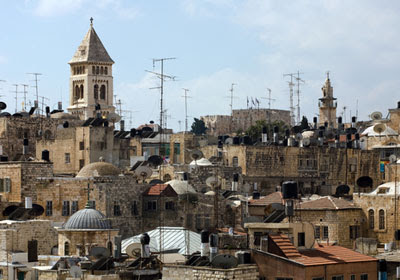
Plagued by respiratory problems or concerned about clean air? Steer clear of Israel. It’s got one of the highest levels of air pollution of the countries on our list. You won’t be lacking vitamin D in this sunny country, however; it’s one of the world’s leaders in solar energy use. Also working for it: the list’s highest physician density rate, or 3.37 for every 1,000 people. Israel’s healthy life expectancy stood at 70 for males and 72 for females, average for the countries on our list.
13. Czech Republic

The Czech Republic has one of the list’s lowest healthy life expectancies–66 for men and 71 for women. The country’s less than stellar sanitation coverage and its TB prevalence rate, 10.8 per 100,000 people, prevented a higher ranking. Working in its favor? One of the world’s lowest infant mortality rates. In 1990, the number of deaths per 1,000 live births stood at 13. It’s now 3.
14. Spain

The country’s tuberculosis rate is the highest of all 15 countries, at 21.7 for every 100,000 people. Spain also has one of the highest air pollution estimates on the list. Its physician density, healthy life expectancy and infant mortality rate are average when compared with other countries on the list.
15. France

A stellar health care system and clean air landed France on the list. Working against it: the worst wastewater treatment standards of the top 15. Its tuberculosis rate–11 cases per 100,000 people, one of the highest on the list–also held it back. But there’s good news for the country’s chronically ill; France’s high physician density measurement: 3.37 per 1,000 people.



